
Unbiased headlines. Facts, not spin.
Unbiased Headlines is an independently owned news organization. We bring you the facts, not opinions, written fresh from 110+ named sources. Sources linked so you can verify it yourself.
 tech
Major Story (7/10)
Australia's House Passes Bill Banning Chatbots That Foster Kids' Dependence as New York Signs Minor Chatbot Law
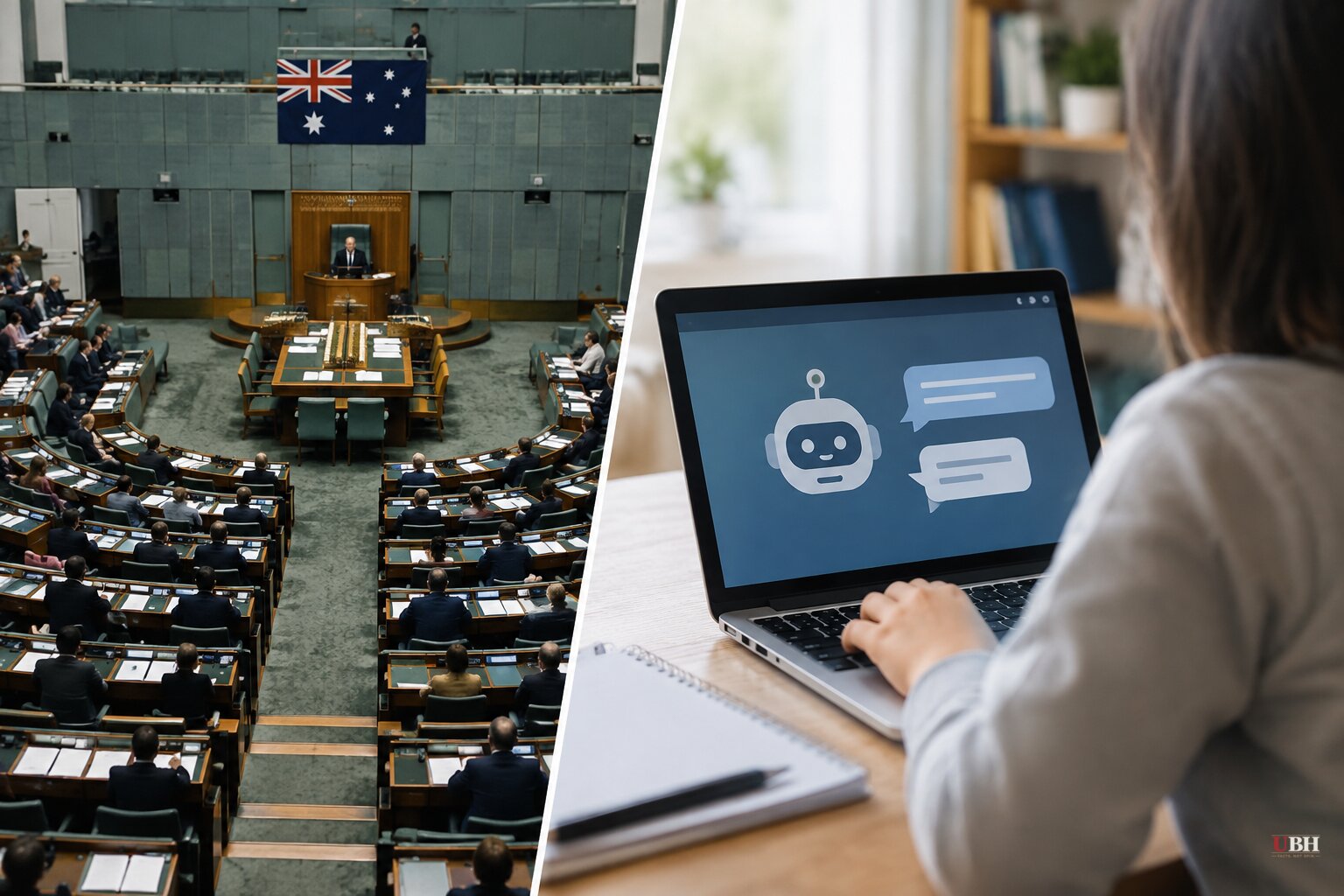
Two governments moved the same day to put legal limits on how AI chatbots deal with kids.
On Wednesday, Oct. 28, Australia's House of Representatives passed the Online Safety Amendment (Digital Duty of Care) Bill 2026. The same day, New York Gov. Kathy Hochul signed the state's "Prohibition on Unsafe AI Companion Features for Minors Act."
Australia: a duty of care, with a chatbot clause
The bill sets one overarching obligation for social media, games, apps and chatbots to provide a safe online environment. It would replace a set of existing industry codes and standards. The government says companies that fail the duty could face penalties of up to A$109.2 million.
The chatbot language came through amendments from independent MP Kate Chaney, which the government accepted during the House debate. Platforms would have to ban "material or conduct that simulates emotional intimacy and encourages or fosters a child's dependence on it in place of human relationships."
The wording is aimed at children. It does not ban adults from using AI companions.
A second accepted Chaney amendment requires social media platforms to offer an opt-out from algorithm-recommended content, and says that control must be "accessible, easy to use" and "prominently available." Communications Minister Anika Wells has said the laws would also capture content promoting misogyny, terrorism, suicide, self-harm and eating disorders. The government's introduction announcement also proposed a 24-hour response window for cyberbullying and abuse complaints, down from 48 hours.
The government points to an eSafety survey that found 78% of Australian children aged 10 to 17 have used an AI assistant or companion. More than half of those children reportedly used them for personal reasons.
Prime Minister Anthony Albanese made the case in a speech on Tuesday, Oct. 27. "The stories we hear about people identifying a chatbot, a non-person as their best friend, should be a huge wake up call for every member of this parliament to be prepared to act," he said.
The opposition and the Senate
The Coalition and One Nation voted against the bill in the House. Opponents have called it an "Orwellian" system of "censorship." Wells rejects that. "If they really care, the test is simple here, they should bring an amendment, not a slogan to 'kill the bill'," she told ABC radio on Wednesday.
Labor says it is open to amendments and wants the Senate to pass the bill by the end of 2026.
The Greens support a digital duty of care but want a stronger version. They are seeking higher penalties and a right for Australians to sue platforms. They have set up a Senate inquiry due to report in late November.
Greens Senator Sarah Hanson-Young said Australians "also need an external complaints pathway, free from the profit-driven whims of 'big tech's' content moderation."
That raises a second dispute. Independent MP Sophie Scamps proposed making the Telecommunications Industry Ombudsman a complaints body for social media and AI. Labor did not accept it in the lower house, and the Greens plan to push it in the Senate.
Ombudsman Cynthia Gebert said her office could take on the role, funded by big tech. "We can help with your Telstra account, but we can't help with your Gmail account," she said.
New York: 12 banned behaviors, 65 days
Hochul's law, enacted as Article 48 of the state's General Business Law, bans 12 categories of conversational AI behavior in interactions with users under 18. It takes effect Jan. 1. That gives operators 65 days from signing.
The central dispute is scope. The law defines a "covered AI companion" as any generative AI system with a natural language interface that provides ongoing, adaptive responses to user inputs. It does not require that the product be designed as a companion.
Tech Times, reading the bill's text, reports that this language could reach general-purpose assistants such as ChatGPT, Claude and Google Gemini. Three exemptions exist. Customer service bots and research or technical tools are exempt only if they cannot discuss topics outside their stated purpose. Internal business tools are also exempt. No exemption covers a general-purpose assistant that can discuss any topic.
Tech Times reports operators must either confirm they qualify for an exemption or restructure products for every user they cannot verify is an adult. That means building age verification or disabling all 12 barred features by default.
Industry objected before signing. The Business Council of New York State wrote in a formal opposition letter: "The definitions are overbroad and inconsistent with existing New York law." It argued that educational tools, research assistants and general-purpose tools were swept in without justification. The Computer & Communications Industry Association asked Hochul to veto the bill. She signed it anyway.
What comes next
In Australia, the Senate inquiry is due to report in late November. Labor needs support beyond the Greens to pass the bill before year-end, and the Coalition and One Nation remain opposed. In New York, operators have until Jan. 1 to decide whether they qualify for an exemption or must verify ages.
Sources used for this briefing
7 links from 6 independent newsrooms (syndicated copies of the same report count once)
These are the sources it draws on, linked so you can verify.


