
Unbiased headlines. Facts, not spin.
Unbiased Headlines is an independently owned news organization. We bring you the facts, not opinions, written fresh from 110+ named sources. Sources linked so you can verify it yourself.
 economy
Major Story (8/10)
Event date: October 15, 2026 ·
UN Weather Agency Says El Niño May Exceed 3.8°C Anomaly, Beyond Four Decades of Records; Aid Chief Releases $50 Million
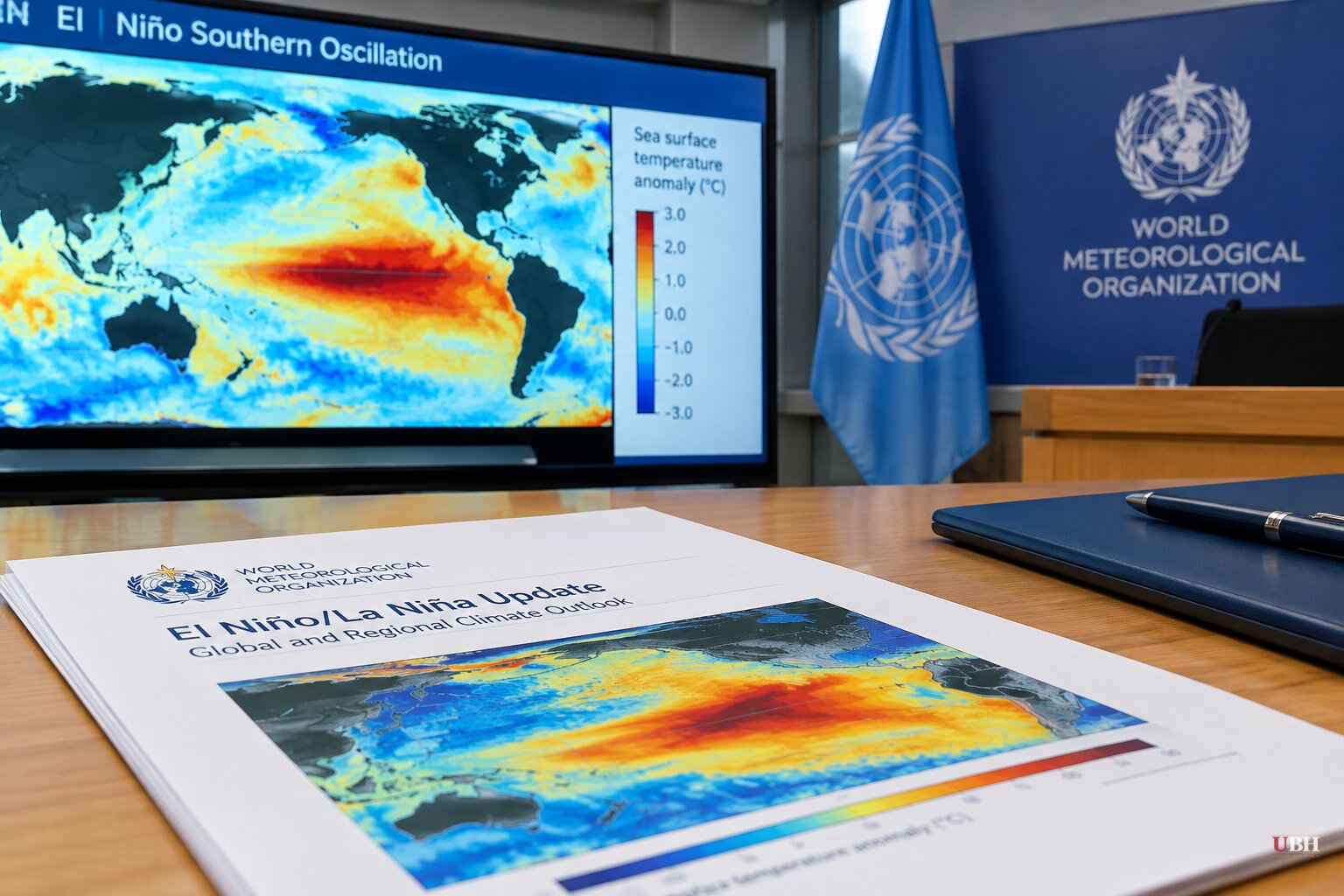
Since our earlier reporting on El Niño's links to Panama Canal restrictions, Sri Lankan drought and Paraná flooding, the United Nations has put hard numbers and a funding request behind the warnings.
Celeste Saulo, Secretary-General of the World Meteorological Organization, said the current event "could be unprecedented in strength – literally, off the monitoring charts that we have used for the past four decades." The WMO's latest Global Seasonal Climate Update says tropical Pacific sea surface temperatures may rise to 3.8°C above average between November 2026 and January 2027.
For scale: an anomaly of 0.5°C is enough to trigger a WMO El Niño alert. Saulo said earlier El Niños linked to 3°C anomalies brought "very substantive impacts across the world," and that this one is "beyond that limit, out of our records, out of our statistics."
Record temperatures, arriving early
Zurich Insurance, in an October 20 analysis for business clients, put the Niño 3.4 daily anomaly at 3.11°C by mid-September. That topped the previous record of 3.08°C and came roughly two months ahead of the usual November or December peak.
The insurer also cited forecast models projecting a peak monthly anomaly of about 4.1°C later this year. That is higher than the WMO's 3.8°C figure, so the two forecasts do not match.
Zurich also noted that global sea surface temperatures logged 100 consecutive days of record highs between June and September 2026. It described El Niño as an amplifier on top of that warming trend rather than the sole cause. Zurich sells risk-management services, so its framing of the stakes serves its business.
The money
Tom Fletcher, the UN's emergency relief chief, called the event a "behemoth… a wrecking ball that will likely tear through Latin America, eastern and southern Africa, Asia and the Pacific with extreme heat, droughts and floods."
Fletcher said he has released more than $50 million from the Central Emergency Response Fund for 11 front-line countries, including Chad, El Salvador, Ethiopia, Somalia and South Sudan.
He said about 50 million people could face increased hunger. He also cited an African Development Bank estimate that the event will cost African countries between $10 billion and $20 billion and cut GDP by one to two percent.
The International Rescue Committee, which is soliciting donations for its El Niño response, puts the figure at an additional 49 million people pushed into acute food insecurity by the end of 2027. That would bring the total to 274 million people across 45 countries.
The IRC says humanitarian funding for food and nutrition assistance has fallen nearly 60% since 2022. It also says conflict is disrupting shipping through waterways such as the Strait of Hormuz, raising the cost of moving food, fuel and fertilizer.
Where it is already hitting
The IRC reports heavy rains have flooded parts of Mogadishu, Somalia, and damaged health facilities. The group links this to the El Niño-related floods of 2023 that displaced 1.2 million people. It is also scaling up cash assistance ahead of forecast flooding in Somalia and drought in El Salvador.
Fletcher said southern Africa's priority is delivering seeds and protecting livestock. Central America needs immediate help to protect livelihoods. Asia and the Pacific face a mix of droughts, floods and cyclones.
Zurich lists the historical pattern for strong events: flooding in parts of South America and the southern United States, drought and wildfire risk in Southeast Asia, Australia and the Amazon, and altered Atlantic hurricane activity. Canada typically sees milder, drier winters. Europe tends toward a wetter, stormier autumn and winter.
Not a foregone disaster
Saulo pushed back on fatalism. "A powerful El Niño does not have to be a recipe for humanitarian disaster," she said. "We have the science forecasts, the early warnings to save lives and protect livelihoods."
Fletcher framed the choice in sharper terms. "It would be an extraordinary failure to see this crisis coming, to hear the predictions from the experts, and yet still squander the opportunity to protect people in its path," he said.
He said the next two weeks are critical. Somalia, Ethiopia and Kenya urgently need funding and emergency supplies in place before heavy rains arrive. Whether donors cover that gap, with food aid budgets already down nearly 60% from 2022, will be visible in how much reaches those three countries before the rains.
Sources used for this briefing
6 links from 6 independent newsrooms (syndicated copies of the same report count once)
These are the sources it draws on, linked so you can verify.


