
Unbiased headlines. Facts, not spin.
Unbiased Headlines is an independently owned news organization. We bring you the facts, not opinions, written fresh from 110+ named sources. Sources linked so you can verify it yourself.
 economy
Notable (6/10)
Event date: October 15, 2026 ·
Six Indian IT Giants Lost 24,422 Net Employees in a Year as Hiring Lagged Exits, Xpheno Data Shows
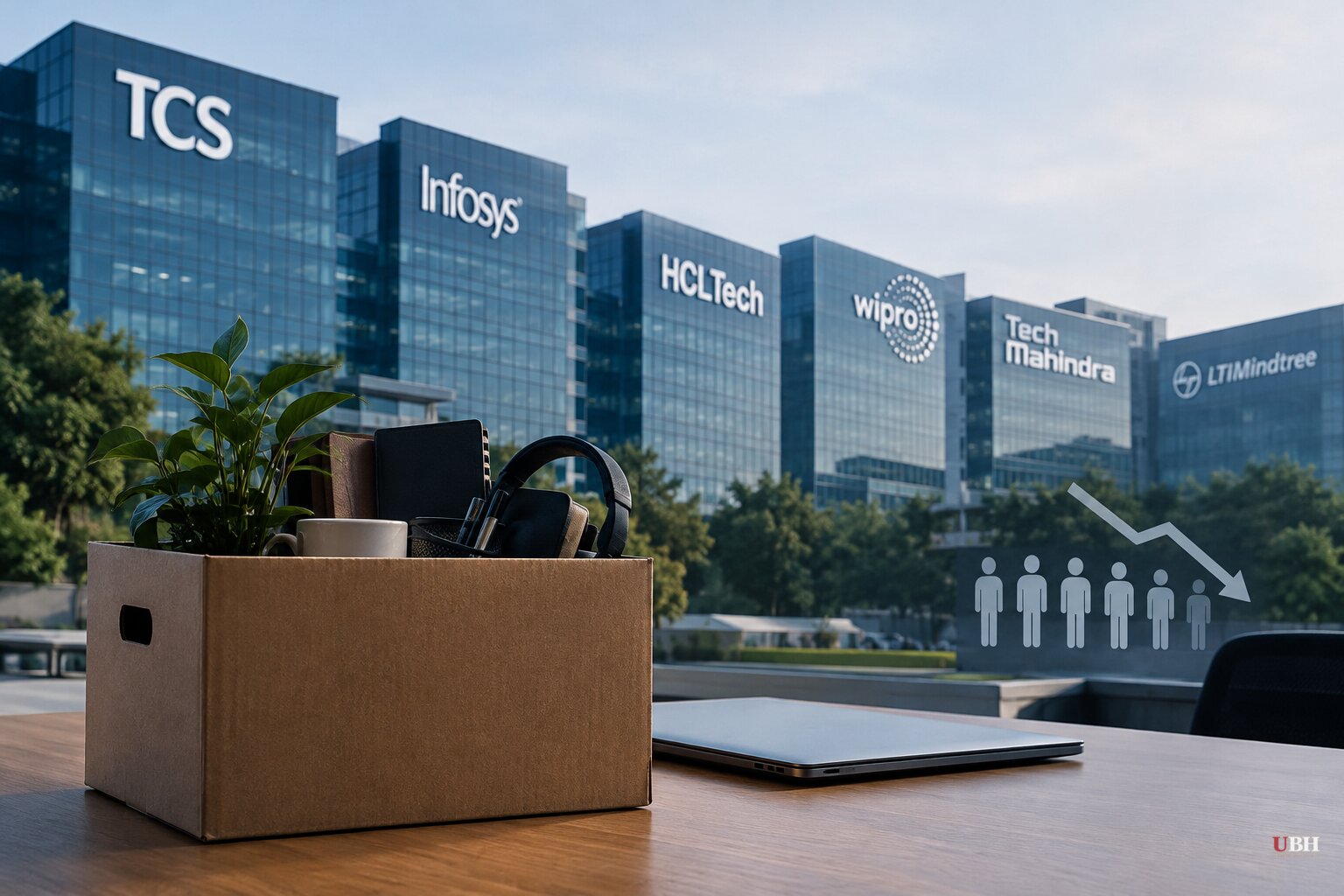
India's six biggest IT services companies employ about 24,000 fewer people than they did a year ago, and the cause is not a wave of firings. It is a hiring freeze on replacements.
Tata Consultancy Services, Infosys, HCLTech, Wipro, Tech Mahindra and LTIMindtree had a combined 797,722 employees in October 2026, down from 822,144 in October 2025, according to data from staffing firm Xpheno. That is a drop of 24,422, or nearly 3%.
The numbers behind the drop
The six companies recorded roughly 92,000 exits over the 12 months. Xpheno puts intake at about 68,000. The gap between the two is the headcount decline.
Exits outpaced new hires in IT and engineering functions in five of the last six months, the Xpheno data shows.
The 92,000 departures are not unusual. They fit the industry's normal attrition rate of 11% to 15%. People left at the usual pace. The companies did not backfill them at the same pace.
"Annual attrition has remained at 11-15%, but companies haven't necessarily refilled attrited seats," said Francis Padamadan, chief executive of Xpheno.
Where the squeeze is landing
Neeti Sharma, chief executive of staffing firm TeamLease Digital, said the decline reflects workforce optimisation and changing technology requirements. She pointed to AI as a factor.
"Replacement hiring is currently lower than the number of people being laid off, particularly in the 5-12 years' experience band across application maintenance, manual testing, infrastructure support and L1/L2 services," Sharma said. "These are roles where AI is reducing the need for routine work."
That is a staffing executive's read of the market. The six companies have not been quoted attributing the headcount decline to AI.
IT functions typically maintain and support existing technology systems. Engineering functions build software and applications. The roles overlap, but the work differs, and the cuts are concentrated in the maintenance end.
The other side of the ledger
Not everyone reads the numbers as a net loss for the Indian job market. A Nomura analysis has put AI-linked hiring in India ahead of job losses by more than 51,000. The detailed breakdown behind that estimate was not available to us. The Xpheno figures cover only six large firms, so the two are not directly comparable.
The Xpheno data also shows nothing about whether laid-off or departing workers landed elsewhere in the technology sector.
The U.S. picture
American tech workers are not insulated. Crunchbase News tallied at least 1,635 U.S. tech employees laid off or scheduled for layoffs in the week ended Oct. 15, 2026.
Netflix said it will cut about 1,000 workers across product, tech, legal and human resources teams, according to CNBC. The cuts are global, and the number of U.S. employees affected is unclear.
Amazon laid off an undisclosed number of global workers in customer service, marketplace and engineering, according to Business Insider, which put the total at fewer than 1,000.
Chatbot startup Character.AI filed for Chapter 11 bankruptcy. The company said it is seeking a "value-maximizing sale of all or substantially all of its assets." It also said the platform will continue to operate but will be wound down if the sale process does not produce a buyer who continues it.
Crunchbase's running totals, which it describes as best estimates built from media reports, social posts and the crowdsourced layoffs.fyi database:
- 2025: about 127,000 U.S. tech workers laid off
- 2024: at least 95,667
- 2023: more than 191,000
- 2022: more than 93,000
What is still open
The Indian figures describe a slow squeeze, not a mass layoff event. Revenue at these firms has not been the issue in the data. It is unclear how long the replacement-hiring gap persists in the 5-to-12-year experience band, where Sharma says it is widest. That group is the mid-career core of the industry's workforce.
Sources used for this briefing
2 links from 2 independent newsrooms (syndicated copies of the same report count once)
These are the sources it draws on, linked so you can verify.


