
Unbiased headlines. Facts, not spin.
Unbiased Headlines is an independently owned news organization. We bring you the facts, not opinions, written fresh from 110+ named sources. Sources linked so you can verify it yourself.
 economy
Notable (6/10)
GM Unveils Fourth-Generation EV Platform With Central Computer 40 Times More Powerful, Debuting 2028 in Cadillac Escalade IQ
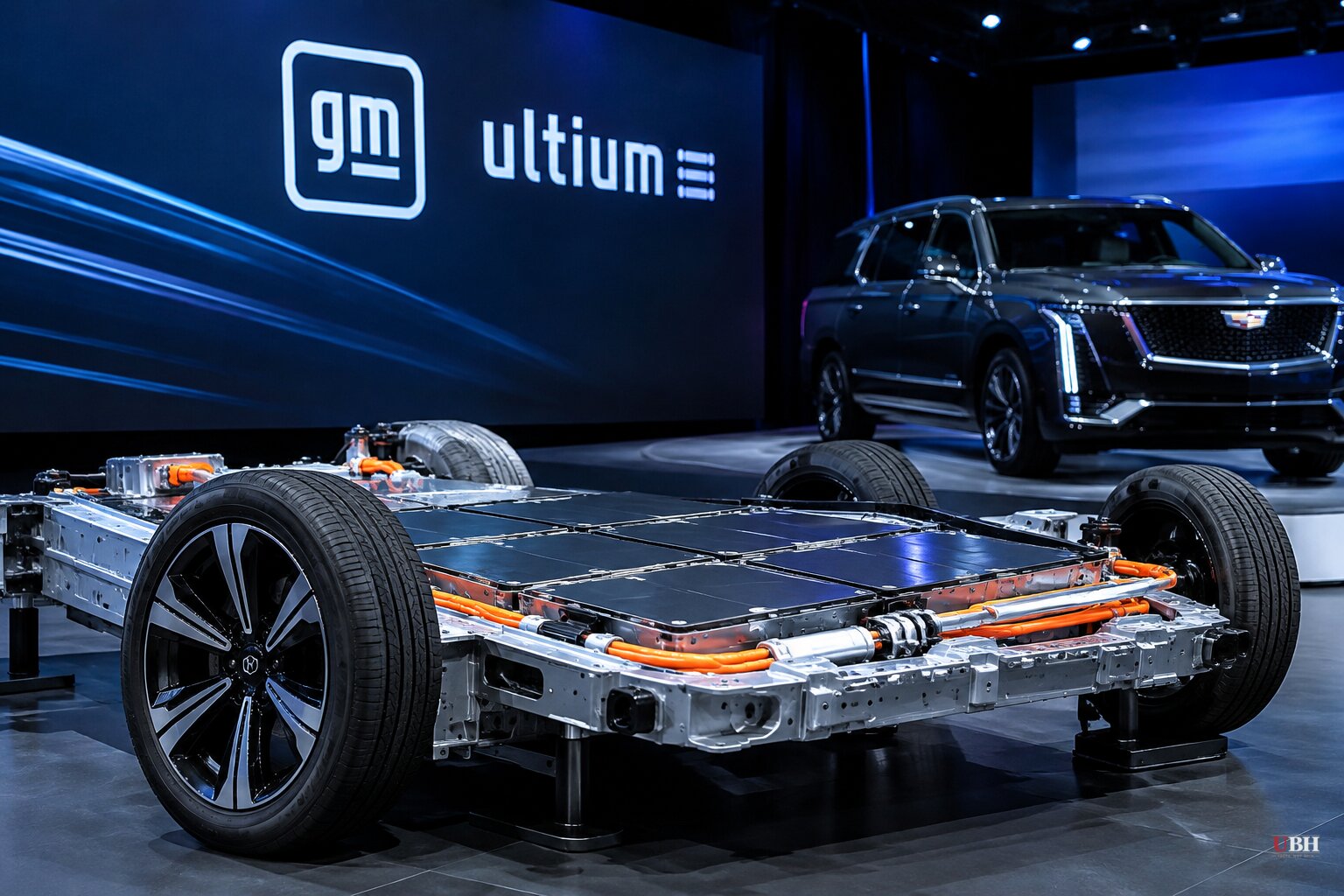
General Motors laid out its fourth-generation EV platform at its GM Forward event in New York on Wednesday, Oct. 21. The pitch was about computers and chemistry, not ride and handling.
The first vehicle to carry the new electrical and computing architecture will be the Cadillac Escalade IQ in 2028. Nothing announced today is on the road yet.
One computer instead of many
The centerpiece is a Central Compute Unit, or CCU. GM says it is 40 times more powerful than the company's current systems.
Instead of spreading work across numerous smaller chips, the CCU will handle propulsion, chassis controls, perception and active safety. It ties together acceleration and power, steering, braking and software.
GM says pulling those chips out of the car cuts wiring length and mass by 30%. It also says cellular connectivity speeds will be up to 50% faster, to handle over-the-air updates and cloud communication.
The architecture is not limited to EVs. GM says it will also work in gas-powered vehicles, and the company plans to expand it from the Escalade IQ to its full-size gas SUVs, trucks, three-row crossovers and fourth-generation EVs. GM has not given a firm timeline for that broader rollout.
Batteries and efficiency claims
The platform is designed around lithium-manganese-rich (LMR) cells. GM says they cost less than high-nickel cells and are more energy-dense than lithium iron phosphate.
GM's targets for vehicles on the platform: 15% lighter, 20% more energy efficient, and 20% less battery capacity overall. These are company projections for vehicles that do not exist yet.
The hands-off driving promise
GM also plans an autonomous highway-driving feature in 2028. Drivers would be able to take their hands and eyes off the road without staying ready to take over.
That is a planned capability, not a delivered one. GM concluded its existing platform could not support the autonomy it wants, which is why perception and safety functions are moving onto the new computer.
"We think vehicles can become a more capable and helpful part of everyday life if we make them spaces that understand context, reduce friction, and give people back moments that would otherwise be consumed by the demands of the road," Sterling Anderson, GM's chief product officer, told TechCrunch.
AI to halve the development clock
GM says enterprise AI tools and large-scale virtual simulation will cut its traditional four-to-five-year vehicle development cycle by 50%. Chinese manufacturers are already turning out new models in two to three years.
GM's example: engineers evaluated more than 300,000 virtual battery designs before building the first physical prototype. The LMR pack went from concept to approved program in one month. Approval is a milestone, not a finished production battery.
Anderson said computational fluid dynamics models that once took as much as 60 hours of compute time now finish in 60 seconds. "What we're building collapses design, engineering and manufacturing into a set of probabilistic optimizations that create better products in half the time," he said.
The money behind it
GM recorded $866 million in capitalized software amortization expense in 2025. That figure spreads software costs over time and is not a single year's cash outlay, but it shows the scale of the bet.
GM dropped Apple CarPlay from nearly all its EVs in favor of a Google-based infotainment system. It has previously said it would overhaul vehicle electronics for faster software, more capable automated driving and a conversational AI assistant. Wednesday added architecture details, a first vehicle and a date.
The track record in this field is not great for legacy automakers. Volkswagen Group struggled with its in-house software effort, including its Cariad unit, and struck a $5.8 billion joint venture with Rivian.
Costs are rising on the other side of the ledger
The announcement came one day after GM's third-quarter report on Oct. 20. Revenue was $50 billion, up about 3% from a year earlier. Adjusted EBIT rose 22% to $4.1 billion, helped by high-margin pickups and SUVs. The board approved a new $20 billion buyback after finishing a $6 billion program.
Shares still fell more than 5% in morning trading that day. CEO Mary Barra told analysts that inflation in logistics, commodities and memory is a problem: "Looking ahead, there are clear external headwinds, and in some cases, they are intensifying."
GM puts the 2026 cost headwind at roughly $2 billion, with about $700 million landing in the third quarter and $1.3 billion year to date. Barra said copper is at record levels and hot-rolled coil steel at four-year highs. GM says spot prices have risen 10% to 15% since July and sit about 50% above last year's average. The company also blamed disruptions tied to the continuing Middle East conflict for higher transport costs.
If elevated commodity prices persist, GM estimates another $1 billion to $1.5 billion of pressure next year, and total external headwinds of about $2 billion in 2027. GM narrowed its 2026 adjusted profit outlook to $14.5 billion to $15.5 billion. Barra said she still expects revenue, margins and adjusted EBIT to improve in 2027, assuming tariffs stay broadly similar to 2026 and commodity pressure eases.
Execution is the open question. GM has put a date on its software overhaul, but the Escalade IQ is the first test in 2028, and the company is trying to build it while absorbing a $2 billion yearly cost squeeze.
Sources used for this briefing
7 links from 6 independent newsrooms (syndicated copies of the same report count once)
These are the sources it draws on, linked so you can verify.


