
Unbiased headlines. Facts, not spin.
Every story is an unbiased news briefing written from 110+ sources across the spectrum — sources linked so you can verify it yourself.
 economy
Major Story (8/10)
July 14, 2026 at 06:25 AM
economy
Major Story (8/10)
July 14, 2026 at 06:25 AM
UN Maritime Agency Says Trump's 20% Hormuz Toll Has No Legal Basis
The Plan
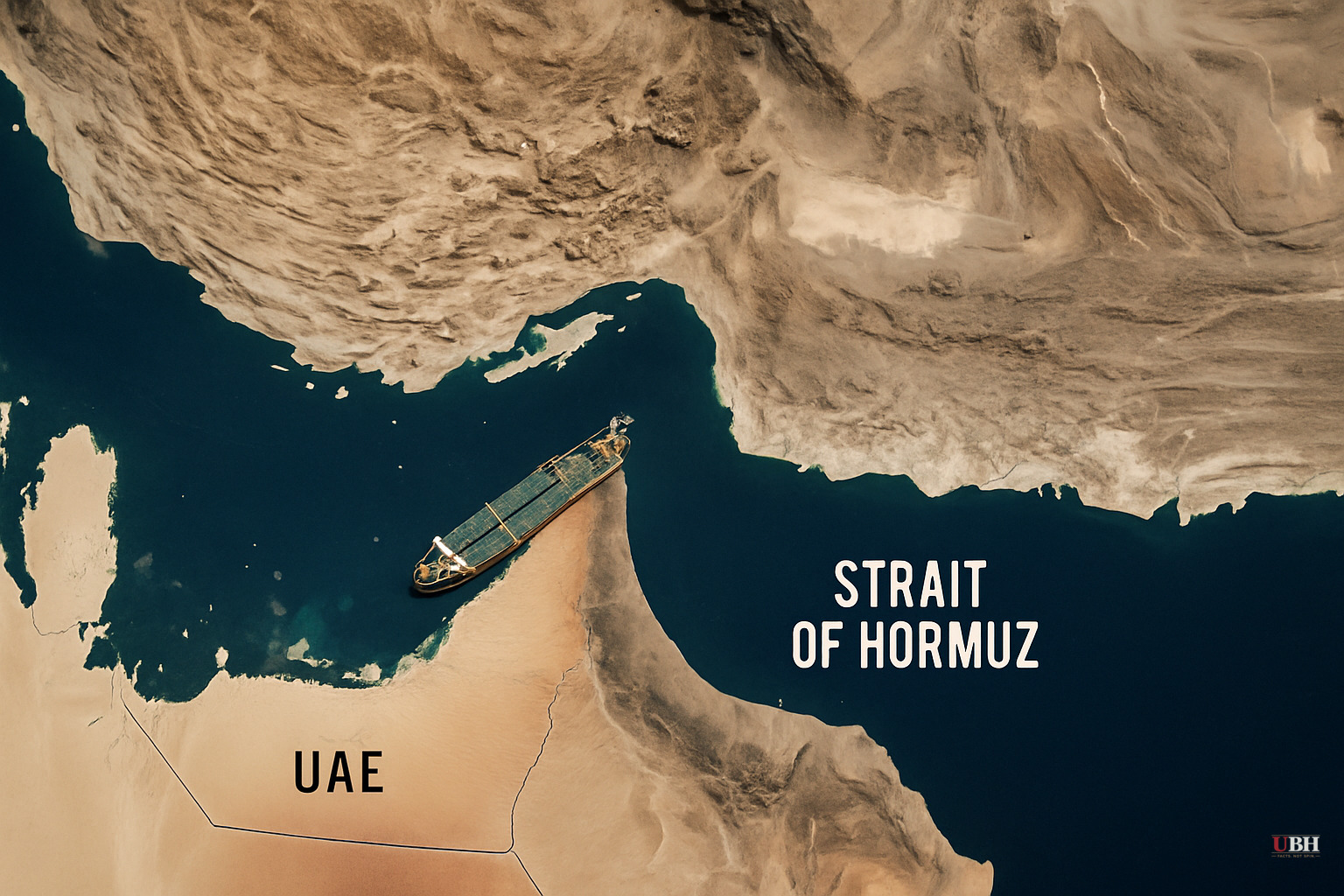
Donald Trump announced Monday, July 13, 2026, that the U.S. Navy will protect commercial ships transiting the Strait of Hormuz, but he wants to get paid for it. On Truth Social, Trump said the U.S. would be reimbursed at a rate of 20% on all cargo shipped through the strait, according to CNBC and Japan's IBTimes.
He also announced the U.S. is reimposing what he called the "Iranian Blockade," a naval measure aimed at stopping Iranian ships and their customers from using the strait. "The Hormuz Strait is OPEN, and will remain OPEN, with or without Iran," Trump wrote, adding that all other countries will have "fair and open use" of the waterway.
The UN Pushes Back
The International Maritime Organization, a United Nations agency, rejected the fee plan outright. "We have always been consistent on our stance on fees. IMO stands firmly against charging fees for passage through straits used for international navigation," a spokesperson told CNBC. "There is no legal basis through which to introduce mandatory tolls simply to transit through a strait."
IMO Secretary-General Arsenio Dominguez made the same point directly to IBTimes Japan, saying the agency's position hasn't shifted despite Trump's announcement. According to Marine Link, which cited Reuters reporting, the IMO said Monday it was still awaiting further details from the White House on how the toll would actually work, since Trump's post didn't elaborate.
The legal argument isn't just an IMO talking point. James Kraska, an expert on international maritime law at the U.S. Naval War College, told CNBC that the world has an unimpeded right to transit Hormuz and that tolls violate international law. That cuts both ways: Kraska also said Iran has no unilateral authority to reroute traffic through its own territorial waters, since both Iran and the U.S. have legal obligations under the Convention on the International Maritime Organization and the International Convention for the Safety of Life at Sea to respect the traditional transit route.
A Reversal From Weeks Earlier
Trump's demand is a shift from where his own administration stood just weeks ago. Secretary of State Marco Rubio told reporters in Bahrain on June 25 that there was "zero support" among Gulf countries for any toll or fee on international waters, and said flatly that "the president's made it clear that's not going to happen," according to IBTimes Japan. Vice President JD Vance had separately said the strait would stay "toll free for the long term" under the ceasefire framework reached after the last round of U.S.-Iran hostilities.
Iran, for its part, has pushed for transit tolls before. Under the memorandum of understanding Tehran signed with Washington on June 17, Iran agreed not to charge a toll for 60 days.
Industry Reaction
Shipping executives aren't buying the 20% number. Herbjørn Hansson, CEO of Nordic American Tankers, told CNBC the fee is unrealistic and that any real arrangement requires Iran and the U.S. to agree on how the strait gets administered. "Iran is suffering, America is suffering, 192 countries outside the Hormuz Strait are suffering," Hansson said.
Chevron CEO Mike Wirth made a similar argument back in May, saying his company would not pay a fee to Iran for safe passage and calling freedom of navigation through international waterways "a very well established principle," according to IBTimes Japan. The U.S. Treasury has previously warned companies that paying Iran for passage would risk violating sanctions, calling such payments "maritime extortion."
There is a reasonable argument in Trump's demand, even if the legal footing is shaky: if the U.S. Navy is going to burn fuel, risk ships, and put sailors in harm's way defending a chokepoint that carries roughly a fifth of the world's oil and gas exports, someone has to pay for that protection. Free-riding on American military power isn't a new complaint from U.S. presidents of either party. But wanting compensation and having the legal authority to impose a mandatory toll on international shipping lanes are two different things, and international law, per Kraska and the IMO, currently says no.
Where Things Stand
The security situation on the ground hasn't calmed down. Iran has struck multiple commercial ships in the strait over the past week, according to CNBC, and Tehran is demanding vessels use a northern route through Iranian territorial waters instead of the traditional path. The U.S. Navy has been escorting ships along a southern corridor near Oman's coast instead.
Iran's Revolutionary Guard said it struck energy facilities in Bahrain and Kuwait, destroyed radar systems in Oman, and hit fuel depots at Prince Hassan Air Base in Jordan, according to IBTimes Japan. The U.S. military said it carried out fresh strikes on Iranian sites in response. Iran's Khatam al-Anbiya Central Headquarters warned that any U.S. attempt to control transit routes without Tehran's coordination "will be strongly resisted."
Brent crude rose above $80 a barrel following Trump's toll announcement, IBTimes Japan reported. Whether that 20% fee ever gets implemented, or whether it dies the same death as the earlier proposal Rubio and Vance shot down in June, is now the open question hanging over global oil markets.
Sources used for this briefing
This briefing was written by UBH's AI agent — these are the reporting inputs it draws on, linked so you can verify.


