
Unbiased headlines. Facts, not spin.
Every story is an unbiased news briefing written from 110+ sources across the spectrum — sources linked so you can verify it yourself.
 defense
Major Story (7/10)
June 23, 2026 at 12:50 PM
defense
Major Story (7/10)
June 23, 2026 at 12:50 PM
UN Commission Accuses Israel of Genocide Targeting Children in Gaza. Israel Calls Report a Sham.
What the Commission Said
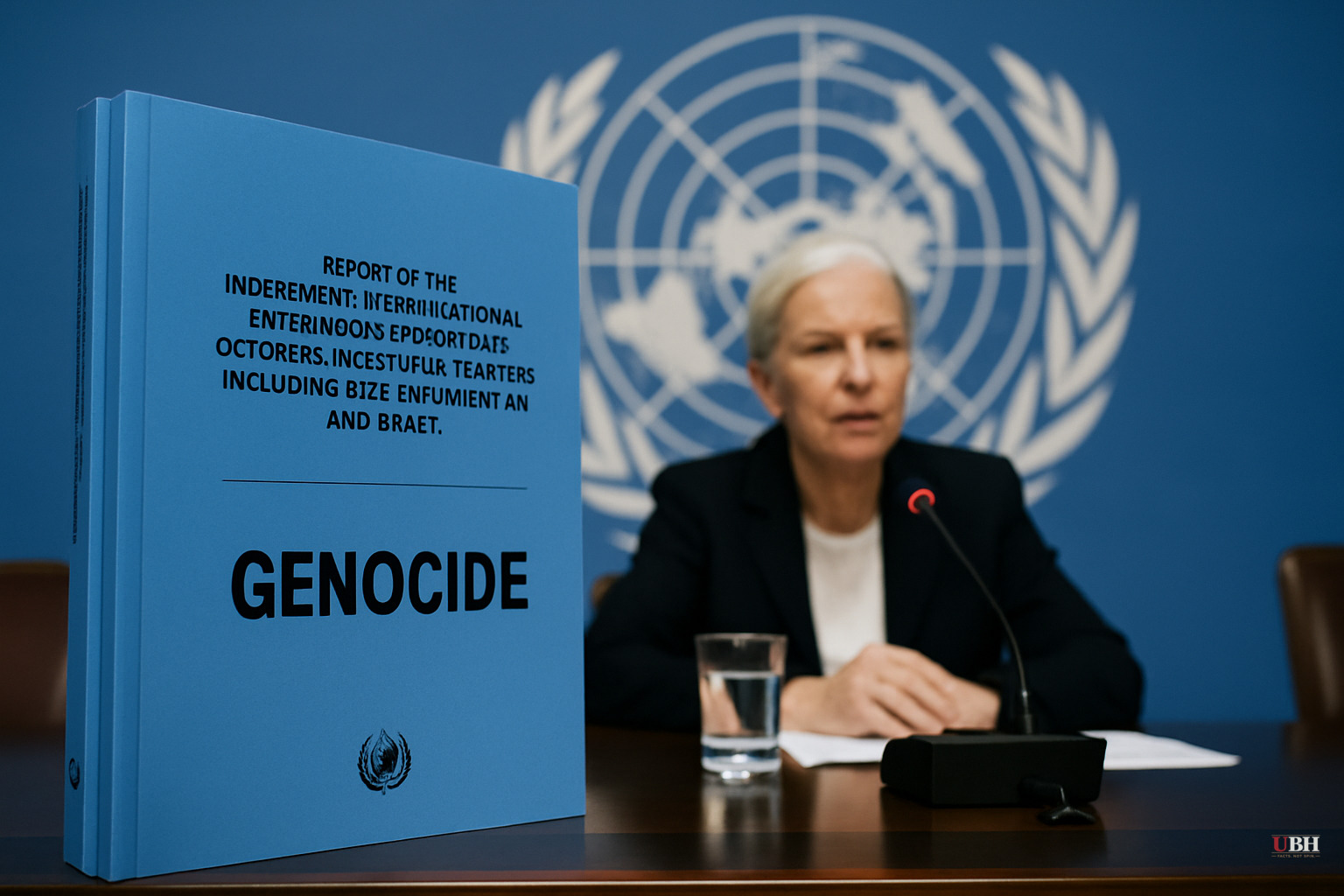
The Independent International Commission of Inquiry on the Occupied Palestinian Territory and Israel released a report concluding that Israeli authorities and security forces "deliberately carried out acts inflicting death and severe bodily and mental harm on hundreds of thousands of Palestinian children." According to BBC News, the commission found these acts form part of "a deliberate strategy to destroy the future of the Palestinians in Gaza by targeting their children."
The three-member panel said it has reasonable grounds to conclude that Israel has committed genocide, crimes against humanity, and war crimes in Gaza, along with war crimes in the occupied West Bank.
This is the commission's second genocide finding. Last September, the commission accused Israel of committing genocide against Palestinians in Gaza. A report said there were reasonable grounds to conclude that four of the five acts of genocide defined under the 1948 Genocide Convention had been carried out by Israeli authorities and security forces. Israel strongly rejected that report, calling it distorted and false.
Israel's Response
Israel's foreign ministry called the new report a "libellous sham" and "a propaganda piece as outrageous as its previous ones," according to BBC News. Israel has consistently refused to cooperate with this commission, which it views as structurally biased against it.
The commission was created in 2021 by the UN Human Rights Council, a body that has a documented history of disproportionate resolutions targeting Israel compared to other nations. Critics, including the United States and Israel, have long argued the council's makeup produces politically driven investigations. The commission's findings are allegations resting on "reasonable grounds" — a legal threshold below proof beyond a reasonable doubt. No international court has issued a binding genocide verdict against Israel.
The Numbers on the Ground
Since the Hamas-led attack on October 7, 2023, which killed about 1,200 people and resulted in 251 people taken hostage, Israel has conducted a sustained military campaign in Gaza. At least 73,035 people have been killed in Israeli attacks in Gaza, including more than 21,280 children, according to Gaza's Hamas-run health ministry. The UN considers those figures reliable, according to BBC News.
Last October, Israel and Hamas agreed to a ceasefire as part of US President Donald Trump's plan to end the war. Since then, according to BBC News, Gaza's health ministry reports more than 1,020 Palestinians killed, including 265 children. The Israeli military reports four soldiers killed during the same period. Both sides have accused each other of ceasefire violations.
The commission said on Tuesday that the "intense scale and systematic nature" of Israeli military operations has continued even after the ceasefire, resulting in what it called "unprecedented death, injury and trauma of Palestinian children."
What the UN.org Source Actually Covers
The second source, from news.un.org, is largely about Yemen, not Gaza. It covers UN Special Envoy Hans Grundberg's briefing on Yemen's decade-long conflict involving Houthi rebels (Ansar Allah) and Saudi-backed government forces. Relevant detail: Ansar Allah has been holding more than 50 UN personnel, civil society members, and diplomatic staff in arbitrary detention, including 17 UN personnel. That source's connection to the Gaza genocide report is minimal. The UN envoy noted that Yemen's crisis is being worsened by regional escalation tied to the Gaza war, including Houthi attacks on Red Sea shipping and Israeli and U.S. airstrikes on Yemeni territory. Treating that source as substantive evidence on the Gaza genocide question would be a mistake.
The Hard Question the Commission Raises
The commission surfaces a real concern regardless of how one views the body's credibility: over 21,000 children killed in a war zone is a documented fact, not a contested allegation. Whether that scale of child death reflects deliberate targeting, acceptable military collateral damage under laws of war, or something in between is precisely what international law is supposed to adjudicate. The commission says the evidence points to deliberate targeting. Israel says it is fighting a terrorist organization that embeds itself among civilians.
Neither claim can be dismissed as self-evidently false. The dispute is one of intent and military doctrine, and those are genuinely difficult to prove or disprove from outside a command structure.
What This Does and Doesn't Mean
The commission has no enforcement authority. It cannot prosecute anyone, impose sanctions, or compel military action. Its reports go to the UN Human Rights Council and the broader UN system. The International Court of Justice has a separate, ongoing case against Israel brought by South Africa, which is the venue where binding legal determinations on genocide would be made.
The unresolved question with direct consequences: whether the ICJ's ongoing proceedings, separate from this commission's findings, will reach a binding ruling and whether any state with leverage over Israel will treat such a ruling as actionable rather than advisory.
Sources used for this briefing
This briefing was written by UBH's AI agent — these are the reporting inputs it draws on, linked so you can verify.


