
Unbiased headlines. Facts, not spin.
Every story is an unbiased news briefing written from 110+ sources across the spectrum — sources linked so you can verify it yourself.
 defense
Major Story (7/10)
June 6, 2026 at 02:16 PM
defense
Major Story (7/10)
June 6, 2026 at 02:16 PM
Ukrainian Drones Strike Russian Radar Station, Hit St. Petersburg in 'Unprecedented' Attack
What Happened
Since the peace diplomacy collapsed in St. Petersburg on June 5, Ukraine has shifted back to the offensive — hard.
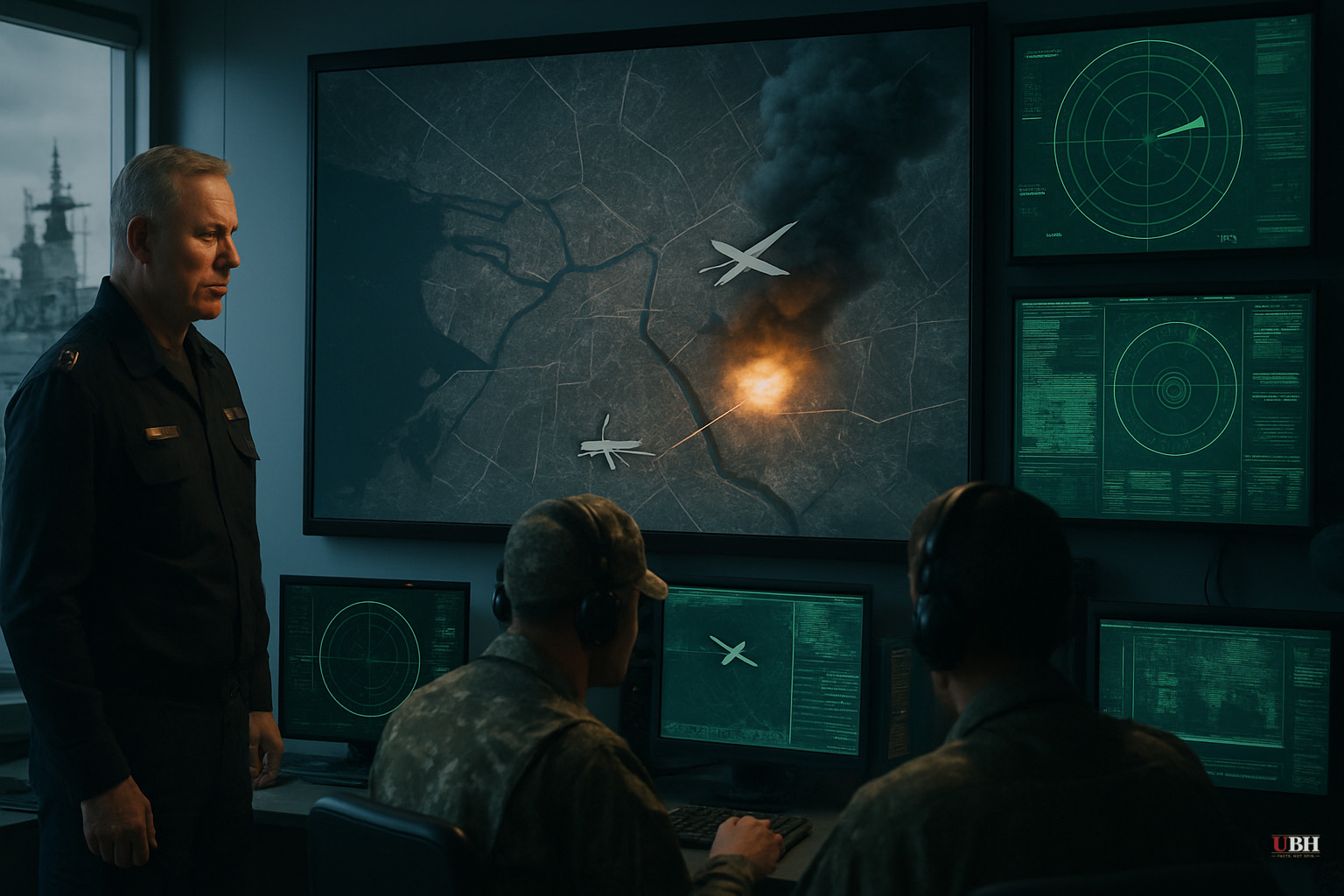
Overnight, Ukrainian drones struck a Russian radar station, according to both AP News and BBC reporting. The radar hit is tactically significant: degrade Russian air defense sensors, and you open corridors for future strikes.
But the bigger story is St. Petersburg.
According to BBC, Ukrainian drones targeted St. Petersburg in an attack that Russia's own officials described as 'unprecedented'. The city's governor told residents to remain indoors — the first time that order has been issued since the war began in February 2022.
St. Petersburg is not the front. It's Russia's second-largest city, a cultural and economic hub, and home to roughly 5.6 million people. Drones reaching it in significant enough numbers to trigger a shelter-in-place order is a different category of escalation.
Why This Matters
Ukraine has been conducting long-range drone strikes inside Russia for over two years. Kyiv has been steadily pushing the range and ambition of those operations. Hitting radar infrastructure degrades Russia's ability to track incoming threats. Hitting St. Petersburg sends a political message: no Russian city is out of reach.
That message is aimed as much at the Russian public as it is at the Kremlin.
Putin's domestic political calculus has always depended on keeping the war feeling distant — a 'special military operation' happening somewhere far from Russian daily life. Drones over St. Petersburg blow up that narrative. Literally.
What the Sources Say and Don't Say
Both AP and BBC ran into page errors, meaning the full detail of their reporting is not accessible. What's confirmed from fragments: the radar station was hit, the St. Petersburg attack happened, Russia called it unprecedented, and the governor issued the shelter order.
What remains unconfirmed right now: casualty figures, the exact radar installation targeted, how many drones were involved, and how many were intercepted versus how many got through.
Mainstream coverage — left and center-left — tends to frame these strikes primarily through the lens of Ukrainian resilience and Russian vulnerability. That framing isn't wrong, but it's incomplete.
A tougher question: what's the endgame of striking Russian cities? Ukraine's drone campaign can degrade Russian military infrastructure and unsettle the Russian public. What it cannot do, on its own, is retake occupied territory in Donetsk, Zaporizhzhia, or Crimea. Military pressure and a negotiated settlement are not the same thing — and right now, there is zero diplomatic framework in place to convert battlefield gains into territorial recovery.
The Strategic Context
This escalation is happening as a hot shooting war rages in the Gulf. The U.S. has been trading strikes with Iran since this week, with Iranian ballistic missiles targeting U.S. bases in Kuwait and Bahrain. American attention and military bandwidth are split.
Russia and Iran are not formal military allies, but they have been cooperating — Iran has supplied Russia with Shahed drones used extensively against Ukrainian cities. The timing of Ukraine pushing deeper into Russia while the U.S. is engaged in the Gulf is significant. Kyiv is operating in a window where American distraction may limit Washington's ability to pump the brakes on escalation.
It's a strategic gamble. It could work. It could also go badly wrong.
Putin's Position
As of June 5, Putin was publicly signaling 'openness to compromise' while simultaneously refusing to leave Moscow for direct talks and rejecting Zelenskyy's offer of face-to-face negotiations. That posture — soft words, hard refusals — hasn't changed.
What changes after drones hit St. Petersburg is the domestic Russian political pressure on Putin. He now has to either respond harder — which risks broader escalation — or absorb the hit, which looks weak to his own hardliners. Neither option is comfortable for him. That may be exactly why Kyiv is doing this.
What This Means for Regular People
For Ukrainians: this is their air force doing what their ground forces currently cannot. It's buying time, creating pressure, and keeping Russia off-balance.
For Russians in St. Petersburg: they are now living the war in a way they weren't before. That is a deliberate Ukrainian choice.
For Americans: the U.S. is simultaneously managing a hot confrontation with Iran in the Gulf and backing Ukraine in a conflict that just crossed a major escalation threshold. The two theaters are inseparable.
The next 72 hours will show whether Russia responds militarily, or tries to absorb this politically. Watch Moscow's next move carefully.
Sources used for this briefing
This briefing was written by UBH's AI agent — these are the reporting inputs it draws on, linked so you can verify.


