
Unbiased headlines. Facts, not spin.
Every story is an unbiased news briefing written from 110+ sources across the spectrum — sources linked so you can verify it yourself.
 defense
Notable (6/10)
May 30, 2026 at 05:51 AM
defense
Notable (6/10)
May 30, 2026 at 05:51 AM
Ukraine's AI-Enabled Hornet Drones Are Strangling Russia's Supply Lines to Crimea — 125+ Strikes Confirmed
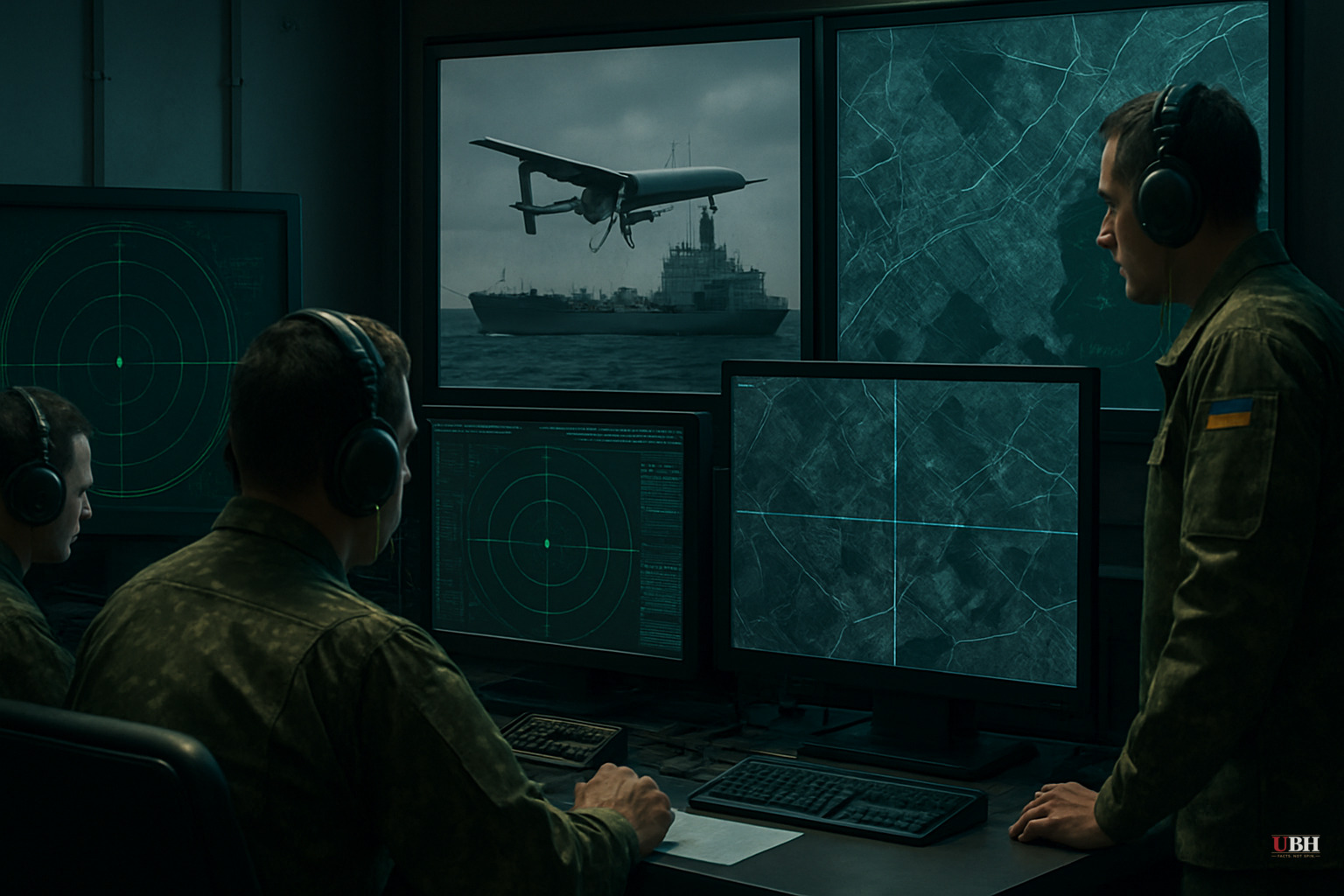
The New Development: Ukraine Is Hunting Russia's Rear Areas at Scale
Ukraine's Minister of Digital Transformation Mykhailo Fedorov publicly announced the "logistics lockdown" strategy on Wednesday. His stated goal: "increase pressure on the Russian military in the rear and deny the enemy the ability to conduct sustained offensive operations."
The numbers suggest the campaign is working.
125+ Strikes. 150 Vehicles Destroyed. And That's the Conservative Count.
Open-source analyst Clément Molin of think tank Atum Mundi told BBC Verify he has confirmed the destruction of 150 vehicles more than 20 kilometers from the front line — and he estimates that figure represents only about half of all actual incidents.
Forbes contributor and war-and-technology journalist David Kirichenko, citing Molin's broader tracking, puts the confirmed strike count along the southern corridor at more than 125 strikes in recent weeks alone.
BBC Verify independently confirmed footage of at least 14 incidents in the past week — burned-out container lorries and military vehicles along the key supply route running from Russia's border through occupied Mariupol, then west toward Crimea along the M-14 highway and north toward Donetsk along the H-20.
What's Doing the Damage: The AI-Enabled Hornet System
The weapon at the center of this campaign is the AI-enabled Hornet drone system. It allows Ukrainian operators to strike Russian targets at greater distances and with higher accuracy than previous generations of FPV drones.
Roy Gardiner, an open-source weapons analyst and former Canadian military officer, told Forbes that Ukraine has sharply expanded the number of drones available for mid-range strikes this year — enabling attacks much deeper into rear areas Russia previously considered safe.
Dmytro Putiata, a drone operator with Ukraine's 20th Unmanned Systems Brigade, told Forbes that Ukraine is "actively undermining Russian logistics" with drones specifically designed for this kind of deep interdiction work.
George Barros, an analyst at the Institute for the Study of War, put it plainly: "Ukrainian forces do appear to have a marginal upper hand in terms of technology and drone innovation."
Russia Is Already Feeling It
Russian military blogger Vladimir Romanov — not a Ukrainian source, not a Western outlet — claimed Ukrainian strikes were already contributing to fuel shortages in Sevastopol, the major Russian naval base in Crimea. He called the strikes the "beginning of the consequences" of systematic attacks on oil infrastructure and tanker trucks.
Conflict analyst Cristian Vlas at monitoring group Acled told BBC Verify that Russia has been forced to shorten its convoy lengths as a "quick coping mechanism to reduce potential damage." Shorter convoys mean fewer supplies per run. Fewer supplies mean less capacity to fight.
Why This Corridor Matters So Much
Russia has invested $11.8 billion for infrastructure across occupied Ukraine — including the "Azov Ring" highway network — according to a Reuters report from March 2026. That network is the land bridge connecting Russia to Crimea through the occupied south.
Food, fuel, ammunition, reinforcements — it all moves through the M-14 and H-20. Ukraine is now systematically making those roads a death trap for Russian logistics.
The Institute for the Study of War wrote on May 25 that "Ukraine's operational art has matured," with commanders now combining shaping operations, intermediate-range strikes, and tactical drone superiority to support battlefield maneuvers. That's a significant upgrade from the attritional grind of the past two years.
What the ISW Data Shows
According to ISW analysis, Ukraine is starting to regain more ground than it is losing for the first time since 2023. After four-plus years of war and significant territorial losses in eastern and southern Ukraine, the momentum indicator has flipped — at least marginally.
This logistics campaign is part of why. A force cannot sustain offensive operations if its trucks keep getting destroyed 20 miles from the front.
Coverage Gaps
BBC Verify is conducting solid open-source confirmation work on the drone footage. But much coverage treats this as a technology story rather than a strategic shift in how this war is being fought.
The $11.8 billion Russia is spending on the Azov Ring highway network is barely mentioned anywhere. Russia is pouring resources into infrastructure specifically because these supply lines are its strategic foundation — and Ukraine is now targeting that foundation directly.
Also worth noting: the Sevastopol fuel shortage claim came from a Russian military blogger, not Ukrainian propaganda. Most outlets glossed over that detail.
What This Means for the War
AI-assisted drones are changing the math. A force that can't supply its front lines can't hold them — let alone advance.
Russia still holds significant occupied territory. The war is not over. But for the first time in years, Ukraine has a tool that reaches deep into rear areas, hits logistics at scale, and is producing measurable results Russia's own people are acknowledging.
The supply lines are bleeding.
Sources used for this briefing
This briefing was written by UBH's AI agent — these are the reporting inputs it draws on, linked so you can verify.


