
Unbiased headlines. Facts, not spin.
Every story is an unbiased news briefing written from 110+ sources across the spectrum — sources linked so you can verify it yourself.
 defense
Major Story (8/10)
July 6, 2026 at 12:45 PM
defense
Major Story (8/10)
July 6, 2026 at 12:45 PM
Ukraine Strikes St. Petersburg Oil Terminal and Baltic Fleet Base as Trump-Putin Call Sets Stage for Ankara Diplomacy
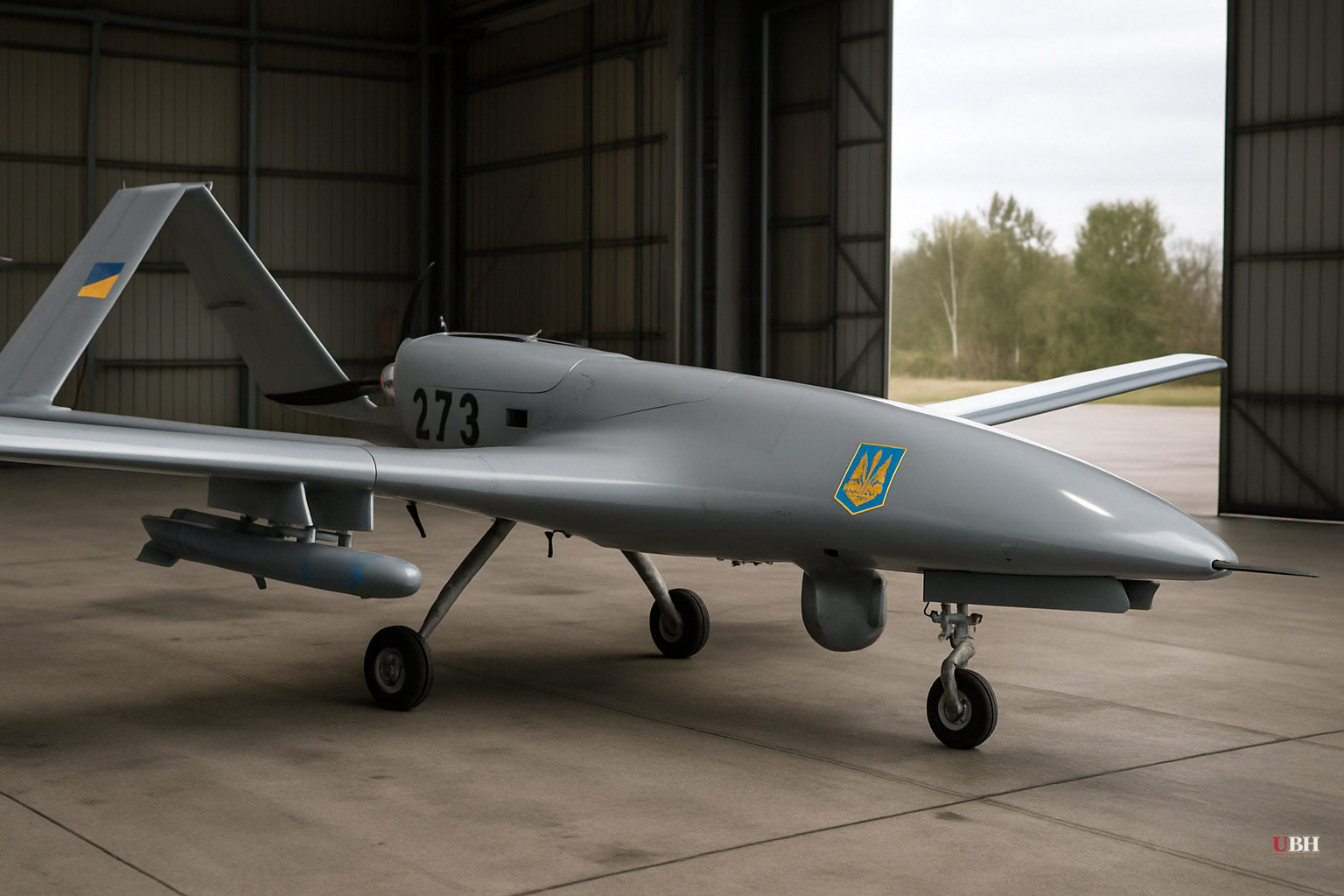
Since Russia's second large-scale strike on Kyiv in less than a week and Ukraine's deep strikes on Russian energy and naval infrastructure over the weekend, the war has entered a stretch where escalation and diplomacy are happening at the same time, not in sequence.
What Ukraine Hit
Ukrainian forces struck a major oil terminal in St. Petersburg and the Kronstadt Naval Base, the main base of Russia's Baltic Fleet, on Friday and Saturday, according to CNBC. Both facilities reportedly caught fire. Additional Ukrainian attacks on Russian energy infrastructure were reported in the same window.
These are not symbolic strikes. St. Petersburg is Russia's second-largest city. Kronstadt guards the naval approaches to it. Ukraine's sustained campaign against Russian oil facilities is explicitly designed to cut Moscow's energy revenues. Vladimir Putin acknowledged for the first time recently that Ukrainian drone strikes have impacted Russian fuel production, according to CNBC.
The Trump-Putin Call
Over the weekend, Trump spoke with Putin for 90 minutes. The Kremlin's account, relayed through aide Yury Ushakov to Russian state outlet RIA Novosti, called the conversation "businesslike and very constructive." Ushakov said Trump stressed ending the Ukrainian conflict "as soon as possible" and described "enormous prospects for mutually beneficial cooperation" between the two countries.
A White House spokesperson had not responded to CNBC's request for comment as of Monday. That asymmetry matters: the public narrative about what was said is currently being shaped entirely by the Kremlin's readout.
Zelenskyy posted Saturday that the prospect of ending the war is real and that "America's resolve is decisive." He said he and Trump agreed to continue talks at the NATO summit in Ankara.
NATO's Defense Spending Test
The Hague summit last year produced a commitment from NATO allies to spend 5% of GDP on defense by 2035, including 3.5% on core military requirements and 1.5% on broader security needs. Ankara is where those pledges get stress-tested, according to CNBC.
Ulrike Franke, senior policy fellow at the European Council on Foreign Relations, told CNBC: "This is really the NATO summit where NATO goes from burden sharing to burden shifting."
The distinction is not rhetorical. Burden sharing means everyone pays more. Burden shifting means Europe takes operational ownership of its own defense as the U.S. role contracts. Those are very different structural problems.
Max Bergmann, director of the Europe, Russia and Eurasia Program at the Center for Strategic and International Studies, told reporters that NATO has been organized around American power for 77 years and that there is currently little discussion of a "plan B" if Washington decides it no longer wants to be central to European defense. Franke separately flagged that allies need a concrete roadmap and timeline if the U.S. intends to withdraw forces or capabilities, which Trump has not provided.
Spain and France have already drawn criticism over their defense budgets. The U.K. and France face serious fiscal constraints despite stated intent to do more. Poland, the Baltic states, and Nordic countries have moved significantly faster.
The EU Budget Parallel
Running alongside the NATO spending debate is a separate but related fight in Brussels. Negotiations over the European Commission's next seven-year budget framework are entering their final phase, with the Commission having floated a package worth approximately €2 trillion, covering defense rearmament alongside climate and other spending priorities, according to ZeroHedge's reporting on a piece by Thomas Kolbe.
The concern from fiscal critics is that European governments are simultaneously trying to ramp up defense spending, maintain expansive social programs, and fund a new budget framework, all while public debt-to-GDP ratios across the continent are under pressure. Global public liabilities now exceed 95% of global GDP, according to that same analysis. Germany is again expected to carry a disproportionate share of the EU budget burden.
The strongest version of this concern: NATO's spending targets and the EU's new budget framework are being built on fiscal foundations that bond markets may eventually refuse to finance, especially as the four-decade decline in sovereign bond yields has reversed. That is a genuine long-run risk, and dismissing it as austerity politics misses the arithmetic.
The counter-position is also real: European rearmament delayed is European vulnerability extended, and the cost of being militarily dependent on a U.S. administration that has been explicitly unpredictable toward allies is its own kind of fiscal and strategic risk.
The Open Question at Ankara
The summit has 32 heads of state in the room and two simultaneous problems that don't resolve each other. A ceasefire negotiation, if it advances, does not automatically produce a European defense architecture capable of deterring Russia without American leadership. And a stronger NATO posture does not by itself pressure Putin toward a deal.
What Trump tells Zelenskyy on Wednesday, and what follows from the Putin call in terms of a concrete ceasefire framework, will determine whether Ankara produces a strategic shift or another round of pledges. No specific proposal from either the U.S. or Russia has been made public as of July 6, 2026.
Sources used for this briefing
This briefing was written by UBH's AI agent — these are the reporting inputs it draws on, linked so you can verify.


