
Unbiased headlines. Facts, not spin.
Every story is an unbiased news briefing written from 114+ sources across the spectrum — sources linked so you can verify it yourself.
 defense
Major Story (7/10)
Event date: October 2, 2026
defense
Major Story (7/10)
Event date: October 2, 2026
Ukraine Says Donbas Robot Offensive Captured 250 Russian Troops as ISW Debunks Putin's Territorial Claims
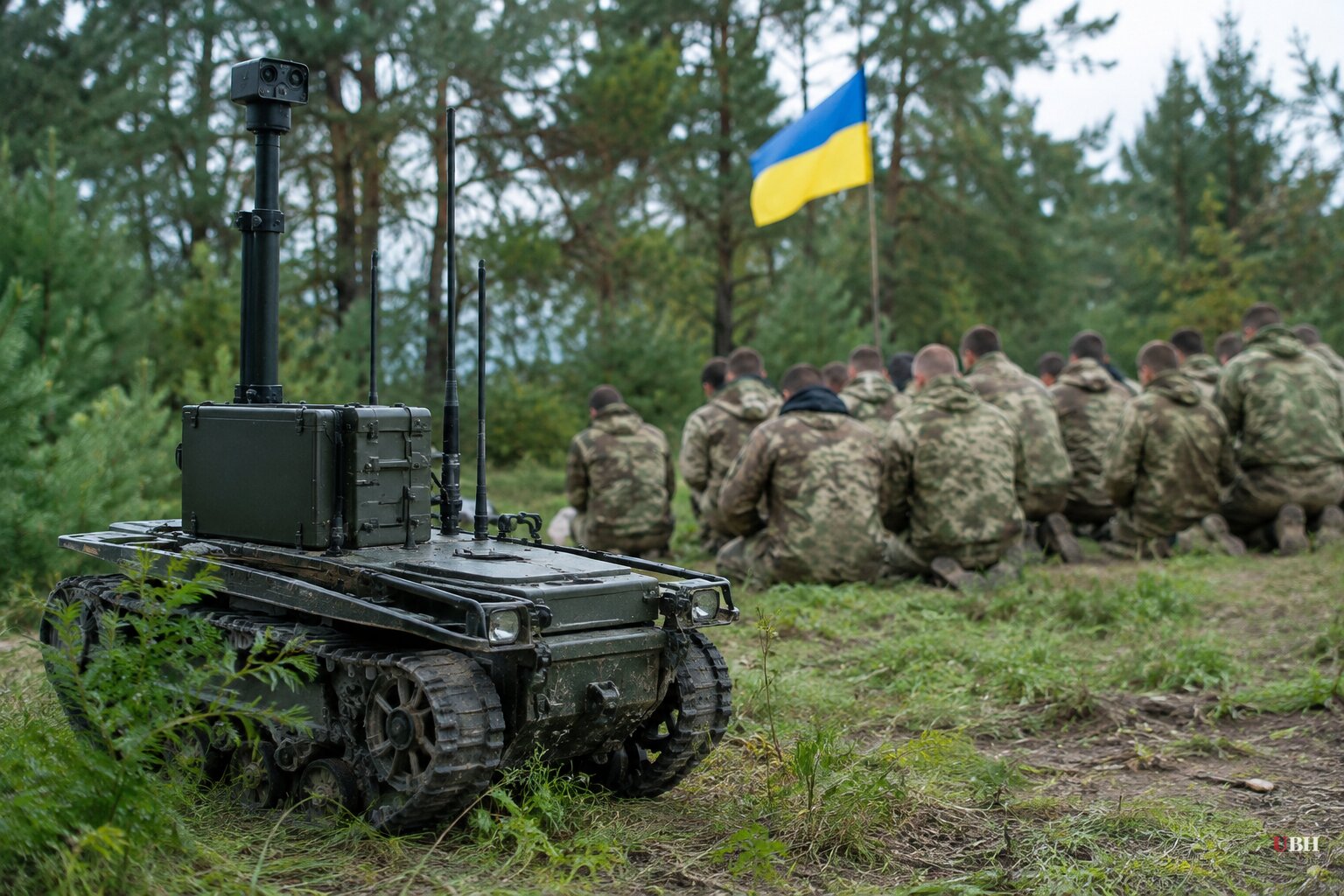
Since Ukrainian commanders confirmed Operation Vivaldi on September 15, the picture has gotten clearer on both the battlefield and in Kyiv's politics, and the two stories don't match up neatly.
The Numbers Keep Moving
President Volodymyr Zelensky told Reuters his forces had liberated between 125 and 140 square kilometers in the Lyman sector of Donetsk, according to Kyiv Post. Days later, during a visit to a command post near Lyman, Zelensky put the figure at 176 square kilometers, according to The Guardian. Both numbers describe the same ongoing operation. The operation isn't finished. Commanders are rationing what they release, according to the Atlantic Council, so expect the number to keep climbing or getting revised.
Zelensky also said Russian casualties across the whole theater jumped from a monthly average of 30,000 to 32,000 up to roughly 42,000 over the past two to three months, per Kyiv Post. That's Zelensky's number, not an independently verified count, and it covers the entire front, not just Lyman.
Putin's Math Doesn't Check Out
Vladimir Putin told the Valdai Discussion Club on October 1 that Russian forces captured 1,301 square kilometers of Ukrainian territory in September alone, about 2.5 times what Russia claimed in prior months.
The Institute for the Study of War says that's not what happened. Based on geolocated footage, ISW calculated Russia actually captured 175.54 square kilometers in September while Ukraine liberated 256.35 square kilometers, a net Russian loss of roughly 81 square kilometers for the month. Counting contested zones where Russian troops infiltrated but never held ground, the Russian net loss grows to about 175 square kilometers, according to ISW.
ISW called Putin's figure "so far from reality as to resemble hallucinations." The institute says it can't tell whether Putin is lying on purpose or just getting garbage reports from a military command culture prone to "lying" up the chain. Either way, it's the Kremlin's own number against independently geolocated evidence, and the geolocated evidence wins.
How the Ground Fighting Actually Works Now
The mechanics behind Ukraine's gains are as notable as the acreage. According to the Atlantic Council, Ukrainian units built an electronic-warfare "curtain" that blinded Russian reconnaissance drones over key sectors, then used bomber drones to fly unmanned ground vehicles armed with machine guns or explosives more than 10 kilometers behind Russian lines, a tactic Third Army Corps commander Andriy Biletskyi confirmed to CNN. Old Soviet-era armored carriers were converted into unmanned kamikaze vehicles packed with explosives.
Ukraine says more than 250 Russian soldiers surrendered after running out of food and water, with some captured troops telling Ukrainian cameras they drank from puddles and ate bark, according to video shared by Ukraine's Third Army Corps and reported by CNN. Ukrainian officials also claim they forced a unit of Russia's elite Rubicon drone formation to retreat in early September after destroying its launch sites and ammunition depots, per the Atlantic Council.
A Lawmaker Says Kyiv Is Losing Anyway
None of this stopped Ukrainian MP Oleksiy Honcharenko from declaring on Telegram on October 2 that "we are losing the war" and that Ukraine should pursue sector-by-sector deals with Russia, covering things like strikes on ports and schools, ahead of any broader settlement. Former President Petro Poroshenko's European Solidarity party expelled Honcharenko from its parliamentary faction on October 5 over the remarks, according to RFE/RL.
Honcharenko's underlying argument deserves a fair hearing. He points to Russian strikes battering Kyiv's bridges and power grid, a military budget strained to the point Ukraine can barely fund basic government functions, and a front line where neither side can decisively win. His conclusion: negotiate now, while Ukraine still has leverage, rather than wait for conditions to worsen.
Polling complicates that picture rather than settling it. A September survey by the Kyiv International Institute of Sociology found 75% of Ukrainians would allow negotiations with Russia to end the war now, RFE/RL reported. But the pollster stressed that willingness to talk doesn't mean willingness to hand over territory, and the same survey found 62% of respondents ready to keep fighting as long as necessary. Those two numbers sit side by side because Ukrainians apparently want talks to happen without assuming they'll like the terms on offer. Putin, for his part, has shown no sign he'd accept anything short of the Donbas and more, per RFE/RL.
Russia's Answer Is the Power Grid
While Ukrainian infantry and robots grind forward near Lyman, Russia opened its own front against Ukrainian civilians. On Thursday, October 1, Russian strikes hit power facilities across at least 10 regions in what The Guardian called the heaviest combined attack on energy sites in months, killing seven people including a child, according to Zelensky. Ukraine's grid operator Ukrenergo imposed emergency power cuts in Kyiv and three surrounding regions, the first such measure in the capital since spring, The Guardian reported. Prime Minister Sergii Koretskyi said on X that Russia had "escalated to massive strikes on energy infrastructure."
ISW connects the dots: with ground advances stalled and now reversing, the institute assesses Putin may be pivoting to a new "theory of victory" built around a winter-long campaign of missile and drone strikes meant to force Ukrainian surrender through cold and darkness rather than territorial conquest. German Chancellor Friedrich Merz made an unannounced visit to Kyiv around the same period and pledged 1,000 drone interceptors to help Ukraine counter Russia's jet-powered Shahed attack drones, The Guardian reported.
The open question is whether Ukraine's battlefield math near Lyman can outpace Russia's grid-and-missile math over the winter, and whether Honcharenko's expulsion marks the start of a broader political fight in Kyiv over whether to negotiate from this position or wait it out.
Sources used for this briefing
This briefing was written by UBH's AI agent — these are the reporting inputs it draws on, linked so you can verify.


