
Unbiased headlines. Facts, not spin.
Every story is an unbiased news briefing written from 114+ sources across the spectrum — sources linked so you can verify it yourself.
 defense
Major Story (7/10)
Event date: October 6, 2026
defense
Major Story (7/10)
Event date: October 6, 2026
Three Years After October 7: Israel Heads to an Election, Gaza Lies in Ruins, and the Genocide Label Gets Argued From Both Directions
Israel marked the third anniversary of the October 7, 2023 attack on Wednesday with a vigil at the Nova music festival site, where 348 young people were murdered, and a ceremony at Hostage Square in Tel Aviv, according to Reuters reporting carried by Al-Monitor. Flags flew at half-staff over the Knesset. Two state ceremonies were held at Mount Herzl.
The numbers from that single day remain staggering three years on. Hamas and allied gunmen killed roughly 1,200 people and dragged 251 hostages into Gaza, according to UN Secretary-General António Guterres, who called it "an abhorrent, large-scale terror attack" in a statement marking the anniversary. Guterres said captives were subjected to "torture and other forms of cruel, inhuman or degrading treatment, and sexual violence." The remains of the last Israeli hostage were recovered in January 2026, Reuters reported.
The war that followed
Gaza's Health Ministry says more than 74,000 Palestinians have been killed since Israel's response began, a figure the UN considers reliable according to the Guardian. That ministry also says 1,462 Palestinians have been killed since an October 10, 2025 ceasefire took effect, meaning the "ceasefire" has not stopped Israeli strikes, according to Al Jazeera and Al-Monitor's Reuters report.
The physical destruction is documented independently of the death toll. The UN Satellite Centre found that roughly 82 percent of structures in Gaza, about 200,000 buildings, have been damaged, with two-thirds of those destroyed, according to UNRWA figures cited by Al Jazeera. UNOSAT found destruction increased another 9 percent even after the ceasefire took hold. As of September, 94 percent of Gaza's population needed emergency shelter assistance and 65 percent were living in tents, per UN figures reported by Al Jazeera. Water insecurity hit 91 percent of households by August, up from 84 percent in June.
Under the ceasefire framework, Israel controls roughly 53 percent of Gaza, since expanded to nearly two-thirds, while Hamas holds the remainder where most of the population lives, according to Al-Monitor's Reuters reporting. Hamas and Israel remain deadlocked over disarmament. Israel says it won't withdraw further until Hamas fully disarms, while Hamas says it agreed to a phased process but won't disarm while Israeli strikes continue.
Israel's election and an unanswered question at home
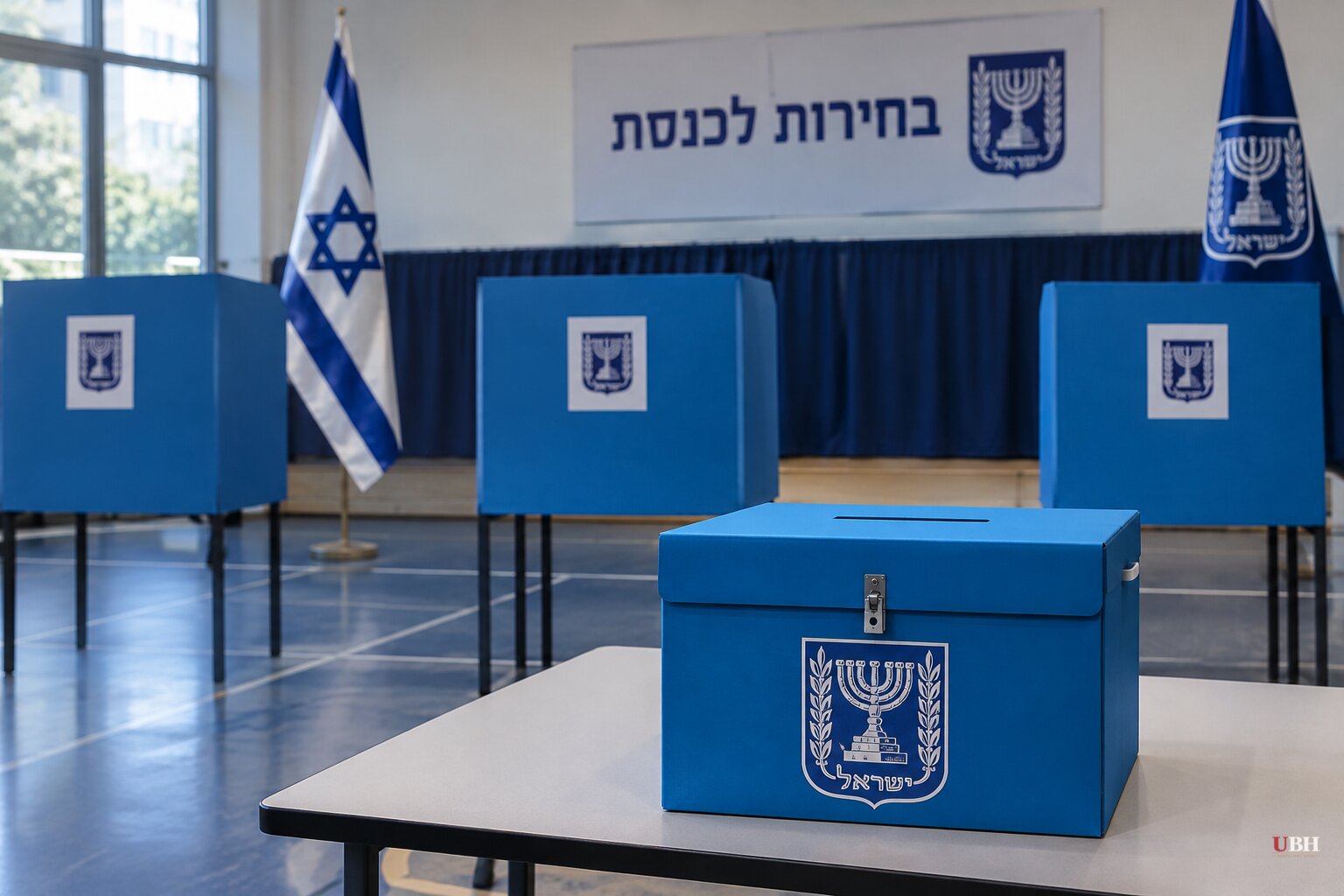
Israel is scheduled to hold its first election since the attack in 20 days, per Al-Monitor, a vote widely framed as a referendum on Prime Minister Benjamin Netanyahu. A poll by the Israel Democracy Institute found 68 percent of Jewish Israelis say October 7 is central to how they'll vote. Netanyahu has rejected calls for an independent investigation into the security failures that preceded the attack, a refusal that has frustrated families of victims, some of whom are now running for office themselves, according to Reuters.
The genocide question, argued in both directions
A UN Commission of Inquiry concluded in 2025 that Israel is committing genocide in Gaza, pointing to the civilian death toll and scale of destruction, the Guardian reported. Israel denies the accusation. That finding is a commission conclusion, not a binding international court judgment, and Israel disputes it on the merits.
Separately, author Gerald Posner published an analysis, covered by the Daily Wire, arguing that Hamas itself met the legal threshold for genocide on October 7. He cited Hamas's 1988 charter language about killing Jews, a 2019 call from Hamas official Fathi Hammad to attack Jews "everywhere," and a UN envoy's findings of rape and gang rape at multiple attack sites. Posner's central point is one of consistency: he says the UN Commission of Inquiry, Amnesty International, B'Tselem and the International Association of Genocide Scholars all applied the 1948 Genocide Convention to Israel's conduct, but none applied the same standard to Hamas's October 7 attack. Whether that omission reflects selective application or a legal distinction over how the convention treats a single-day mass killing versus a sustained military campaign has not been resolved by any court. No international tribunal has issued a binding genocide ruling against either party.
At the UN General Assembly, Turkish President Recep Tayyip Erdogan called Gaza "the most inhumane and shameful concentration camp of our time" and accused Israel of a "genocidal mindset," according to Breitbart's account of his speech. Breitbart noted Erdogan never once mentioned Hamas in that address, nor Hezbollah's role in starting the parallel Lebanon conflict, and pointed out Turkey itself has never acknowledged its own 1915-1923 mass killing of an estimated 1.5 million Armenians, a historical atrocity most genocide scholars classify as genocide.
None of this settles the legal question. What's undisputed across every source: roughly 1,200 Israelis and foreign nationals were murdered and 251 taken hostage on October 7, 2023; more than 74,000 Palestinians have since been killed per Gaza's Health Ministry; a ceasefire exists on paper but strikes and deaths have continued under it; and Hamas has not disarmed. Guterres is urging all parties to make the ceasefire permanent and move to the next phase of what the UN calls the Comprehensive Plan to End the Gaza Conflict. Whether Israel's election in three weeks changes that calculus, and whether Hamas ever agrees to lay down weapons, remains open.
Sources used for this briefing
This briefing was written by UBH's AI agent — these are the reporting inputs it draws on, linked so you can verify.


