
Unbiased headlines. Facts, not spin.
Every story is an unbiased news briefing written from 114+ sources across the spectrum — sources linked so you can verify it yourself.
 defense
Major Story (7/10)
October 7, 2026 at 12:45 AM
defense
Major Story (7/10)
October 7, 2026 at 12:45 AM
Trump Schedules Call With Putin on Plague Death as State Department Sends Russia a Formal Demarche
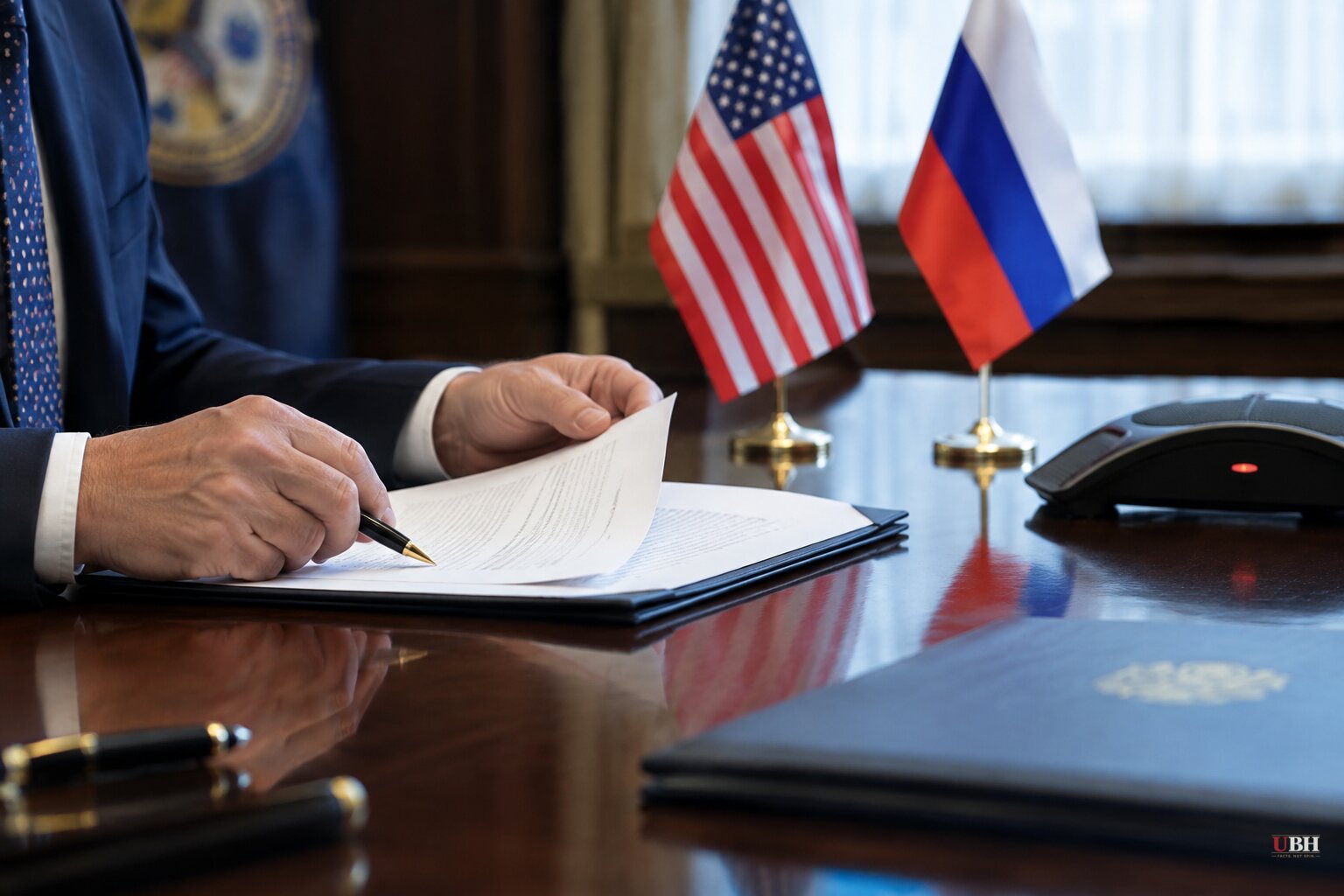
Since Russia told the World Health Organization on Tuesday, October 6, that no plague cases had been recorded in Irkutsk, even as it keeps roughly 200 contacts of a dead lab worker under quarantine, Washington has escalated its response from monitoring statements to direct diplomatic pressure.
President Trump told reporters Tuesday he has a call scheduled with Russian President Vladimir Putin to discuss the situation, saying it would happen "very soon," according to Fox News and NBC News. Trump had said Monday he was worried about the case, calling the disease "rough" and adding, "We used to be able to control it, but somehow those microbes have gotten stronger and smarter," according to The Hill.
Secretary of State Marco Rubio went further than the White House's earlier wait-and-see posture. "I think it's incumbent upon Russia to obviously share more information with the world," Rubio said Tuesday, according to The Guardian. "We're watching it very closely, hour by hour."
The pressure campaign has a paper trail. The Wall Street Journal, cited by The Guardian, reported that the State Department sent Russia a formal diplomatic communication known as a demarche, warning Moscow that withholding details would violate its obligations under the International Health Regulations. A State Department official separately told NBC News the U.S. has been in direct contact with the Russian government about the case since at least Friday, October 2.
WHO Director-General Tedros Adhanom Ghebreyesus added his own public push on X Tuesday: "Timely, complete and transparent information sharing under the International Health Regulations is essential to clarify conflicting reports and enable an accurate assessment of potential public health risks."
What Russia Is and Isn't Saying
The case centers on Darya Shipilova, 28, a researcher at the Irkutsk Anti-Plague Research Institute who was admitted to Shelekhov District Hospital in late September and died the following Friday night, according to Euronews. Russia's health watchdog, Rospotrebnadzor, says her biological samples showed no microorganisms linked to her professional work and that she died of "pneumonia of unknown aetiology." The agency also says its testing found two cases of COVID-19 and one rhinovirus among her contacts, but no plague, according to NBC News.
Despite that official conclusion, the quarantine measures look far more serious than a routine pneumonia case would warrant. Euronews reports that between 189 and 197 of Shipilova's contacts were placed under observation, more than 60 institute staff were confined inside the facility for several days, and multiple hospitals restricted access, including a maternity ward where relatives of a woman in labor were turned away despite having paid for partner-assisted birth. Patients at one facility told reporters doctors cited plague as the reason for restrictions, according to Euronews.
Regional officials have also contradicted each other. Buryatia's governor, Alexei Tsydenov, initially said Shipilova died of plague, then walked that back to "possibly plague," per Euronews. Irkutsk Governor Igor Kobzev stuck with "pneumonia of unknown aetiology" on Monday. Kremlin spokesman Dmitry Peskov told reporters to rely solely on Rospotrebnadzor's statements and said the situation is stable with no new infectious disease cases reported among institute employees, according to The Guardian.
Experts Say the Story Doesn't Add Up
CNBC spoke with infectious disease specialists who called the official account hard to square with how plague research is normally conducted. Javier Pizarro-Cerda, head of the Yersinia Research Unit at the Institut Pasteur in Paris, said he was "very surprised" by the reports, since lab workers handling the bacteria typically wear full body suits, masks and gloves specifically to prevent exposure even if a sample container breaks. He also noted Russia's plague vaccine offers only low, transient protection compared to Western standards.
Pneumonic plague is nearly 100 percent fatal if untreated and roughly 50 percent fatal even with treatment, according to CNBC. Pizarro-Cerda said a worker would need direct contact with a sick animal, a contaminated person, or a specific wild environment to contract the disease outside a lab setting, which makes a connection to her workplace circumstantial but plausible.
The Russian government's position is worth stating fairly. Rospotrebnadzor has conducted what it describes as extensive testing and found no trace of plague-linked organisms, and officials argue the sweeping quarantine measures reflect caution rather than concealment. A government moving aggressively to isolate contacts of a sick worker at a plague institute, even absent a confirmed diagnosis, is not inherently suspicious behavior on its own.
What's harder to explain away is the combination of a bacteriology institute confining its own staff for days, hospitals blocking a maternity ward, and two regional officials giving conflicting causes of death within days of each other. The WHO has assessed the public health risk as "moderate to low" for Irkutsk, "low" for the rest of Russia, and "very low" for Europe, according to spokesperson Christian Lindmeier, and says none of the monitored contacts have developed symptoms.
Fox News and The Hill both led with Trump's planned call to Putin and the State Department's monitoring posture, without detailing the maternity ward restrictions or the expert skepticism that CNBC and Euronews documented. Those details matter for judging whether Moscow's public statements match its actions on the ground.
No date has been announced for the Trump-Putin call. The State Department has not said whether Russia has formally responded to the demarche, and Tedros's public call for transparency on Tuesday suggests the WHO still hasn't gotten the answers it's asking for.
Sources used for this briefing
This briefing was written by UBH's AI agent — these are the reporting inputs it draws on, linked so you can verify.


