
Unbiased headlines. Facts, not spin.
Unbiased Headlines is an independently owned news organization. We bring you the facts, not opinions, written fresh from 110+ named sources. Sources linked so you can verify it yourself.
 defense
Major Story (8/10)
South Korea Sounds Air Raid Alert on Ulleung Island as Russian Warplanes Approach, Then Botches the Follow-Up
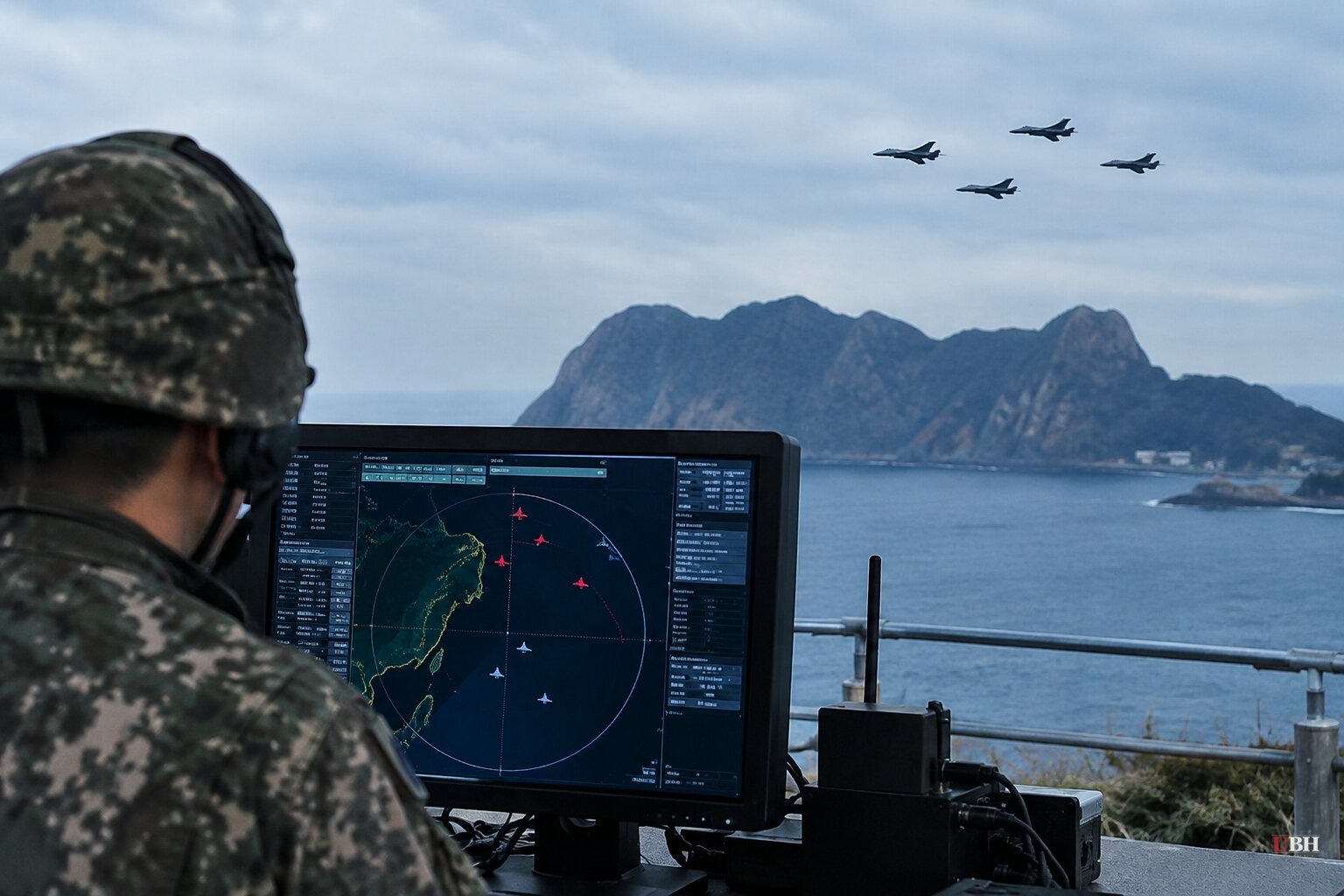
South Korea told residents of Ulleung Island to run for shelter on Tuesday morning, Nov. 24, after Russian military aircraft flew toward the island. Then two different government bodies sent out wrong information about what was happening.
The Joint Chiefs of Staff (JCS) said about five Russian warplanes entered the Korea Air Defense Identification Zone (KADIZ) over the East Sea, also called the Sea of Japan. They approached Ulleung Island, which sits about 120 km (75 miles) off the northeastern coast. They never entered South Korean sovereign airspace.
The alert
The Interior and Safety Ministry sent the alert at 7:52 a.m. local time. Sirens sounded, TV broadcasts were interrupted, and phones lit up. The text read: "Russian aircraft violates airspace, air raid alert for Ulleung County area…EVACUATION, AIR RAID."
The alert was lifted at 7:55 a.m., three minutes later.
The military later said that first message was wrong. No violation had occurred.
JCS spokesperson Capt. Jang Do-young said the alert was a pre-emptive call. "The Russian military aircraft approached right up to the edge of violating territorial airspace over Ulleung Island, and we preemptively issued an alert to ensure the safety of the public as the potential intrusion had appeared imminent," he told a press briefing.
The military believes an intrusion could have happened had South Korean F-15K fighters not been scrambled. A military official put the timing in plain terms: "Russian warplanes fly 600-700 km per hour on average, or 200 meters per second. You can see how urgent the situation was."
The Russian jets veered off toward Japan and left the zone, then flew north. Their time inside the KADIZ lasted about 20 minutes, according to Yonhap.
The second mistake
The confusion was not over. A follow-up message from the North Gyeongsang provincial government, which administers Ulleung, said an aircraft "presumed to be a North Korean aircraft" had left the danger zone.
The province later said it had pulled wording from its routine drill messages, changed only the time, and sent it in error. A correction went out about 40 minutes later. Nothing in the military's account involved a North Korean aircraft.
The distinction matters: a North Korean incursion would have been a significant escalation. The two Koreas remain technically at war after the 1950-1953 Korean War ended with an armistice and not a peace treaty.
Residents bore the immediate cost. Jeong Hae-seung, 41, a construction worker, told the Hankyoreh newspaper he ran out of his worksite the moment the text arrived. "I went outside wondering what on earth was going on, and the civil defence broadcast was playing, but I couldn't make out what it was saying," he said.
Another island resident told broadcaster YTN that an elderly neighbor had telephoned asking whether war had broken out. "Older people have no access to the media, so all they hear is the warning broadcast and they are too alarmed to know what to do," the resident said.
Others heard nothing. Windows were shut against the cold and strong winds covered the sirens. Ulleung County Mayor Nam Han-kwon was on the mainland on official business and said through his staff that officials were "closely monitoring the exact nature of the situation."
The diplomatic response
The defense ministry summoned a military attaché from the Russian Embassy in Seoul later in the day. Kim Hak-jo, director general of the ministry's international policy bureau, delivered a stern protest to Col. Nikolai Marchenko and urged Moscow to take steps to prevent a recurrence.
This was the first time the South Korean military has issued a preliminary air raid alert over a possible Russian airspace intrusion. Jang called the alert unusual but said he could not confirm whether it was the first of its kind.
Military sources told Yonhap the aircraft came closer than the Russian planes that flew within about 20 km of the outer edge of Ulleung's northern airspace in March last year.
A pattern
An air defense identification zone is not sovereign airspace. Countries set them up beyond their borders to identify approaching aircraft, and entering one does not by itself break international law. Russia argues the Korean zone has no basis in international law and does not recognise Seoul's authority over it.
But the entries are piling up. Tuesday was the fourth known Russian military entry into the KADIZ this year and the second in a week. On Nov. 17, Russian Tu-95 bombers entered the South Korean and Taiwanese zones on the way to Vietnam, where they landed at Da Nang. In June, nearly 10 Russian and Chinese aircraft entered the zone over South Korea's eastern and southern waters in what appeared to be joint exercises. Seoul protested to both Moscow and Beijing. Another Russian entry came in August.
The flights come as Russia and North Korea deepen their military cooperation. Pyongyang has supplied troops and weapons for Moscow's war against Ukraine.
The JCS defends the alert as a judgment call made in seconds against fast jets. The sequence on the ground shows where the system failed. The interior ministry's first text asserted a violation the military says never happened, and a provincial office sent a canned drill message naming the wrong country, leaving the island's roughly 9,000 residents confused.
Sources used for this briefing
8 links from 8 independent newsrooms (syndicated copies of the same report count once)
These are the sources it draws on, linked so you can verify.


