
Unbiased headlines. Facts, not spin.
Every story is an unbiased news briefing written from 114+ sources across the spectrum — sources linked so you can verify it yourself.
 defense
Major Story (8/10)
October 6, 2026 at 07:41 PM
defense
Major Story (8/10)
October 6, 2026 at 07:41 PM
Ex-CIA Officer Pleads Guilty to $194 Million Fraud Scheme, Admits He Also Exposed a Secret Source
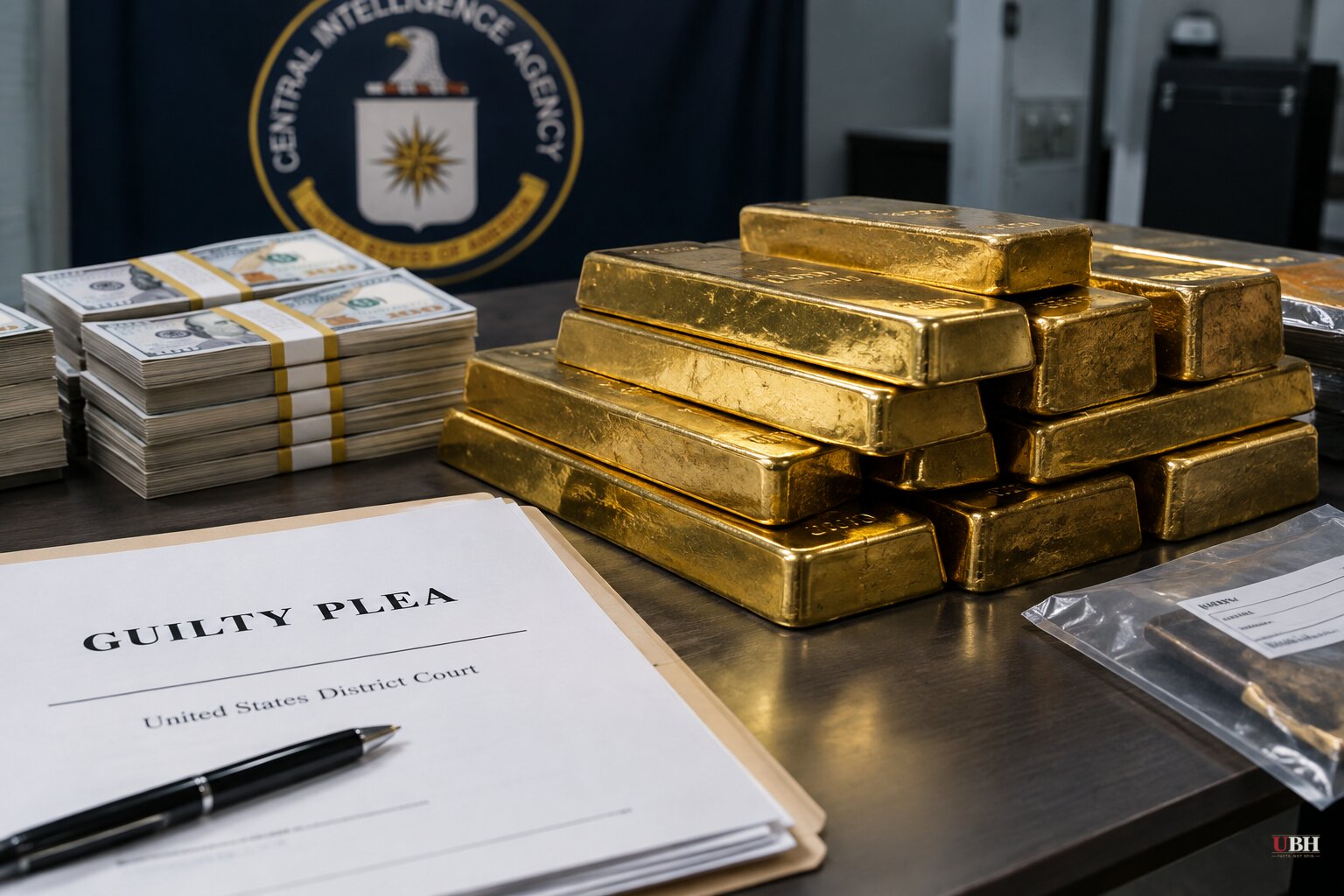
A former senior CIA officer admitted in federal court Tuesday that he invented fake classified government programs to steal nearly $194 million in taxpayer money, and separately admitted he disclosed details about a secret U.S. intelligence source to a foreign official.
David Rush pleaded guilty to one count of wire fraud during a hearing in Alexandria, Virginia, according to CBS News and NBC News, both of which covered the plea. U.S. District Judge Michael Nachmanoff approved the plea agreement. Rush faces up to 20 years in prison and is scheduled to be sentenced Jan. 28, according to NBC News.
How the Scheme Worked
Rush held a senior position at the CIA's Directorate of Science and Technology and served as a liaison to the Pentagon on sensitive military programs, according to NBC News, which reported he collaborated closely with Deputy Defense Secretary Steve Feinberg, citing people familiar with the work. That access, prosecutors say, is exactly what he exploited.
According to the criminal information detailed by CBS News, Rush invented a fake classified program to funnel about $145 million in government funds through a front company he controlled, then used that money to buy four luxury properties in Palm Beach and Hobe Sound, Florida, which he intended to flip for profit. Separately, he fabricated a different purported "sensitive government activity" to justify buying gold bars, telling contractors he was working on a Top-Secret project that required him to deliver "high-value commodities" to unnamed individuals.
Prosecutors say those two operations, real estate and gold, were part of "the same overarching scheme." A $45 million wire transfer from a contractor to Rush's holding company in January forms the basis of the wire fraud count he pleaded guilty to.
FBI agents searching Rush's home after his arrest on May 19 found 298 gold bars, roughly $40 million worth and about 600 pounds by weight, along with $2 million in cash and 35 luxury watches, according to CBS News and NBC News. As part of his plea deal, Rush agreed to forfeit at least $194 million in assets, including the gold, two BMWs, the watches and the four Florida homes. About $38.6 million remained in the holding company's account, prosecutors said.
The Part CBS Left Out
CBS News' account of Tuesday's hearing focuses almost entirely on the financial fraud. NBC News reported an additional admission: Rush told prosecutors that in late 2025 he disclosed "certain descriptive information of a U.S. government clandestine human source" to a foreign official, information that could endanger the source's life and the officers working with them, and damage the CIA's ability to recruit future sources who rely on the government's promise of secrecy.
This represents a national security breach separate from the financial crimes. A man who spent years inventing fake classified programs to buy mansions and gold also, by his own admission, leaked information that could get a human asset killed.
How He Got There
NBC News reported Rush had been a "Senior Executive Service level employee" who fooled the agency for years by falsifying his education and military service record, raising obvious questions about how thin the CIA's vetting process is at the senior level. Assistant U.S. Attorney Kevin Hakala told the court Rush used his manufactured credentials to build confidence in his work and acted alone, using fabricated classified authorities to direct contractors and subcontractors to carry out the transactions.
The intelligence community's inspector general is separately investigating how Rush operated undetected, according to NBC News, citing a U.S. official and a person familiar with the probe. Rush was placed on leave before his May arrest and has since been fired. His lawyers declined to comment, according to NBC News.
The case raises fundamental questions about the CIA's vetting process at the senior level. An agency entrusted with the nation's deepest secrets failed to catch a fabricated resume and fabricated classified programs for years, while nearly $200 million in public money disappeared into gold bars and beachfront property. The inspector general is now investigating how many more red flags were missed and whether anyone above Rush signed off on transactions this size without asking basic questions.
Sentencing is set for Jan. 28. Prosecutors have not said whether additional charges, related to the source disclosure or involving other individuals, are under consideration.
Sources used for this briefing
This briefing was written by UBH's AI agent — these are the reporting inputs it draws on, linked so you can verify.


