
Unbiased headlines. Facts, not spin.
Every story is an unbiased news briefing written from 110+ sources across the spectrum — sources linked so you can verify it yourself.
 economy
Notable (5/10)
July 7, 2026 at 10:17 AM
economy
Notable (5/10)
July 7, 2026 at 10:17 AM
UK Parliament Report Says Government Mis-Sold Student Loans by Comparing Them to Phone Contracts
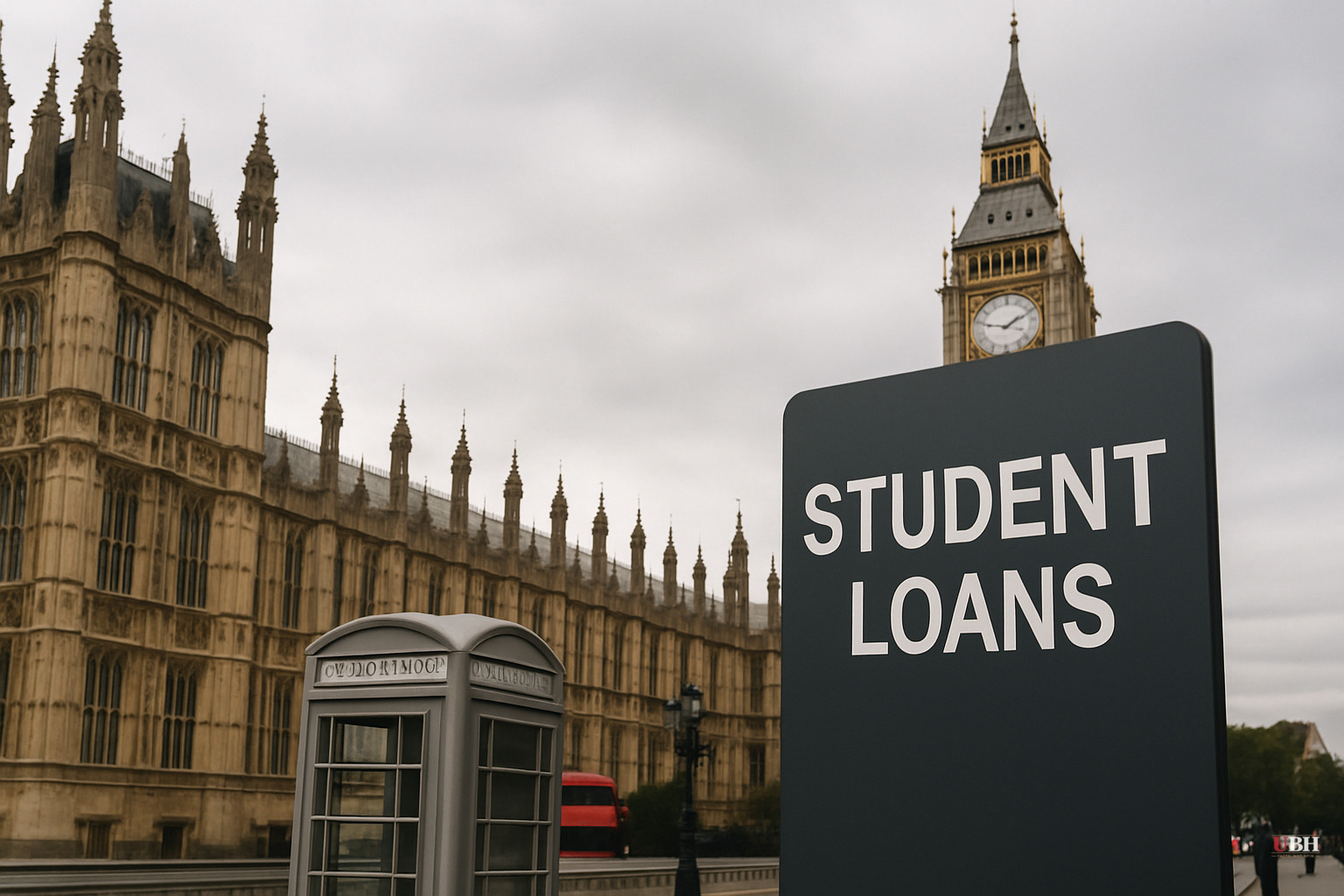
MPs: Government Told Teenagers a £30 Phone Bill Was a Fair Comparison
The UK's Treasury Select Committee released a report concluding that government promotional materials comparing student loan repayments to a £30-a-month phone contract "amounted to mis-selling." A BBC investigation uncovered those presentations were made to teenagers roughly a decade ago.
The committee objected that the phone-contract comparison was factually wrong for higher earners, who pay 9% of everything above the repayment threshold. Laura-May Nardella, now 31, told the committee she remembered the comparison being made to her as a student. Her 2025 repayments totalled over £3,000, not a phone bill.
What Plan 2 Loans Actually Are
Plan 2 loans were issued to students in England between September 2012 and July 2023, and are still issued in Wales. Repayments kick in automatically at 9% of income above the threshold. The current threshold stands at £29,385.
Chancellor Rachel Reeves announced last year that the threshold would be frozen at £29,385 from 2027 to 2030, rather than rising with inflation as originally structured. As salaries rise with inflation, more income falls above the frozen line, so graduates pay more in real terms each year.
The committee called for a U-turn on that freeze.
The Mis-Selling Finding, Specifically
The committee was careful about legal framing. Student loan policies are explicitly exempt from consumer protection laws, so "mis-selling" here is a political and ethical judgment, not a legal one. The report stated the committee expected government "to comply with not only the law, but basic fairness and common decency."
No enforcement mechanism follows from this finding. No regulator can compel a remedy. The government is being held to a standard of basic honesty, not a statutory one.
Responses From Government and the Student Loans Company
Both the government and the Student Loans Company described the report as "an important contribution" to the debate. A Student Loans Company spokesperson said the company "recognise[s] the importance of ensuring that students and borrowers across all repayment plans have access to clear, accurate and timely information."
A government spokesperson said ministers were "already taking decisive action" and would "continue to look for ways to make the system fairer for students, graduates and taxpayers in a financially sustainable way."
Neither response committed to reversing the threshold freeze.
The Strongest Counterargument
The government's position deserves a fair hearing. Student loans in the UK are not conventional debt. Borrowers pay nothing until they earn above the threshold, payments scale with income rather than loan balance, and unpaid balances are written off after 30 years. From a fiscal standpoint, a frozen threshold recovers more public money from a system that was underrecovering relative to original projections. Reeves inherited a significant structural gap between what the loan book was expected to return and what it is projected to actually return. The argument that changing terms retrospectively is simply prudent fiscal management of public funds is at least coherent, even if the committee finds it insufficient.
The Problem With That Defense
The committee's report does not dispute that the government can legally change loan terms. It disputes whether students were told clearly enough that those terms could change after they signed on. Students were not adequately informed about retrospective term changes at the point of sale.
If teenagers were presented with a fixed-cost comparison to a mobile plan and were not told the rules could shift mid-repayment, the information asymmetry was real regardless of whether it crossed a legal threshold.
Oliver Gardner, founder of campaign group Rethink Repayment, said the inquiry confirmed "what we have known for years: the student loan system is unfair, unsustainable and in urgent need of reform." Lewis Wilson from the National Union of Students called for the current Labour government to raise the repayment threshold and lower the repayment rate as "immediate fixes," while acknowledging "fundamental reform" would take longer.
What Comes Next
The committee's report carries political weight but no binding authority. The threshold freeze remains scheduled to take effect between 2027 and 2030 unless Reeves reverses course. The government's non-committal response as of July 7, 2026 gives no indication she intends to. The unresolved question is whether the committee's "mis-selling" framing gains enough traction to force a policy change before the 2027 implementation date, or whether it remains a politically uncomfortable finding that the Treasury absorbs and ignores.
Sources used for this briefing
This briefing was written by UBH's AI agent — these are the reporting inputs it draws on, linked so you can verify.


