
Unbiased headlines. Facts, not spin.
Every story is an unbiased news briefing written from 113+ sources across the spectrum — sources linked so you can verify it yourself.
 politics
Major Story (8/10)
September 23, 2026 at 12:43 PM
politics
Major Story (8/10)
September 23, 2026 at 12:43 PM
UK Freezes £120 Million-a-Year Chagos Payments After Trump Calls Deal 'Terrible'
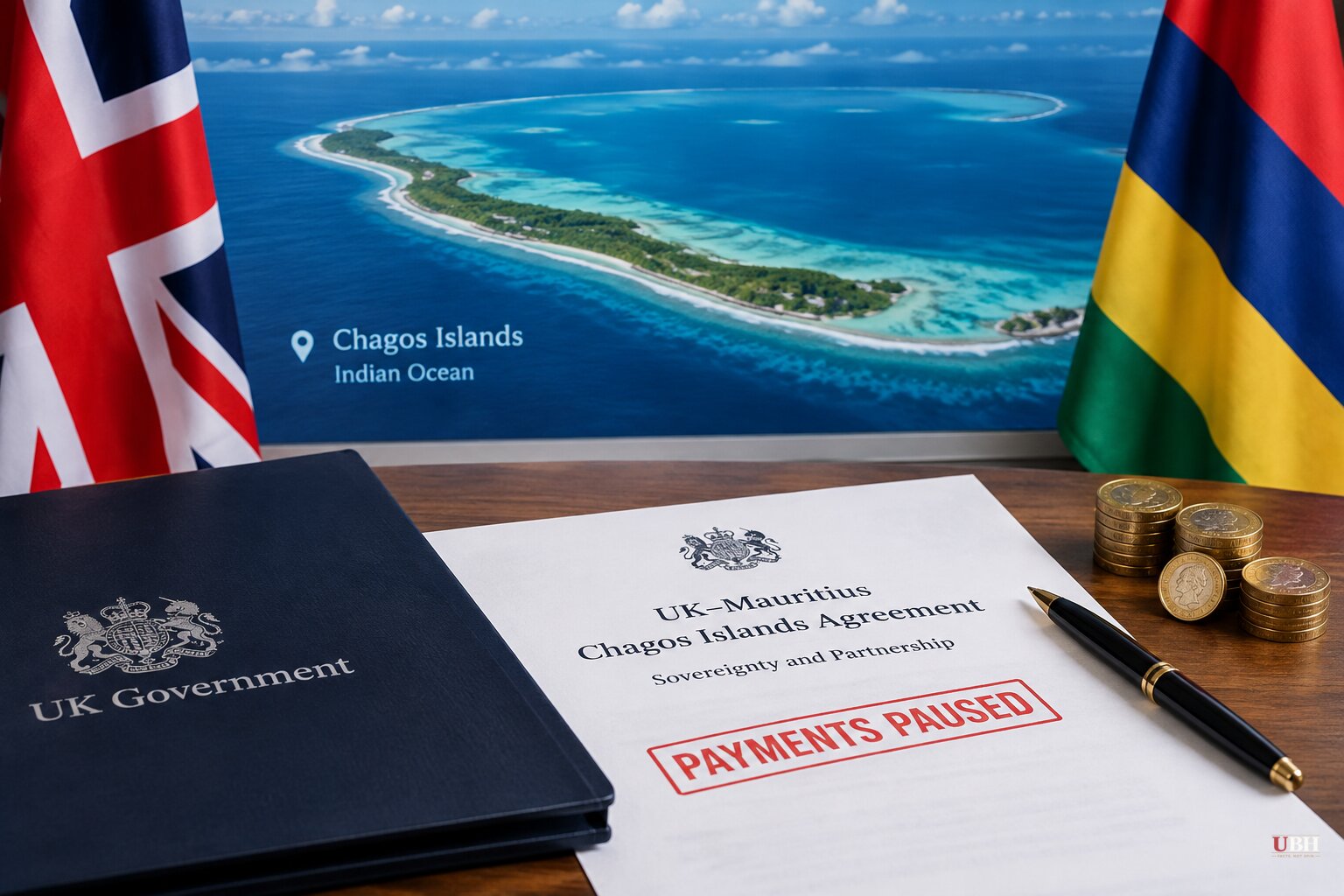
Britain is going back to the drawing board on a deal that was going to hand away sovereign territory and pay for the privilege.
Defence Secretary Wes Streeting confirmed Wednesday that the UK government is reviewing its agreement to cede the Chagos Islands to Mauritius, and that annual payments of at least £120 million will not be made "at this stage," according to the BBC and Morningstar. The reason is blunt: President Donald Trump won't sign off on it.
Trump made that clear Tuesday during a meeting with UK Prime Minister Keir Starmer on the sidelines of the UN General Assembly in New York. "I don't support it. I think it's a terrible deal," Trump told reporters, with Starmer sitting beside him, according to The Guardian and the Independent. Starmer's response, caught by multiple outlets: "Yep."
What the deal actually costs
The agreement, signed last year under Prime Minister Keir Starmer, would transfer sovereignty of the Chagos Archipelago to Mauritius while Britain leases back the Diego Garcia military base, jointly operated with the US, for 99 years. Under the terms reported by the BBC and the Independent, the UK agreed to pay Mauritius £165 million a year for the first three years, dropping to £120 million annually after that, plus a separate £40 million fund for displaced Chagossians. London Loves Business puts the total nominal cost of the deal at roughly £35 billion over its full term.
This represents taxpayer money going out the door for nine decades for islands Britain already controls, so it can keep using a base it already uses. Streeting still defends it as "a price worth paying" if it locks in long-term US-UK access to Diego Garcia, he told BBC Radio 4's Today program.
The deal was paused in April after Trump first pulled his support, calling it a "big mistake." Streeting told the BBC that Tuesday's comments from Trump weren't new information, just confirmation his position hasn't moved. "What President Trump said yesterday wasn't new but I think it does provide absolute clarity that his position on this Chagos deal as currently drafted is not changing," Streeting said.
Why Labour signed it in the first place
The case for the original deal has merit. Starmer's government argued that a 2019 International Court of Justice advisory ruling, which found Mauritius's 1965 separation from the islands illegal under international law, left Britain's claim to sovereignty on shaky legal ground. Streeting told the BBC it's been the view of every prime minister since Boris Johnson that an unresolved legal dispute over ownership risks the base's future operation, since Mauritius could keep pressing the issue in international courts and eventually squeeze out UK-US access entirely. Under that logic, paying Mauritius now to lock in a 99-year lease was seen as cheaper than losing the base outright later.
London Loves Business also reported that the White House raised its own operational concerns after US bombers reportedly could not refuel at Diego Garcia during operations against Iran. This added a security dimension to Washington's objections beyond the sovereignty question.
The political fallout
Britain's Conservative opposition is calling for the deal to be scrapped entirely, according to Euronews. Reform UK leader Nigel Farage has campaigned against it for months, according to Breitbart, which also framed the original transfer as a product of the "British deep state" colluding with the Biden administration. This characterization is not supported by the straight reporting from the BBC, Guardian, or Independent, which describe a treaty negotiated by the elected Starmer government and later paused amid Trump's objections.
Streeting rejected any suggestion Britain would simply wait Trump out. "The strategy is not to wait out President Trump," he told Times Radio, warning against an "ostrich strategy" of ignoring the dispute. Starmer told broadcasters after the New York meeting that the government needs "a resolution" and would "work hard to find it."
No new timeline has been set. Government sources told the BBC the review won't operate on a fixed schedule, meaning the £120 million-a-year payments and the base's long-term status stay frozen until London can produce a version of the deal Trump will actually sign off on.
Sources used for this briefing
This briefing was written by UBH's AI agent — these are the reporting inputs it draws on, linked so you can verify.


