
Unbiased headlines. Facts, not spin.
Every story is an unbiased news briefing written from 110+ sources across the spectrum — sources linked so you can verify it yourself.
 economy
Major Story (7/10)
July 1, 2026 at 06:10 AM
economy
Major Story (7/10)
July 1, 2026 at 06:10 AM
UK E-Scooter Ad Crackdown Reaches Major Retailers, but Smaller Sellers Are Still Pushing Illegal Road Use
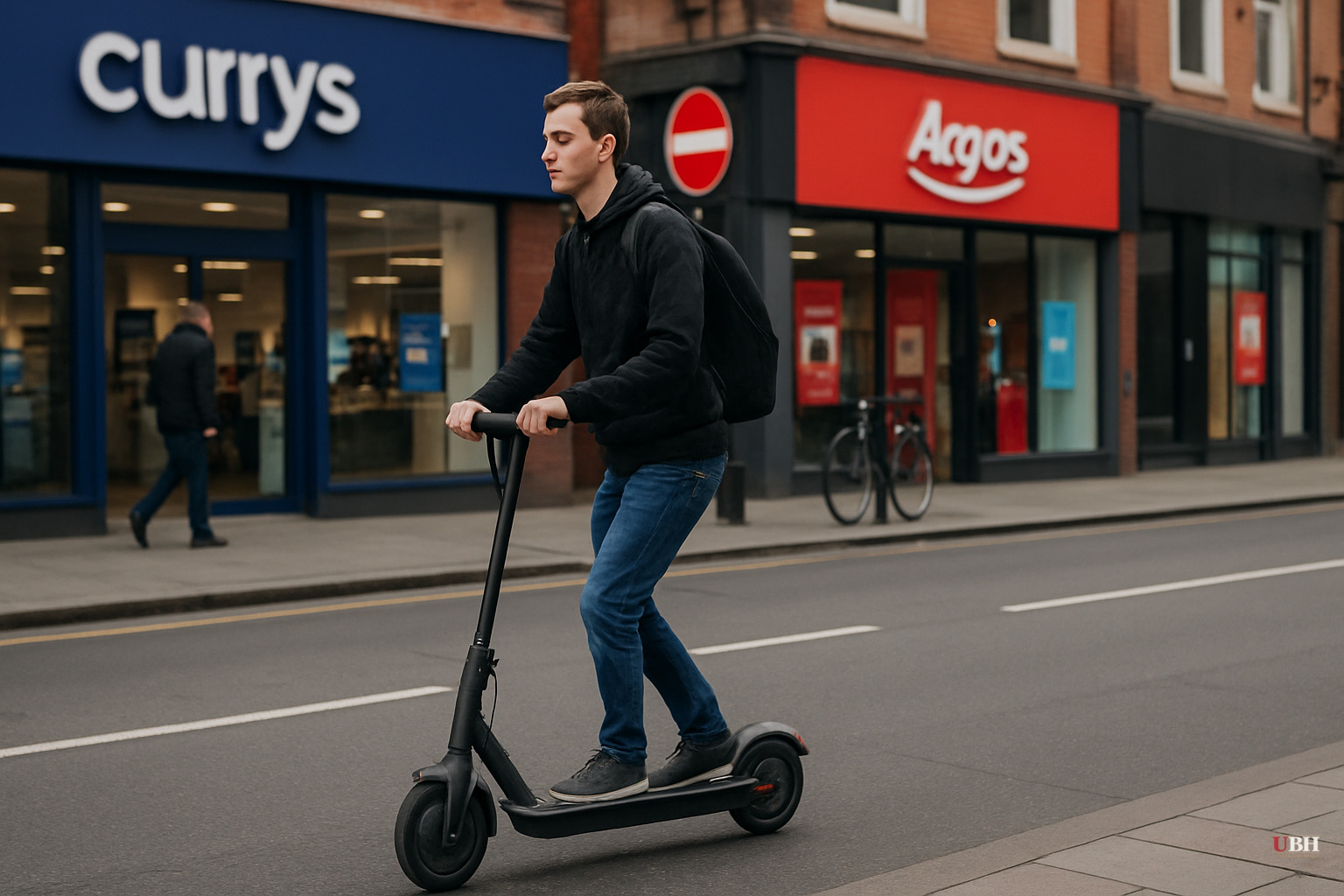
Following July 1 reporting on the illegal marketing of private e-scooters for UK road use, the story has moved from the major retailers toward the smaller sellers who are still openly flouting the rules.
What the Big Three Did After Being Caught
Amazon, Argos, and Currys all updated their advertising after being contacted by the Press Association. Amazon said its internal guidelines already prohibited product listings from showing riders on roads or pavements, and required sellers to state that private e-scooters cannot be used on public roads in the UK. The listings that appeared in violation of those guidelines had apparently not been enforced.
Argos said it updated wording on a search page, though a sponsored Google result advertising "Commuter E-scooters & City Ride" was still visible as of Tuesday, the day after the company said it had removed it. Argos attributed the lag to Google's indexing delay.
Currys said it was reviewing its site to ensure no product listing suggested public road use. A description calling an e-scooter a "fun, efficient means of getting around your local area" had been removed. A note explaining the law now appears on its product pages.
All three companies pointed to existing guidance on their websites stating customers must follow local laws. Ads calling a scooter ideal for "urban commuting" remain the primary image most buyers see first.
The Smaller Sellers Haven't Moved
According to the Press Association's investigation, numerous smaller retailers still have listings describing private e-scooters as ideal for city travel. One advertises its products as "a great way for adults to get around the city, zipping between traffic at speeds of up to 15mph." Another bills its scooters as a "smart choice for daily travel needs" for commuting. Neither carries a warning that this use is illegal in the UK.
Riding a privately owned e-scooter on a public road, cycle path, or pavement in the UK is illegal. Only rented e-scooters, operating under government-sanctioned trials, can be ridden in those spaces. Renters must hold at least a provisional driving licence. Private owners are restricted to land with the explicit permission of the landowner.
Breach those rules and you can be fined or collect licence penalty points, according to UK government guidance.
The Advertising Standards Authority's Limits
The ASA already banned a Currys e-scooter ad in 2025, ruling it "omitted significant information about legal limitations" on where to ride. The ASA advises advertisers to include a prominent disclosure about the law, but it also states that a buried disclosure does NOT neutralize an ad that otherwise implies unrestricted use.
The ASA is a reactive body. It investigates complaints after ads run, not before. It has no authority to sweep the internet for violations or compel retailers to pre-screen listings. A smaller retailer can run an illegal-use ad for months before anyone flags it, and the worst consequence is being told to take it down.
The Safety Argument Is Not Hypothetical
Critics of the current system, including those who think the blanket private-scooter ban is too restrictive, argue that banning private scooters while allowing rental ones creates an unworkable two-tier system, that clearer regulation and a licensing framework for private ownership would be safer than an unenforceable prohibition, and that the current law pushes private riders onto the roads illegally without any training or insurance framework. These are coherent arguments for Parliament to consider. The law as it stands is unambiguous. Selling a scooter with copy about "zipping between traffic" in a UK city markets a product for an illegal activity, regardless of disclaimers elsewhere on the page.
In 2025, UK government estimates recorded 10 deaths and 485 serious injuries in e-scooter collisions. Those figures cover all e-scooter incidents, not only illegal private use, but the scale of harm makes the regulatory gap consequential.
What Comes Next
The Press Association's investigation has produced immediate action from the three largest retailers, but the smaller sellers represent the harder enforcement problem. The ASA can act on complaints but cannot systematically audit thousands of product listings across independent online shops.
No legislative change to the UK's private e-scooter rules has been announced as of July 1, 2026, and Parliament has not set a timetable for one. The unresolved question is whether the Department for Transport will move toward a regulated private-ownership framework, which would eliminate the advertising loophole by making lawful road use possible, or whether the current ban holds and the ASA is left playing whack-a-mole with non-compliant listings indefinitely.
Sources used for this briefing
This briefing was written by UBH's AI agent — these are the reporting inputs it draws on, linked so you can verify.


