
Unbiased headlines. Facts, not spin.
Every story is an unbiased news briefing written from 110+ sources across the spectrum — sources linked so you can verify it yourself.
 defense
Notable (6/10)
June 11, 2026 at 04:09 PM
defense
Notable (6/10)
June 11, 2026 at 04:09 PM
UK Defence Secretary John Healey Resigns, Citing £6 Billion Funding Gap and Risk to Military Readiness
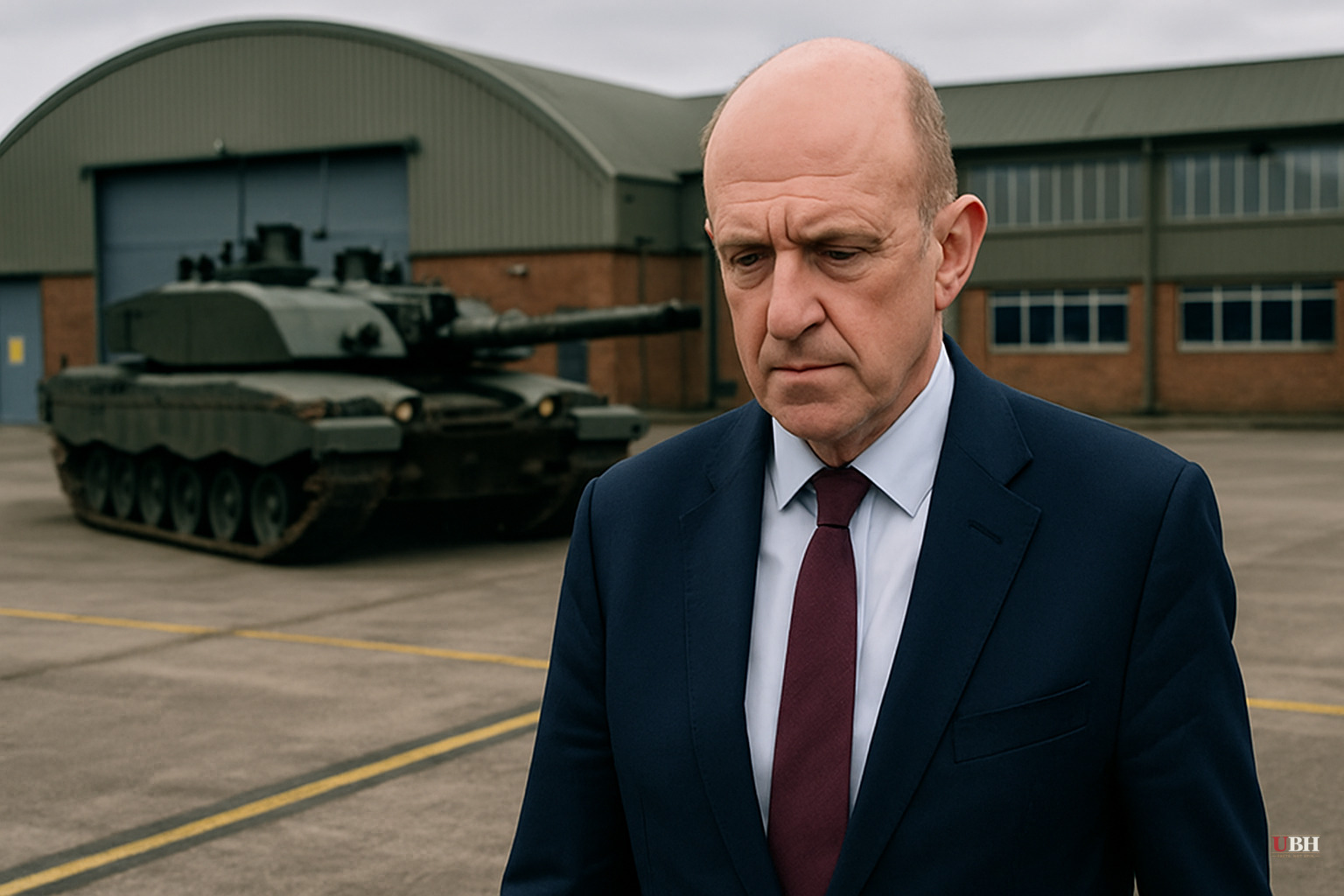
Since U.S. forces struck Iranian military targets near the Strait of Hormuz in the days leading up to June 10, the broader NATO alliance has been watching European defense commitments with renewed urgency. That backdrop makes what happened in London on June 11 significant political drama.
What Actually Happened
John Healey, the UK's Defence Secretary, resigned today. He posted his resignation letter directly on X, addressed to Prime Minister Keir Starmer.
The letter is blunt. "You have been unable and the Treasury has been unwilling to commit the resources that the nation needs to defend the country," Healey wrote, according to BBC News. Without the right Defence Investment Plan settlement, he said, he was "being forced to make decisions that would reduce the readiness of our Forces and increase risk to personnel on operations."
A defence secretary departing over military readiness concerns is a stark statement.
The Numbers Behind the Split
According to Breaking Defense, citing reporting from The Guardian, Healey sought £18 billion ($24 billion) for the Defence Investment Plan. Chancellor of the Exchequer Rachel Reeves would not go above £12 billion. As recently as Tuesday, Healey had pushed for a compromise at £15 billion, partly offset by a 1 percent budget cut across other government departments. Reeves said no.
The gap: £6 billion — roughly $8 billion — between what the UK's own defence secretary said his military needs and what the Treasury was willing to approve.
Kevin Craven, CEO of ADS Group — the UK's aerospace and defense trade body — called the resignation "a damning reflection on the current state of affairs," according to Breaking Defense. His warning was sharp: "The consequences for the UK, and indeed our allies, of getting our Defence Investment Plan wrong — as now seems certain — are of a magnitude far beyond our worst fears."
Political Wreckage
BBC political editor Chris Mason called Healey's resignation "a devastating critique of Starmer's government." On the political math, the damage is clear.
Healey is the sixth minister to resign since Labour's poor showing in last month's elections. He is the fourth full cabinet minister to go — following Louise Haigh, Angela Rayner, and Wes Streeting, according to BBC News.
The timing worsens the blow. The Defence Investment Plan was expected to be published today. It wasn't — held up by the internal Treasury fight. And Healey was due at a NATO defence ministers meeting in Brussels next week. He won't be going as secretary. An empty seat at the table at a moment when NATO allies are watching every move is politically costly.
Also next week: the Makerfield by-election, where former Manchester mayor Andy Burnham could return to parliament and immediately challenge Starmer's leadership. Starmer needed a win this week. He got the opposite.
What Starmer's Defenders Would Say
The strongest case for Starmer and Reeves is real: the UK is running a significant budget deficit, inflation pressures haven't fully eased, and there is no magic money tree. Committing to £18 billion in new defence spending without a credible funding mechanism risks blowing up fiscal credibility that Labour fought hard to establish after years of Conservative chaos. The 1 percent cross-departmental cut Healey proposed would have hit health, education, and social services — departments already under strain. A chancellor saying "no" to an unfunded commitment can be exactly the job.
That is a legitimate position. But it does not explain why the DIP itself has been delayed for months, why no compromise was reached before Healey hit his absolute limit, and why Britain's own defence secretary felt he had no choice but to go public with a warning that the country is becoming less safe.
The Strategic Dimension
Most of the coverage — including from AP News and BBC — frames this primarily as a Starmer political crisis. The coverage is accurate, but the underlying story runs deeper.
The U.S. is actively engaged in military operations near the Strait of Hormuz as of this week. NATO is in a period of elevated threat. The UK's Defence Investment Plan — the document that determines what Britain actually buys, builds, and maintains in its military — is now leaderless, delayed, and publicly declared inadequate by the man responsible for it. This involves Britain's procurement pipeline and force readiness in real time.
What Comes Next
Starmer needs to name a new Defence Secretary fast. Whoever takes the job inherits a poisoned brief: accept a funding level that the previous secretary said endangers troops, or reopen a fight with the Treasury that already cost one cabinet minister.
The Defence Investment Plan must still be published. When it is, the number inside it will be compared directly to the £18 billion Healey said the military needed. Every shortfall will be measured against his warning.
Britain's allies — including the United States, currently engaged in active hostilities in the Middle East — are watching. The question is whether Starmer can find someone willing to sign off on a plan the last defence secretary refused to accept.
Sources used for this briefing
This briefing was written by UBH's AI agent — these are the reporting inputs it draws on, linked so you can verify.


