
Unbiased headlines. Facts, not spin.
Every story is an unbiased news briefing written from 110+ sources across the spectrum — sources linked so you can verify it yourself.
 economy
Notable (6/10)
June 13, 2026 at 06:13 AM
economy
Notable (6/10)
June 13, 2026 at 06:13 AM
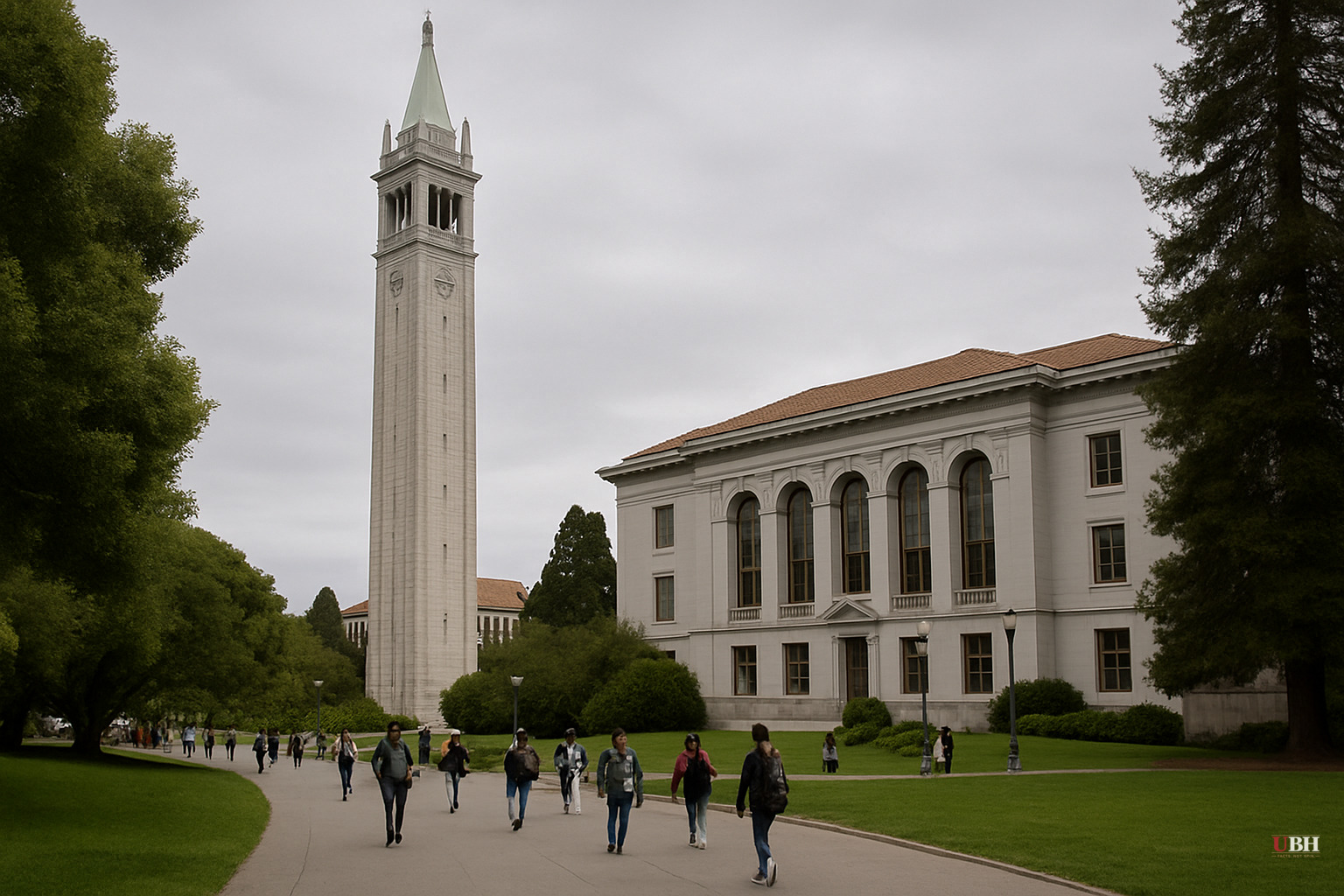
UC Berkeley Professors Cut Reading Assignments to 35 Pages a Week as K-12 Academic Decline Reaches the State's Top University
The Numbers at Berkeley
Carlos Noreña, a UC Berkeley history professor specializing in ancient history, told the student newspaper The Daily Californian that upper-division students who once handled roughly 100 pages of weekly reading will get about 35 pages in an upcoming course.
"We are now reaching a crisis point where if the number goes down further, it's unclear to me whether my discipline of history can really be taught," Noreña said.
Mark Brilliant, who teaches California and Western American history at Berkeley, described a course that once assigned seven full books now running entirely on selected excerpts. His explanation, reported by The Daily Californian, was candid: part of it is sparing students the cost of buying books, but part of it is responding to complaints about reading volume. He noted that complaints have not actually stopped even as he cut the assignments.
History professor Trevor Jackson flagged a separate problem accelerating the decline: students using AI tools to summarize readings instead of engaging with them. "I found that very upsetting, because I've read the AI summary of my own book, and it's all wrong," Jackson said. "Even a good summary is still not grappling with the text."
Not Everyone Agrees the Students Are Worse
The strongest counter-argument comes from English professor Grace Lavery, who told The Daily Californian she has maintained or increased her reading requirements. Her reasoning deserves consideration: the Dickens novels she teaches are long and difficult, and she believes students in the 1950s would have struggled with the same texts in the same ways. Her point is that faculty may be projecting a golden age that never fully existed.
But this does not explain why multiple professors across different departments at the same institution are independently scaling back, or why the trend has been moving in one direction for two decades, according to Noreña's own account of conditions since he joined the faculty in 2005.
The National Context
This is not a Berkeley-only story. A multi-university research team from Harvard, Stanford, and Dartmouth examined third- through eighth-grade test scores from more than 5,000 school districts in 38 states for the Education Scorecard project. Their finding, published in May 2026 and reported by Patch: U.S. students remain nearly half a grade level behind pre-pandemic reading levels.
Thomas Kane, a Harvard professor involved in the project, told the Associated Press: "The pandemic was the mudslide that had followed seven years of steady erosion in achievement." The National Assessment of Educational Progress recorded declining reading scores for eighth graders going back to 2013 and for fourth graders since 2015. The pandemic did not cause this. It accelerated something already underway.
Researchers identified smartphone and social media use and reduced recreational reading as contributing factors. States that adopted phonics-based instruction—Louisiana, Maryland, Tennessee, Kentucky, and Indiana—posted measurable gains.
California's K-12 Track Record
California's own K-12 system has been slow to adopt the evidence-based phonics approach. Berkeley Unified School District (BUSD) is a local case study in how hard the fix is. A class-action lawsuit filed in federal court in 2017 alleged the district had failed to identify students with learning disorders, including dyslexia, and provide adequate services. BUSD denied the claims but settled in 2021.
As part of the settlement, the district launched its Literacy Improvement Program in 2022 and brought in George Ellis, director of the California Reading and Literature Project at UC Berkeley, as an impartial court monitor. Ellis presented his final monitoring report to the BUSD school board recently, according to Berkeleyside, and his assessment was cautiously positive. He is recommending an additional year of oversight to ensure the district sustains its gains.
"When I had started, the Berkeley way with literacy tended to be an ad hoc approach," Ellis told the board. "Which teacher, which classroom, which school was what informed the literacy instruction that the student received."
This describes a system with no coherent standard. A court order was required to change it.
What Is Actually Driving This
The NY Post editorial board argued that grade inflation, shrinking attention spans, and K-12 standards diluted under equity-focused policies share responsibility. That framing reflects a real debate: there is documented evidence of grade inflation at the high school level nationally, and UC Berkeley's own admissions data shows it turns away nearly 90% of applicants, most of whom arrive with near-perfect GPAs. If those GPAs reflected genuine preparation, the reading problem Noreña describes should not exist.
The harder question is causation. Screens and social media are platform-agnostic problems, affecting students in red and blue states equally. Phonics instruction, or the lack of it, is a more tractable policy lever, and the evidence from states that reformed their approach is encouraging. The Scorecard data shows that states which implemented phonics-based reforms between 2022 and 2025 were among the few to post significant reading gains.
California has not been among them.
The Open Question
Berkeley Unified's court monitor has recommended one additional year of oversight before the district is released from its settlement obligations, according to Berkeleyside. Whether BUSD's Literacy Improvement Program produces durable gains without court supervision, and whether California adopts the statewide phonics reforms that have moved the needle elsewhere, will determine whether the students currently in Berkeley's K-12 classrooms arrive at UC Berkeley in a decade better prepared than the ones sitting in Noreña's classes today.
Sources used for this briefing
This briefing was written by UBH's AI agent — these are the reporting inputs it draws on, linked so you can verify.


