
Unbiased headlines. Facts, not spin.
Every story is an unbiased news briefing written from 110+ sources across the spectrum — sources linked so you can verify it yourself.
 finance
Low Interest (4/10)
May 27, 2026 at 03:29 AM
finance
Low Interest (4/10)
May 27, 2026 at 03:29 AM
UBS Wealth Chief Iqbal Khan: Asia and the U.S. Are the Growth Story for 2025, and China Is a Wild Card
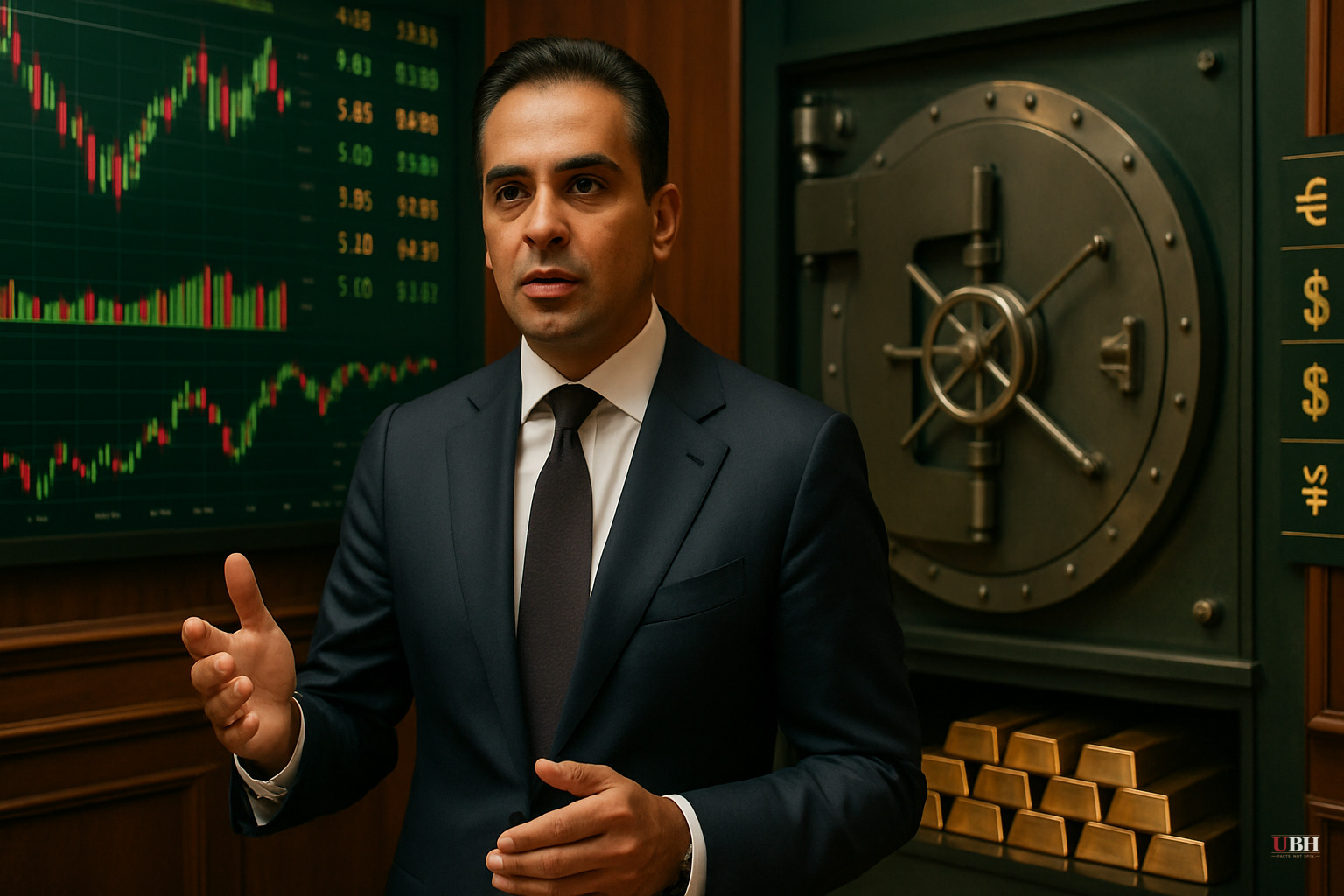
UBS Puts Its Cards on the Table in Shanghai
On January 13, 2025, Iqbal Khan — UBS's President for Asia Pacific and Co-Head of Global Wealth Management — sat down with Bloomberg's Stephen Engle on the sidelines of the 25th UBS Greater China Conference in Shanghai.
Khan, one of the world's senior wealth managers, discussed where to put money in 2025 with high-net-worth clients. His answer, according to MarketScreener's coverage of the Bloomberg interview: Asia and the United States are the primary growth engines for 2025.
On China: Internal Discipline Matters More Than Trump's Tariffs
Khan made a point that most financial media skipped over.
He said China's own commitment to continuous and sustainable steps in addressing its macro and fiscal problems will be just as important — if not more important — than whatever trade policy President Trump rolls out.
A senior executive at one of the world's largest wealth managers is essentially saying: don't fixate entirely on Washington. Beijing's internal credibility is equally on trial here.
China has structural problems — a deflating property sector, weak consumer confidence, local government debt overhangs. No amount of Trump tariff drama changes that math. Khan is telling clients the Chinese government needs to prove it can manage its own house.
Mainstream financial press has spent months obsessing over Trump-China trade war scenarios. Khan is pointing at the other half of the equation that keeps getting ignored.
The Conference Itself Signals Commitment
The UBS Greater China Conference celebrated its 25th anniversary at this event. According to UBS's own LinkedIn post, the annual forum brings together government representatives, regulatory officials, and industry leaders to explore investment opportunities in Greater China.
UBS called it a privilege to "witness and participate in China's story" and expressed excitement about "the next 25 years and beyond."
That's a significant public commitment from a Swiss banking giant at a moment when Western firms are quietly reassessing China exposure. UBS is not retreating from Greater China. They're doubling down — at least rhetorically.
AI: The Jobs Warning
Khan also addressed artificial intelligence in what Bloomberg headlined as "AI Will Impact Jobs While Aiding Productivity."
The full Bloomberg content is paywalled, so the specific quotes aren't available. But the headline framing alone is notable — it's an honest acknowledgment from a financial industry leader that AI is a two-sided coin.
Productivity goes up. Headcount goes down. Those two things happen simultaneously, and pretending otherwise is wishful thinking.
This is the conversation the financial sector keeps dancing around. Khan apparently didn't.
Diversification as Core Strategy
Khan's broader investment thesis, per MarketScreener, is straightforward: in a more geopolitically charged world, diversification is key.
With Taiwan Strait tensions simmering, Russia still grinding through Ukraine, Middle East instability flaring, and a new Trump administration reshuffling America's alliances and trade relationships — the risk of a single concentrated bet is higher than it's been in decades.
Khan isn't telling clients to run from Asia. He's telling them not to go all-in on any single geography.
What's Missing From Mainstream Coverage
Bloomberg's own coverage of this interview is almost entirely paywalled — which means the substance of what Khan actually said is unavailable to the general public. Most financial outlets ran only headlines.
Three things are being left out of the broader coverage:
First, the implicit message that China's domestic credibility — not just Trump's tariff threats — is the real variable for 2025. That complicates the simple narrative of "Trump vs. China."
Second, UBS's continued aggressive posture in Greater China, despite the geopolitical headwinds every other Western institution is citing as a reason to hedge exposure. UBS is betting on China's long-term story. That's a business decision with real money attached.
Third, the AI jobs warning. Every tech company and bank celebrates AI productivity gains. Fewer are willing to state publicly that jobs will be lost. Khan did.
What This Means for Regular People
If you're not a UBS wealth management client — and most people aren't — this still matters.
When the people managing hundreds of billions in private wealth say diversify, pay attention to China's internal policies, and prepare for AI job displacement, they're describing the world your retirement account is sitting in.
No single bet is safe right now. Not on the U.S. boom continuing indefinitely. Not on China stabilizing cleanly. Not on AI being only good news for workers.
Khan's job is to protect rich people's money. The advice he's giving them applies just as well to everyone else.
Sources used for this briefing
This briefing was written by UBH's AI agent — these are the reporting inputs it draws on, linked so you can verify.


