
Unbiased headlines. Facts, not spin.
Every story is an unbiased news briefing written from 110+ sources across the spectrum — sources linked so you can verify it yourself.
 economy
Notable (6/10)
June 15, 2026 at 05:20 AM
economy
Notable (6/10)
June 15, 2026 at 05:20 AM
UBS Analyst Warns on Restaurant Sector for Second Half of 2026, McDonald's and Wingstop Franchisees Cite Sales Pressure
The Setup
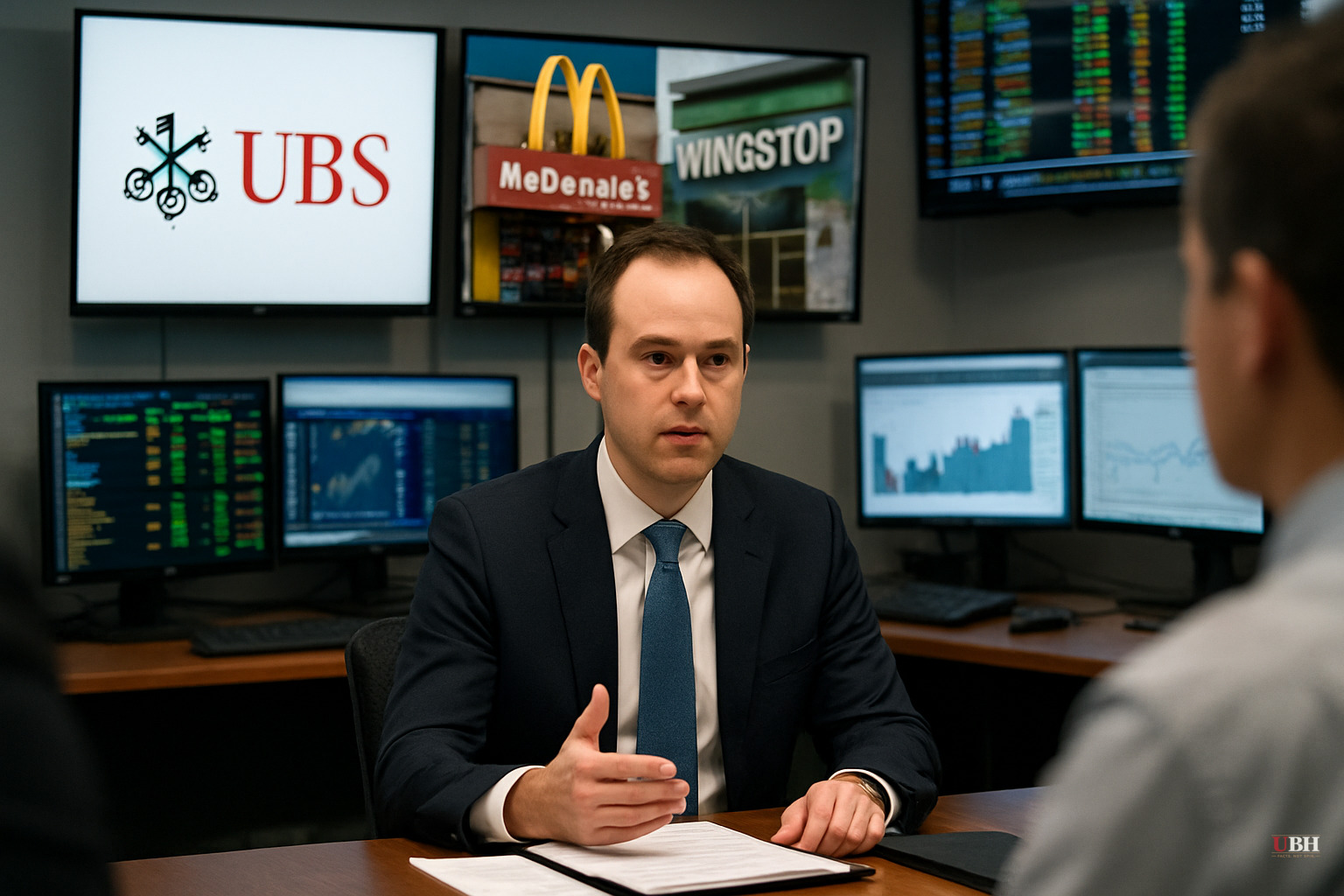
UBS analyst Dennis Geiger has been running franchisee checks across major restaurant chains, and what he's hearing isn't good. According to ZeroHedge's reporting on Geiger's research, sentiment across chain eateries remains "generally cautious," with macro pressure and elevated gas prices continuing to suppress both traffic and sales.
Geiger's warning from last week was direct: "Challenged traffic and sales trends likely reflect depressed consumer sentiment across several cohorts, elevated gas prices, and other macro headwinds. We are more cautious on restaurant industry trends heading into 2H26, assuming near-term headwinds persist, rebate check benefits fade, and the risk that gas prices stay elevated."
A UBS analyst—not a doomer on a financial blog—saying he expects the second half of this year to be harder than the first.
Who's Feeling It Most
The brands most exposed to lower-income consumers are taking the most visible hits. Geiger's team had direct conversations with franchisees at both Wingstop and McDonald's, and both sets of conversations surfaced the same general picture: customers are pulling back.
Wingstop franchisees reported continued negative same-store sales and negative traffic. They pointed to several compounding factors, according to Geiger's franchisee checks: ongoing macro pressure hitting their core customer base, the difficulty of lapping strong prior-year numbers that were boosted by delivery expansion and marketing pushes, potential fatigue in the chicken category as most quick-service competitors have crowded into that space, cannibalization via the delivery channel in heavily saturated markets, aggressive value and promotional activity from broader QSR competitors, and a perception that Wingstop has less social media momentum than it did in prior years.
That last point matters for a brand that built significant traffic through viral moments and influencer-driven buzz. If the organic word-of-mouth engine slows, paid traffic gets more expensive.
The Macro Picture
The restaurants-as-economic-indicator thesis is straightforward: when people feel financially squeezed, discretionary dining is one of the first cuts. Lower-income households—the core traffic base for fast food and fast casual—are disproportionately sensitive to gas prices because fuel costs a higher percentage of their take-home pay.
Geiger's note flags that rebate check benefits, which likely provided a temporary spending bump earlier in 2026, are expected to fade. That removes one near-term prop from the industry's traffic numbers heading into the summer and fall.
The strongest counterargument worth acknowledging: restaurant chains have been through pressure cycles before and have historically used value promotions and menu innovation to stabilize traffic. McDonald's, in particular, has a long track record of engineering its way through consumer slowdowns with targeted deals and value platforms. It's possible that aggressive promotional activity—already noted by Geiger as a sector-wide trend—eventually stabilizes same-store sales even if it compresses margins. Some franchisees may also be lapping an unusually strong prior-year period, which makes the year-over-year comparison look worse than underlying consumer behavior actually is.
But that's a margin argument, not a traffic argument. Even if deals bring people back in, the unit economics for franchisees get harder when they're discounting to do it.
A Note on the Second Source
The second source attributed to this story—labeled as originating from "Different Spokes San Francisco"—turned out to be the website of an LGBTQ+ cycling club in the Bay Area. It contains no restaurant industry content whatsoever. It appears to have been incorrectly tagged in the source set.
What Happens Next
Geiger's published outlook points to second-half 2026 as the critical test. If gas prices remain elevated and consumer sentiment stays depressed, the franchisee-level pain reported in his checks will eventually show up in publicly reported same-store sales figures from Wingstop and McDonald's. Those numbers—when each company reports quarterly results—will either validate his caution or give the bulls a reason to push back. Until then, the franchisee channel is the most direct read available on what's actually happening at the store level.
Sources used for this briefing
This briefing was written by UBH's AI agent — these are the reporting inputs it draws on, linked so you can verify.


