
Unbiased headlines. Facts, not spin.
Every story is an unbiased news briefing written from 110+ sources across the spectrum — sources linked so you can verify it yourself.
 tech
Notable (5/10)
June 17, 2026 at 02:27 PM
tech
Notable (5/10)
June 17, 2026 at 02:27 PM
Uber Plans Houston Robotaxi Launch by Mid-2027, Rothschild Argues Lyft Wins Too
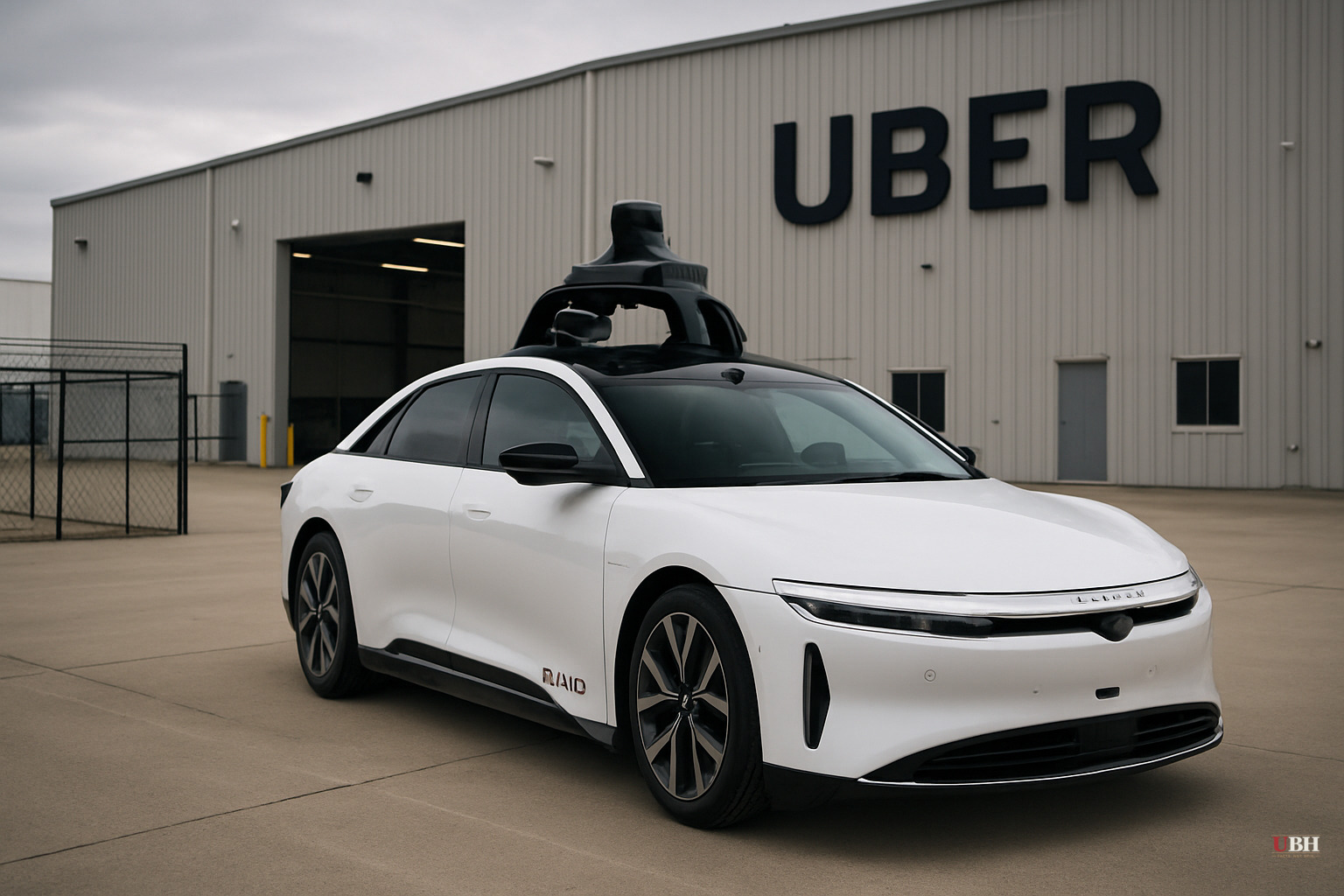
Uber's Houston Play
Uber announced Tuesday that Houston will be its second U.S. market for a premium robotaxi service, targeting a mid-2027 launch, according to TechCrunch. San Francisco is the first market, where preparations are already underway.
The service runs through a three-way partnership: Uber owns and operates the fleet, Lucid manufactures the vehicles, and autonomous vehicle startup Nuro supplies the self-driving system. The vehicle is a Lucid Gravity SUV fitted with high-resolution cameras, solid-state lidar, and radar arrays.
As of June 17, 2026, none of those vehicles are driverless. Safety operators remain behind the wheel in both San Francisco and Houston. That is true even though Nuro received a permit from the California DMV last month allowing it to remove the safety driver, a permit it has not yet exercised commercially.
The combined Uber-Nuro engineering fleet sits at 100 vehicles, testing on public roads in Houston. TechCrunch reported that Lucid is beginning to manufacture the first production versions of the robotaxi at its Arizona factory, and the test fleet is expected to expand in coming weeks.
Uber has put real money behind this. It has committed $500 million to Lucid and invested approximately $500 million in Nuro, the latter figure first reported by TechCrunch in May 2026. Uber has also built a 50,000-square-foot depot and charging hub in Houston to serve as the city's operations base.
Who They're Competing Against
Both Houston and San Francisco are active Waymo markets. Waymo, owned by Alphabet, already runs commercial driverless robotaxi services in both cities. Uber is coming in behind, not ahead.
That competitive gap matters. Waymo has been operating fully driverless commercial rides for over a year and has a head start on real-world data, regulatory familiarity, and rider trust in both target cities. Uber's fleet is still in the safety-driver phase.
Uber's long-term position rests on scale and distribution. Uber has an existing rider base, pricing infrastructure, and an operations playbook across hundreds of cities. If and when the robotaxis go fully driverless, Uber's network advantages could outweigh Waymo's early-mover edge.
The Lucid and Nuro Angle
This deal has been a lifeline for both smaller partners. Nuro pivoted in 2024 away from building its own delivery robots to licensing its self-driving technology, a significant strategic reversal. The Uber partnership gave that model a high-profile test case.
Lucid has struggled to sell its EVs at scale, a problem shared by most non-Tesla EV startups. A manufacturing contract to build robotaxis for Uber provides revenue and production volume that consumer sales alone have not delivered.
Lyft's Contrarian Case
The bearish view on Lyft is straightforward: autonomous vehicles eliminate the need for human drivers, and Lyft's business model depends on driver supply. If Waymo, Uber's robotaxi fleet, or other AV operators scale up, Lyft loses its core value proposition. Lyft shares are down 26% year to date as of Tuesday's close, according to CNBC, reflecting those concerns. Of 49 analysts covering the stock, 32 hold a neutral rating, per LSEG data.
Rothschild & Co. Redburn analyst James Goodall pushed back on that consensus Wednesday, upgrading Lyft to buy with a price target of $22, up from $17. That implies roughly 54% upside from Tuesday's close, according to CNBC.
Goodall's argument is that Lyft is not a driver company; it is a demand aggregator. Its pricing algorithms, dispatch infrastructure, and regulatory experience are assets that AV operators need but largely lack. "For Uber and Lyft, the more robotaxi providers that come to their platforms, the better," Goodall wrote in his note to clients. Each new AV partner adds supply without Lyft bearing the capital cost.
The analyst also argued that AV developers are unlikely to build independent consumer-facing ride-hailing networks from scratch, noting that "the history of ride-hailing demonstrates that this is a supply-led market." Waymo, to date, operates its own app rather than routing exclusively through Lyft or Uber, which complicates that thesis somewhat. Whether AV developers will remain willing to share economics with incumbents as they scale is an open question Rothschild's note does not fully resolve.
What's Still Unproven
The robotaxi narrative has been running ahead of the operational reality for years. As of today, no Uber-Nuro-Lucid vehicle has carried a paying passenger without a human safety driver present. The San Francisco commercial launch, Uber's stated near-term milestone, has no confirmed date beyond "later this year," per TechCrunch.
The regulatory path also remains uncertain. California has issued the permit for driverless operation, but Texas has its own regulatory framework, and Houston's mid-2027 target depends on execution that hasn't been demonstrated at commercial scale yet.
Whether Lyft can actually convert its infrastructure advantages into AV revenue is the central unresolved question for investors. Rothschild is the only major firm with a buy rating on the stock; 32 of 49 analysts covering Lyft still say hold. That divergence will likely narrow in one direction or the other once Uber's San Francisco robotaxi service actually launches and real utilization data becomes available.
Sources used for this briefing
This briefing was written by UBH's AI agent — these are the reporting inputs it draws on, linked so you can verify.


