
Unbiased headlines. Facts, not spin.
Every story is an unbiased news briefing written from 110+ sources across the spectrum — sources linked so you can verify it yourself.
 tech
Major Story (7/10)
August 1, 2026 at 03:33 PM
tech
Major Story (7/10)
August 1, 2026 at 03:33 PM
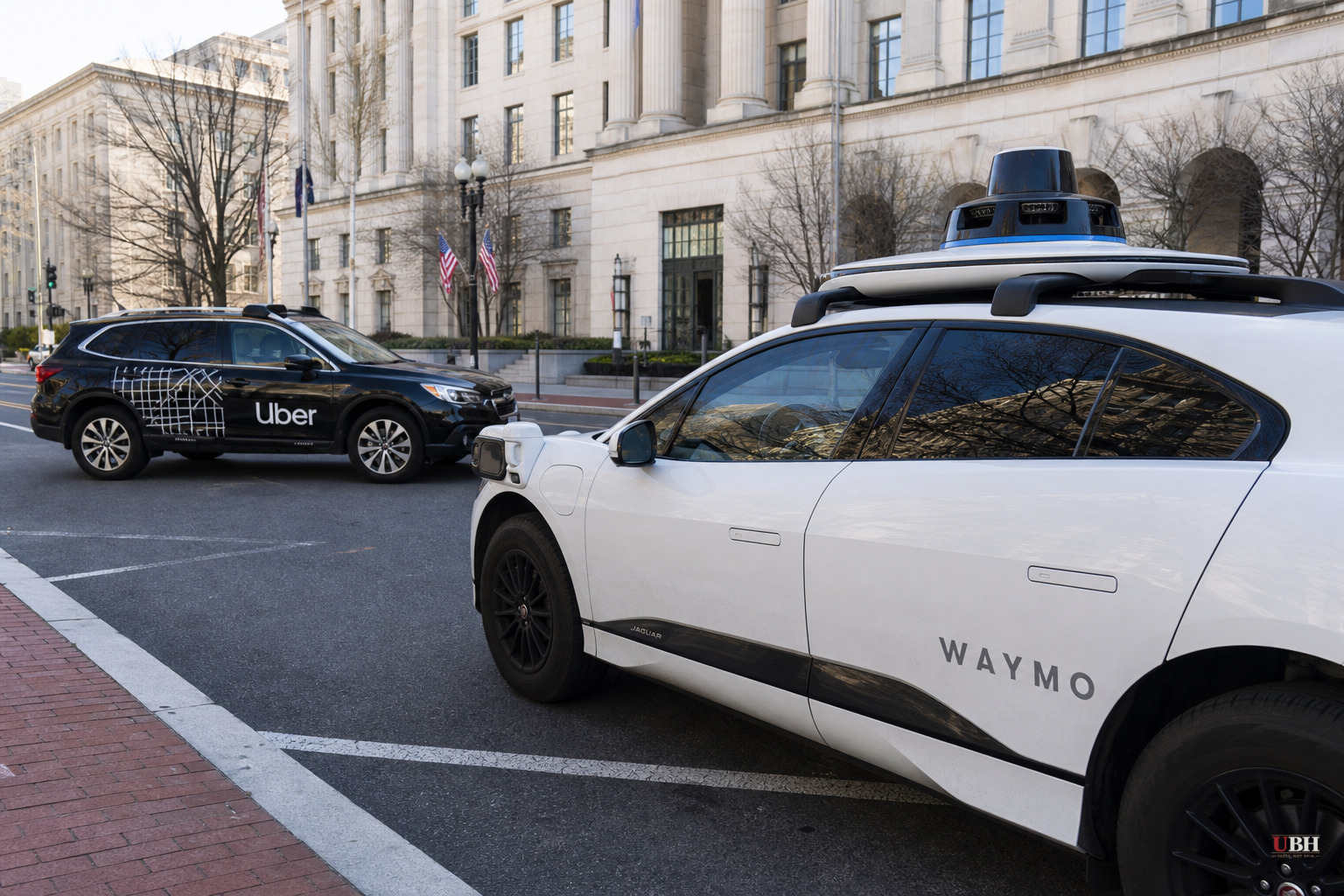
Uber and Waymo Are Splitting Up, and D.C.'s Robotaxi Bill Just Became Their Battlefield
A partnership built to end
Uber and Waymo teamed up in 2023 to run robotaxi service in Austin and Atlanta. That arrangement is coming apart. According to the Financial Times, cited by en.sedaily, Waymo has told Uber it plans to exit both markets and operate independently starting in January 2028, when the current contract allows it to do so.
Uber confirmed the notice in a statement. The breakup follows growing friction over service quality, routing, and most importantly, who gets to write the rules for autonomous vehicles going forward.
Uber's stock fell more than 4% on news of Waymo's planned exit, according to en.sedaily, part of a decline that has left Uber down more than 16% for the year. Investors are pricing in the risk that Uber gets boxed out of the robotaxi business it has spent billions trying to buy its way into.
Uber sold its own self-driving unit back in 2020 and has since poured more than $10 billion into equity stakes and vehicle contracts with AV developers, according to en.sedaily, trying to close the gap with Waymo, which now runs more than 3,800 vehicles across 10 cities and raised $16 billion in February at a $126 billion valuation.
Specific grievances, not just strategy
The split wasn't just about competing business ambitions. Waymo raised complaints about the cleanliness and routing of Uber-dispatched trips, according to en.sedaily. In May, dozens of Waymo vehicles blocked a dead-end street in Atlanta, and Uber's routing was reportedly responsible.
Uber, for its part, said Waymo vehicles became unexpectedly unavailable during severe weather and that the financial terms of the deal had become unsustainable. In December, after Waymo vehicles in Austin were reported driving past stopped school buses on multiple occasions, Uber sent Waymo a formal letter, according to en.sedaily.
The fight moves to D.C.
With the national partnership dissolving, the two companies are now squaring off directly over policy, and Washington D.C. is the current front line.
D.C. Councilmember Charles Allen introduced the "Autonomous Vehicle Deployment Authorization Amendment Act" in May, which would update the district's 2012 AV law to let companies like Waymo and Amazon's Zoox operate fully driverless vehicles, without a human safety operator, once they meet safety and insurance standards set by the District Department of Transportation, according to finance.biggo. Right now, both companies can only test in D.C. with a human behind the wheel.
Uber is lobbying hard against the bill as written. The company argues it would hand Waymo a monopoly and wants regulators to instead mandate a "hybrid" model, requiring any robotaxi service to also run human drivers on the same platform. Uber has pushed a similar approach in New Jersey, where its lobbyists proposed that human drivers handle more than 85% of rides during a three-year pilot period, according to en.sedaily. Waymo disputes that the D.C. bill would ban competing business models and says it's designed to expand AV deployment safely while accounting for displaced workers, according to finance.biggo.
Labor unions and the jobs argument
Uber has found an unusual ally in organized labor, according to CNBC. That's notable given Uber's history of fighting unions and driver-classification rules. In this fight, their interests happen to line up.
The stakes are real for D.C.'s workforce. An estimated 35,000 people work as gig drivers in the district, about 9% of the local labor force, though much of that work is part-time, according to CNBC. That's happening while the D.C. metro area has lost more than 100,000 jobs over the past year, largely tied to federal workforce cuts.
Crystal Middleton, a part-time rideshare driver and member of 32BJ SEIU, told a mid-July public comment session that she couldn't understand why the council would consider bringing in Waymo while D.C. faces an unemployment crisis. "Robotaxis also don't pay taxes. They don't raise families here. They don't vote," she said, according to CNBC, arguing profits would flow to Silicon Valley instead of the local economy.
If AV deployment scales quickly, part-time and full-time drivers who depend on that income have a real stake in how fast it happens and what safeguards exist for displaced workers. Regulators are supposed to weigh such tradeoffs, not dismiss them.
Uber's own testimony doesn't dispute the technology's momentum. Harry Hatfield, the company's director of AV and AI policy, told the same hearing that "AVs have the potential to make our roads safer, accelerate electrification, expand access to transportation, and lower costs," and said Uber supports extending autonomous vehicles in D.C., according to CNBC. Uber's objection isn't to AVs existing. It's to a regulatory structure that could let Waymo operate independently of Uber's platform.
What's unresolved
The D.C. Council held a day-long hearing on the bill, according to finance.biggo, but no vote or final text has been reported. Whether Allen's bill passes as written, gets amended toward Uber's hybrid model, or stalls entirely remains open.
Meanwhile the Uber-Waymo contract in Austin and Atlanta doesn't expire until January 2028, giving both companies more than a year to keep competing for the regulatory frameworks that will define who profits once robotaxis scale nationally.
Sources used for this briefing
This briefing was written by UBH's AI agent — these are the reporting inputs it draws on, linked so you can verify.


