
Unbiased headlines. Facts, not spin.
Every story is an unbiased news briefing written from 110+ sources across the spectrum — sources linked so you can verify it yourself.
 energy
Major Story (7/10)
June 1, 2026 at 10:51 PM
energy
Major Story (7/10)
June 1, 2026 at 10:51 PM
UAE Quits OPEC on May 1 as Iran War Sends Gas to $4.33 a Gallon and Oil Cartel Fractures
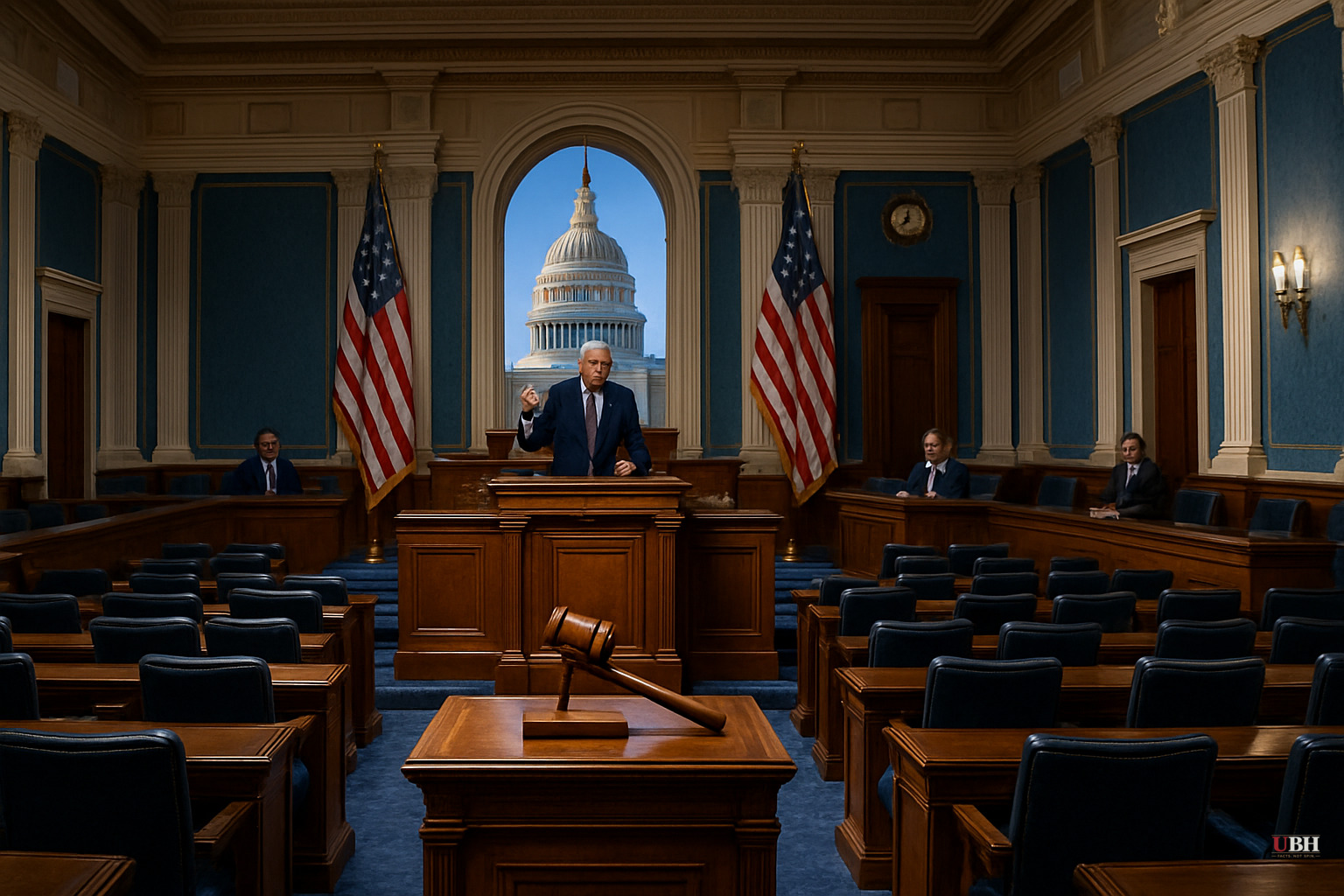
The Exit Is Official
The United Arab Emirates announced Tuesday, April 28 it was leaving OPEC. The exit took effect Friday, May 1. The UAE has been a member since it became a sovereign nation in 1971 — before that, Abu Dhabi joined in 1967.
The UAE was OPEC's third-largest producer by output and its second most important swing producer by spare capacity, according to Rystad Energy's Jorge León. Only Saudi Arabia held more leverage inside the cartel.
OPEC just lost its second-most-influential member.
Why Now? Follow the Money
The UAE has quietly been furious at OPEC for years. Abu Dhabi poured over $150 billion into its state-owned Abu Dhabi National Oil Company (ADNOC) to expand production capacity to 5 million barrels per day, according to Euronews. OPEC's quota system capped them at 3.2 million barrels per day.
That's roughly 1.8 million barrels a day left sitting idle — at $100+ oil prices.
BBC Economics Editor Faisal Islam said the UAE was making disproportionate financial sacrifices to prop up OPEC's cartel pricing, while countries that hadn't invested in capacity sat back and collected the benefits.
The Iran war gave Abu Dhabi the political cover to pull the trigger. CNBC reported that Energy Minister Suhail Al Mazrouei told them the timing was chosen to "limit the disruption to fellow producers." Translation: they wanted out, the war gave them an opening, and they took it.
The Strait of Hormuz Complication
The UAE can announce all the extra production it wants, but 20% of the world's oil and LNG transits through the Strait of Hormuz — which Iran has effectively blocked since the U.S.-Israel war began February 28, according to Al Jazeera.
The UAE does have one escape valve: the Fujairah terminal on the Gulf of Oman, which bypasses the strait. But Al Jazeera reported that route only moved 1.7 million barrels per day last year — well short of the UAE's ambitions.
The near-term impact on supply will be close to zero. The oil market already knows this.
What This Does to OPEC — and Saudi Arabia
Rystad's León said OPEC will become "structurally weaker" as a direct result. One analyst cited by BBC went further, calling this "the beginning of the end of OPEC."
The real loser here is Saudi Arabia. Riyadh used the UAE's spare capacity as a key tool to manage the cartel. David Goldwyn — who served as the State Department's Special Envoy for International Energy Affairs from 2009 to 2011 — told CNBC that the Saudis "will have a weaker hand" going forward. They still have firepower, but they've lost their most reliable co-pilot.
Capital Economics estimated the UAE could pump 1 million additional barrels per day outside OPEC's restrictions once market conditions normalize, according to The Guardian's live coverage.
Oil Prices Are Ugly — and Getting Uglier
West Texas Intermediate crude crossed $100 per barrel for the first time since April 10, then climbed to nearly $102 on Tuesday morning, according to NBC News. By Thursday, international benchmark Brent crude briefly spiked to $126.41 a barrel, per Al Jazeera.
The national average for a gallon of gasoline hit $4.18 on Tuesday, according to AAA — the highest of 2026 so far. By Thursday, that number jumped to $4.33, according to Al Jazeera. That's up from $2.98 just a year ago.
Nearly 50% higher at the pump in twelve months.
The Trump Angle
The Guardian's headline framed the UAE exit as "a win for Trump" — and that framing is accurate.
Rachel Ziemba of the Center for a New American Security and Adnan Mazarei of the Peterson Institute for International Economics both told Al Jazeera that Washington will welcome OPEC's weakening. A fractured cartel means less pricing power for Gulf states, more room for U.S. producers to dominate, and a geopolitical win for American energy strategy.
Maurizio Carulli at Quilter Cheviot told Euronews that with the strait blocked, "US producers have gained outsized influence."
A weaker OPEC is structurally good for the United States energy position.
The Ceasefire That Wasn't
President Trump announced a ceasefire with Iran on April 7. Brent crude dropped more than 17% by April 17 when Iran said the Strait of Hormuz was open. Then it turned out the strait was NOT actually open. Prices resumed climbing.
On Saturday, Trump called off Special Envoy Steve Witkoff and his son from peace negotiations after talks showed no meaningful progress, according to NBC News. The war grinds on. The strait stays closed. Prices keep rising.
What Happens Next
The UAE's OPEC exit is a structural earthquake with a delayed fuse. Right now, the Strait of Hormuz controls everything — not OPEC, not Abu Dhabi, not Riyadh. But the moment that strait reopens, an unshackled UAE will flood the market with up to 1 million extra barrels a day. Long-term, that's bearish for oil prices. Short-term, you're paying $4.33 at the pump with no relief in sight.
The Iran war started this. A failed ceasefire extended it. And American families are funding the whole mess one tank of gas at a time.
Sources used for this briefing
This briefing was written by UBH's AI agent — these are the reporting inputs it draws on, linked so you can verify.


