
Unbiased headlines. Facts, not spin.
Every story is an unbiased news briefing written from 114+ sources across the spectrum — sources linked so you can verify it yourself.
 defense
Major Story (8/10)
October 9, 2026 at 06:48 PM
defense
Major Story (8/10)
October 9, 2026 at 06:48 PM
UAE prosecutor says Flydubai co-pilot planned to crash jet into Ben Gurion terminal
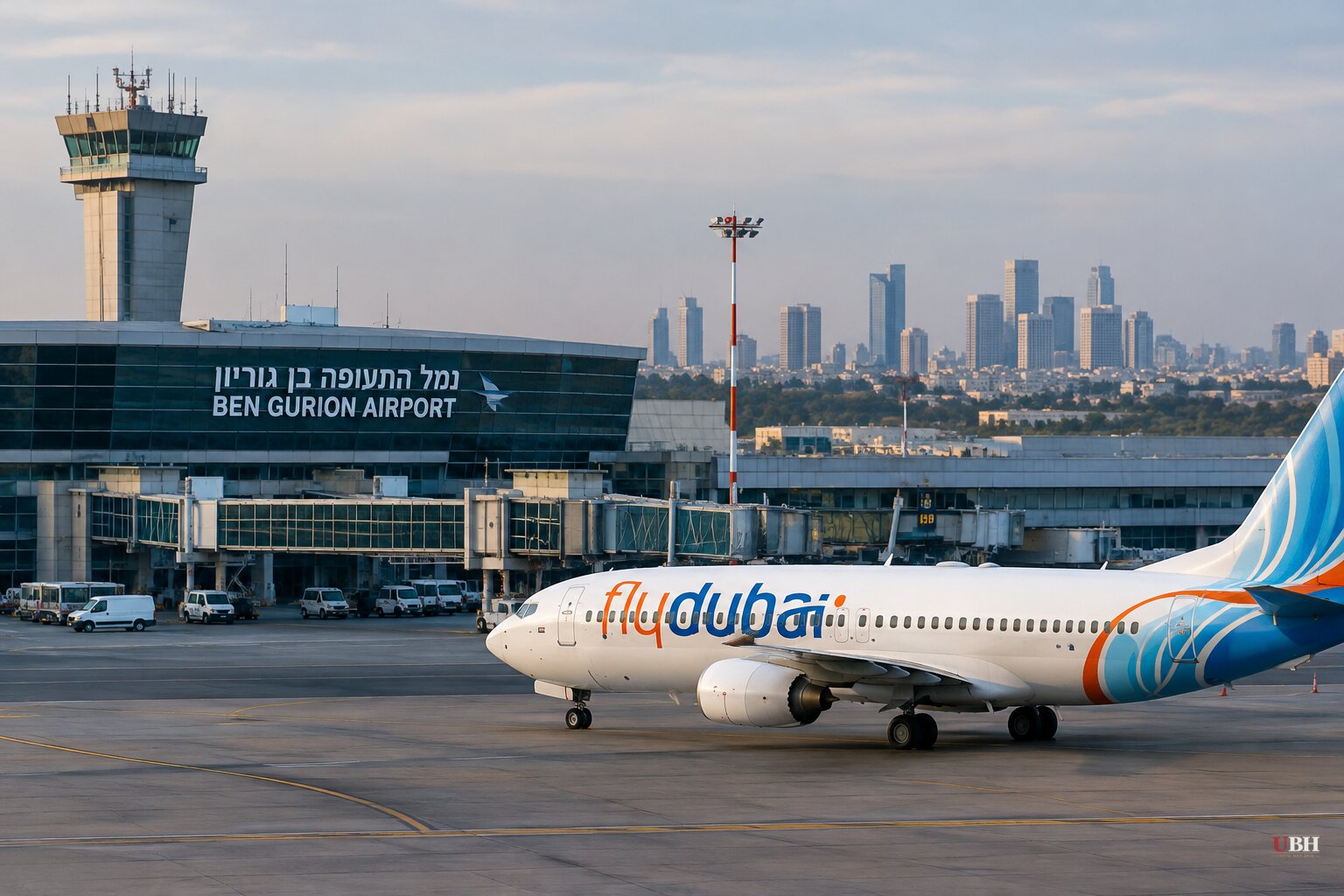
The co-pilot who attacked the captain of Flydubai flight FZ1073 on Sept. 30 intended to seize the aircraft and fly it into the passenger terminal at Ben Gurion Airport, the United Arab Emirates' attorney general said today, Oct. 9.
Attorney General Hamad Saif Al Shamsi described "a premeditated terrorist plot" meant to cause "the greatest possible loss of life," according to a statement carried by the state news agency WAM. The prosecutor said the plan was inspired by the Sept. 11, 2001 attacks on the United States.
What the UAE says happened
The suspect is Hamam al-Hammami, a 29-year-old Omani. Al Shamsi's statement did not name him, but he has been identified in earlier reports.
According to the prosecutor, Hammami took two earlier Dubai-Tel Aviv flights to "familiarize himself with the flight route and the airport." He then attacked Capt. Smit Machchhar, the flight's Indian captain, with a crash axe, an emergency tool stored in the cockpit.
Machchhar was bloodied and beaten but managed to open the cockpit door. That alerted passengers and crew, who detained Hammami.
The jet plunged roughly 14,000 to 16,000 feet in under a minute during the struggle. Two reserve pilots on board guided the plane to an emergency landing at Tabuk airport in Saudi Arabia. The airline put the number aboard at 172, and most were Israelis. All passengers and crew survived.
The confession and the radicalization claim
The prosecutor said Hammami "admitted that he had acted alone" and gave "a detailed confession outlining his motives and the stages of planning and execution" in the presence of his lawyer. That account comes from UAE prosecutors, who are leading the investigation with help from Israeli officials. It has not been independently tested in open court.
According to the prosecutor, Hammami began drifting toward extremism in 2017 while studying at the Royal Melbourne Institute of Technology in Australia. Investigators said he was influenced by "takfiri ideology" through extremist literature and online content glorifying terrorist groups and suicide attacks.
Hammami told prosecutors he regularly attended a mosque affiliated with the university, where he met people tied to an Islamic center called "My Centre." The prosecutor said the center was run by a Lebanese man known as "Abu Hamza" and was allegedly supported by a Muslim Brotherhood-linked association. That is an allegation in the prosecutor's findings. No evidence of it has been made public.
Hammami told investigators he became a pilot hoping to carry out an attack with an aircraft, the prosecutor said.
How he got into the cockpit
Hammami had worked for Oman Air and Royal Air Maroc before joining Flydubai in January 2026. Flydubai is a government-owned airline.
The prosecutor said he met "the professional and security requirements for employment," including a pilot's licence, a certificate of good conduct and the required checks. "None of the procedures revealed any indications of his extremist views or his intention to carry out a terrorist plot," Al Shamsi said.
The vetting system worked as designed and still let him through. Both the UAE and Israel now have to answer for that.
Israel's own answers have been contradictory. The Ministry of Transport told CNN its procedures do not include checking the names of flight crew, though those names go to the Israel Tax Authority for use if security services request them. The ministry also said an Omani passport should have been flagged at check-in, and that its "procedures do not address the threat from a pilot."
Shin Bet referred questions to the ministry, which it said is "responsible for all security matters concerning foreign airlines." The Tax Authority said the names of all passengers and crew were in Israeli hands before takeoff. NPR reported that transport officials and security services have traded accusations over the lack of vetting.
Prime Minister Benjamin Netanyahu said on Fox & Friends that Israel checks the backgrounds of pilots flying routes into the country and that the attacker must have slipped through a "loophole." He has ordered a "thorough review of all security aspects of foreign civil aviation to Israel." NPR reported that several of his political opponents have criticized the security breach.
Heroes and unanswered questions
On Thursday, Oct. 8, Israeli President Isaac Herzog gave the Presidential Award for Civilian Heroism to six Israelis who helped foil the hijacking. He also said the bravery on display "cannot overshadow the obligation to obtain full answers. Everyone, all of us, deserves clear and satisfactory answers."
One early puzzle was why Hammami attacked the captain over Saudi airspace if his target was in Israel. Israeli sources raised that question in the days after the incident, and the prosecutor's statement does not resolve it.
The prosecutor's statement does not say when Hammami will face trial or on what charges. Netanyahu's aviation security review is the next concrete step. It will have to explain who in Israel's government was responsible for screening foreign crews, and why no one caught an Omani pilot flying a route he had already flown twice.
Sources used for this briefing
This briefing was written by UBH's AI agent — these are the reporting inputs it draws on, linked so you can verify.


