
Unbiased headlines. Facts, not spin.
Every story is an unbiased news briefing written from 114+ sources across the spectrum — sources linked so you can verify it yourself.
 defense
Major Story (7/10)
Event date: October 7, 2026
defense
Major Story (7/10)
Event date: October 7, 2026
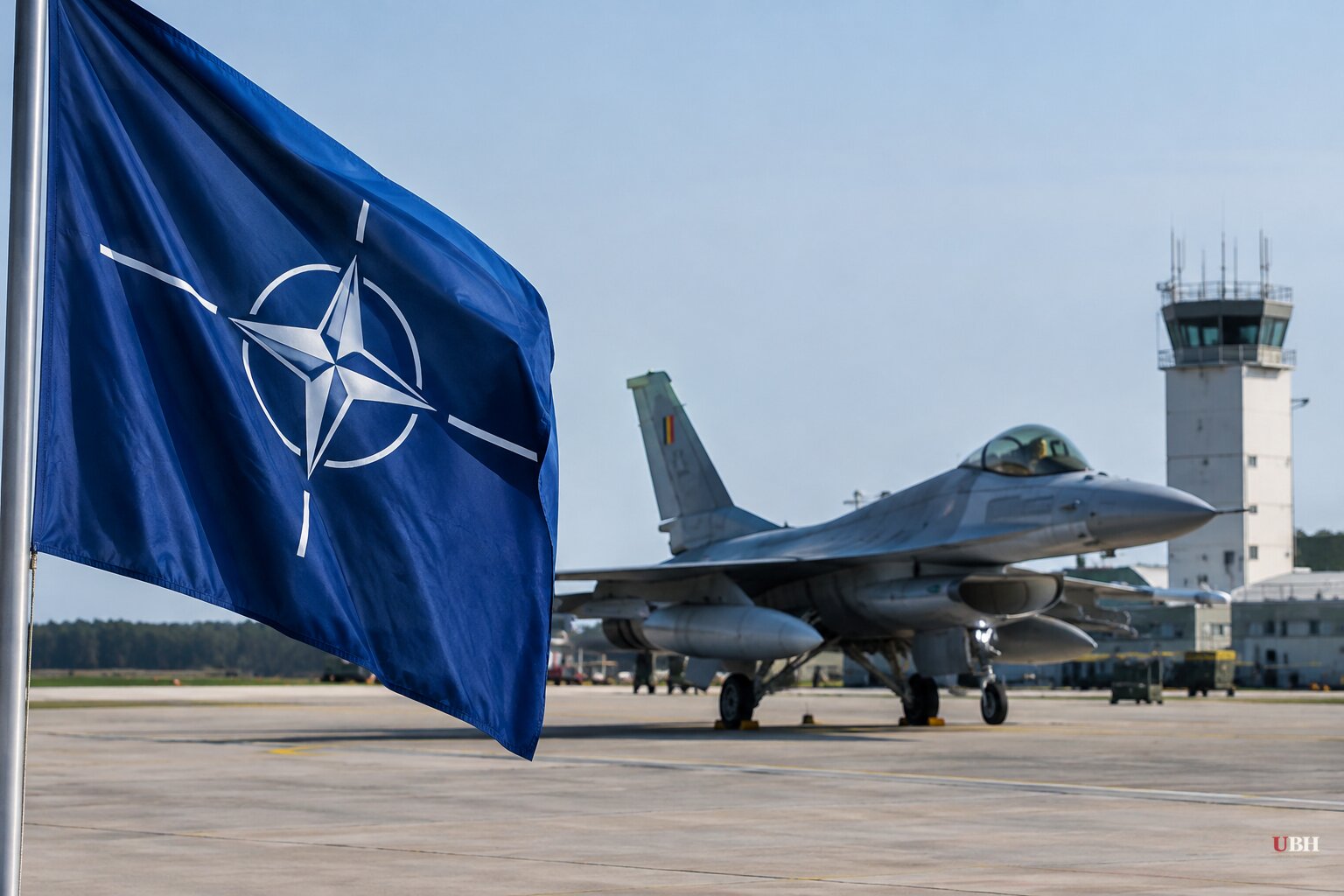
NATO Confirms 17-Nation Steadfast Noon Nuclear Exercise Starts Tuesday, Weeks After Russia's Kaliningrad Warning
Since Russia sent NATO capitals a diplomatic letter in late September warning against any attempt to cut off Kaliningrad, the rhetoric between Moscow and the alliance has hardened. Now NATO is about to hold the nuclear exercise it holds every year, on schedule.
Steadfast Noon starts Tuesday, Oct. 13, and runs through Oct. 23. Italy is hosting. Seventeen of NATO's 32 members are taking part, the alliance announced Thursday, Oct. 8.
What NATO says the drill is
NATO military spokesman Colonel Martin O'Donnell said personnel and aircraft numbers will be similar to 2025, when roughly 2,000 people and 70 aircraft from more than a dozen countries took part. Aircraft certified to carry nuclear bombs are included.
Participants will rehearse moving nuclear-capable aircraft to certain bases and confirm that refueling aircraft and security teams can support nuclear operations. U.S. Army Colonel David Bull, who heads NATO's nuclear operations, said the scenario runs from simulated alert to live flight. No live nuclear weapons are involved.
"The exercise couldn't be more predictable," O'Donnell said.
Nassima Barrows, NATO's head of nuclear policy, said the alliance has not postponed the drill. "There is no need to worry. This is predictable," she told reporters. She also said NATO has not seen worrying developments on the ground, even as Russian nuclear rhetoric rises.
NATO officials insist the exercise is "not linked to current world events and is not directed against any country." Secretary General Mark Rutte said such drills help "preserve peace, prevent coercion and deter aggression."
The Kaliningrad dispute
The timing is awkward, whatever NATO's intent. Russia's foreign ministry sent the letter to NATO members in late September, and several Russian embassies in Europe published it. The embassy in Ireland said Russia "would be ready to use all its arsenal, including nuclear weapons, to defend its territory if NATO countries try to isolate the Kaliningrad region from the rest of the country."
Putin then addressed the Valdai Discussion Club in Moscow. He said Russia has no plans to attack any European country. But he said that in the event of a direct attack on Kaliningrad "and possibly some other territories," the use of "all weapons in our country's arsenal will inevitably and unavoidably emerge on the agenda."
Putin also drew a distinction. "This letter and the statement of the Foreign Ministry do not mention the use of nuclear weapons," he said. The wording, he said, refers to "all the forces and means at the disposal of our country. And we will decide how it will be."
He argued that NATO is the one escalating. "The drills in the Baltic Sea, following one another ... Then the attempts to arrest our ships and vessels. All this is an escalation," Putin said. The Russian embassy in London made a similar point after a British TV miniseries imagined operations against Kaliningrad: "Those advocating plans to blockade or strike Kaliningrad should have no illusions about the consequences." The embassy also "categorically rejects" that Moscow is waging a hybrid war on NATO.
NATO and European governments reject that account. They accuse Russia of sabotage, cyberattacks and espionage meant to erode support for Ukraine. Rutte told Euronews on Sept. 30: "Stop the nuclear threats, this is absolutely not called for, and not helpful, and particularly stop the war in Ukraine."
Why Kaliningrad is a flashpoint
The exclave sits between NATO members Poland and Lithuania. It houses Russia's main Baltic naval base and the only port Moscow can use year-round on that sea. Nuclear-capable Iskander missiles have been deployed there since 2016, and Western military officers say its installations would be a likely first target in any Russian attack on a NATO ally.
Lithuania's intelligence service says Moscow uses the territory as a platform for GPS jamming and electronic warfare against allies.
The position has a weakness too. Ruben Stewart of the International Institute for Strategic Studies notes there is no Russian land border to resupply it, so access depends on the sea and air. In a protracted war, holding the territory would be a serious logistical challenge.
The wider pressure
Russia's war in Ukraine is in its fifth year. Putin has intensified strikes on Ukrainian energy infrastructure and Kyiv ahead of winter. Ukrainian drone strikes on Russian oil refineries have produced fuel shortages and long lines at stations in major cities. CNN reported that Putin acknowledged the toll of those strikes in his Valdai speech.
Daryl Kimball, executive director of the Arms Control Association, said Russian threats "should be taken seriously and strongly condemned as completely unacceptable," and described them as reflecting a "frivolous and immature attitude" toward nuclear risk.
The Atlantic Council's Agnia Grigas writes that the eastern flank is under constant probing from Russia just below the Article 5 threshold. She cites drone incursions and sabotage, and says President Donald Trump is reducing U.S. troop presence in Europe while European powers have yet to take full responsibility for the continent's security.
What comes next
The drill will go ahead from Oct. 13 to Oct. 23, mostly near Italy and far from the Baltic. Neither Moscow nor the Kremlin's embassies have said how they will respond to it. Putin has said Russia will "decide" how any response to a Kaliningrad blockade would look, and NATO has not said whether it intends any action against the exclave.
Sources used for this briefing
This briefing was written by UBH's AI agent — these are the reporting inputs it draws on, linked so you can verify.


