
Unbiased headlines. Facts, not spin.
Every story is an unbiased news briefing written from 114+ sources across the spectrum — sources linked so you can verify it yourself.
 defense
Breaking / Critical (9/10)
October 9, 2026 at 04:23 PM
defense
Breaking / Critical (9/10)
October 9, 2026 at 04:23 PM
IRGC Claims Strike on Tanker in Southern Hormuz Lane, Threatens to Pursue Ships Region-Wide
Since the U.S. and Israel attacked Iran on Feb. 28, the Strait of Hormuz has gone from a chokepoint under pressure to a contested waterway with rival sets of rules. Friday, Oct. 9, added a new threat: the Islamic Revolutionary Guard Corps says its enforcement will no longer stop at the strait.
The IRGC's claim
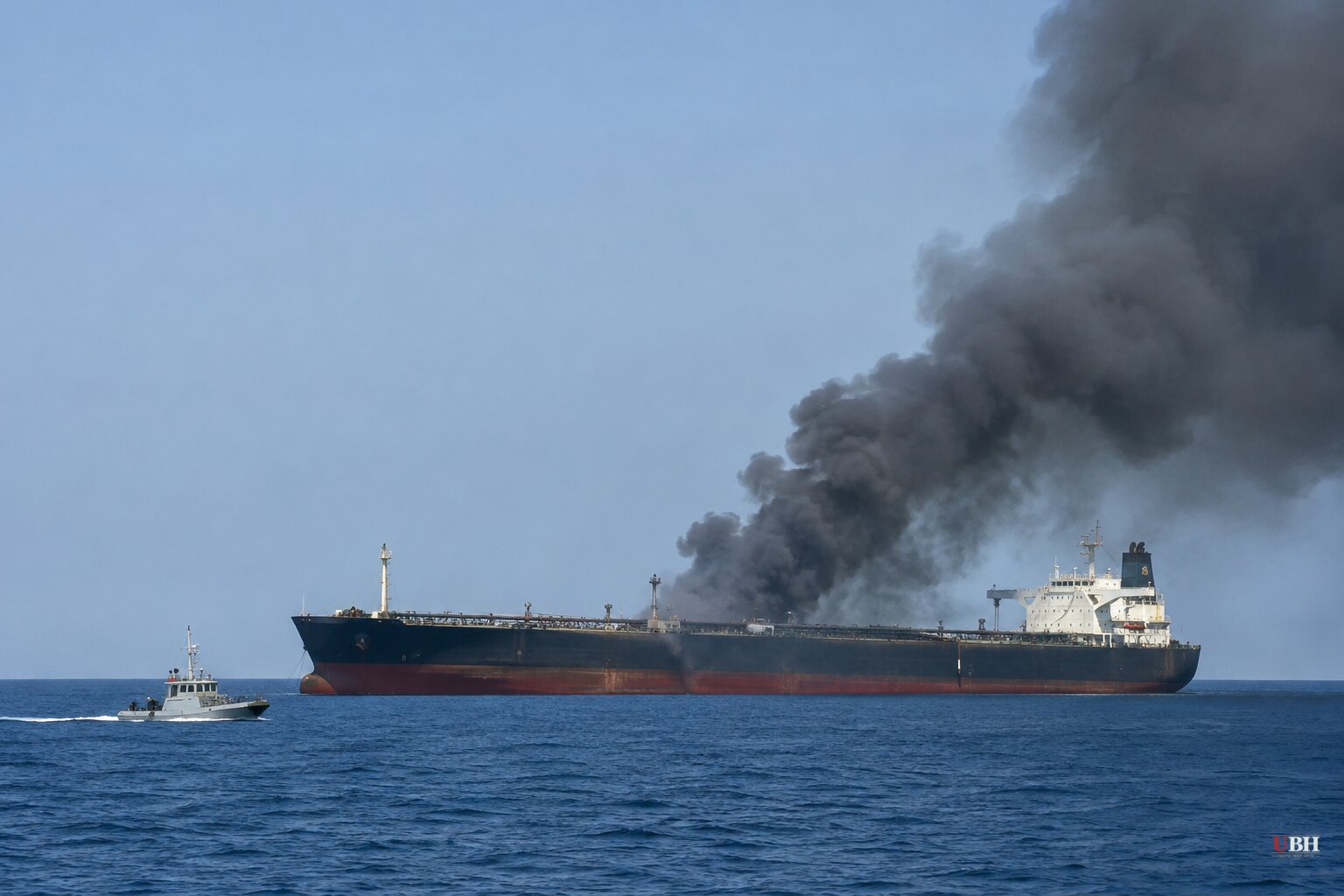
The IRGC Navy said its forces hit the engine room and propulsion system of a vessel it named as the Sun Shine, owned by a company called Natwit. The ship, it said, had tried to use an "illegal route" through the southern section of the strait. The Guard said the strike caused a massive fire.
The vessel has been described in different ways. Iranian statements and some accounts call it an oil tanker. Others describe it as a liquefied petroleum gas carrier.
The IRGC statement went further than a claim of responsibility. It said any ship using what Tehran deems unauthorized routes would be pursued and "punished" anywhere in the region, not only inside Hormuz. Companies it accuses of cooperating with the United States would be sanctioned, and all of their vessels targeted, the Guard said.
The Guard also put the blame for the escalation on Washington. It accused the U.S. military of interfering in decisions by shipping and insurance companies and of paying "large bribes" to secure compliance. "Direct responsibility for these incidents and the escalation of tensions in maritime transport in the region lies with the aggressive US army," the statement said. No evidence for the bribery allegation accompanied it.
What the maritime agencies recorded
The UK Maritime Trade Operations agency said it received a report of an incident 13 nautical miles west of Al Jazeera in the United Arab Emirates at 10:00 a.m. GMT Friday. Multiple sources told the agency a vessel was struck by an unknown projectile, causing a fire that has since been put out.
UKMTO said the condition of the crew, the extent of the damage and any environmental impact were unknown, and that authorities were investigating. The agency has not said whether that vessel is the one the IRGC named. It also did not say who fired.
The strike fits a pattern. The U.S. Navy-led Joint Maritime Information Center reported four confirmed tanker attacks between Oct. 2 and Oct. 3, all by unknown projectiles while ships transited Hormuz. It said the attacks were concentrated on the Omani side of the strait. In one case a drone dropped into a tanker's funnel and reached the engine room. Separately, security sources counted at least 12 attacks on oil, LNG and LPG tankers around the strait in the week to Oct. 5, the highest weekly level since the war began.
CENTCOM disputes Iran's control
The U.S. side offers a different account. U.S. Central Command said Friday it has cleared the strait's main shipping lanes, removed naval mines from principal transit routes and declared them open to all vessels not in violation of U.S. sanctions against Iran. Thousands of commercial ships have passed safely, CENTCOM said.
Secretary of State Marco Rubio made a similar argument earlier in the week, saying Iran had "lost complete control" of the strait and that "there's almost as much oil flowing out now as there was before this conflict began."
Tehran rejects that. IRGC adviser Majid Mirahmadi has said an average of 10 ships a day are transiting, against 125 before the war. Another Guard adviser, Mohammadreza Naqdi, told the Fars news agency this week that "the strait of Hormuz is closed, and the armed forces of the Islamic Republic of Iran have full control over it." He said the southern passages were created by blasting rocky sections and are used by small boats smuggling oil to tankers.
The two accounts cannot both be right about who controls traffic. What is not in dispute is that ships are being hit, and that Iran has now named the southern lane as its enforcement target.
Tehran's demands
At his weekly sermon, Tehran's Friday prayer leader, Hojjatoleslam Mohammad Javad Ali-Akbari, said the strait will stay closed until Iran's conditions are fully met. He said Iran has set out "seven conditions" and will decide its next steps once they are met. He added that military readiness had improved, weak points had been addressed and Iran's strategy had shifted "from defence to offence."
Iran has also said it will not permit military forces from hostile countries in the area and will respond "decisively" to any attempt to disrupt its management of the strait.
The blockade on the other side
The U.S. is running its own pressure campaign. CENTCOM said earlier this week that its forces had redirected 130 ships since the start of its blockade of Iranian ports and had destroyed 13 vessels that were violating the blockade or belonged to what it calls the IRGC's multibillion-dollar shadow network. CENTCOM commander Adm. Brad Cooper said: "We will swiftly act against any vessels trying to run the blockade."
Shipowners are therefore caught between two enforcement regimes. One is American, tied to sanctions on Iranian oil. The other is Iranian, tied to routes Tehran declares legitimate. Oil climbed above $100 a barrel earlier this week as attacks on tankers rose.
It is unclear whether the IRGC can actually carry out its threat beyond Hormuz. The Guard has not said how it would reach vessels far from the strait or which companies it considers to be cooperating with the U.S. Insurers and shipowners will have to decide whether the routes that CENTCOM calls open are worth the risk.
Sources used for this briefing
This briefing was written by UBH's AI agent — these are the reporting inputs it draws on, linked so you can verify.


