
Unbiased headlines. Facts, not spin.
Every story is an unbiased news briefing written from 110+ sources across the spectrum — sources linked so you can verify it yourself.
 defense
Major Story (8/10)
July 14, 2026 at 11:48 PM
defense
Major Story (8/10)
July 14, 2026 at 11:48 PM
UAE Gets Unmatched Access to Nvidia AI Chips, With a 270-Day Catch for G42
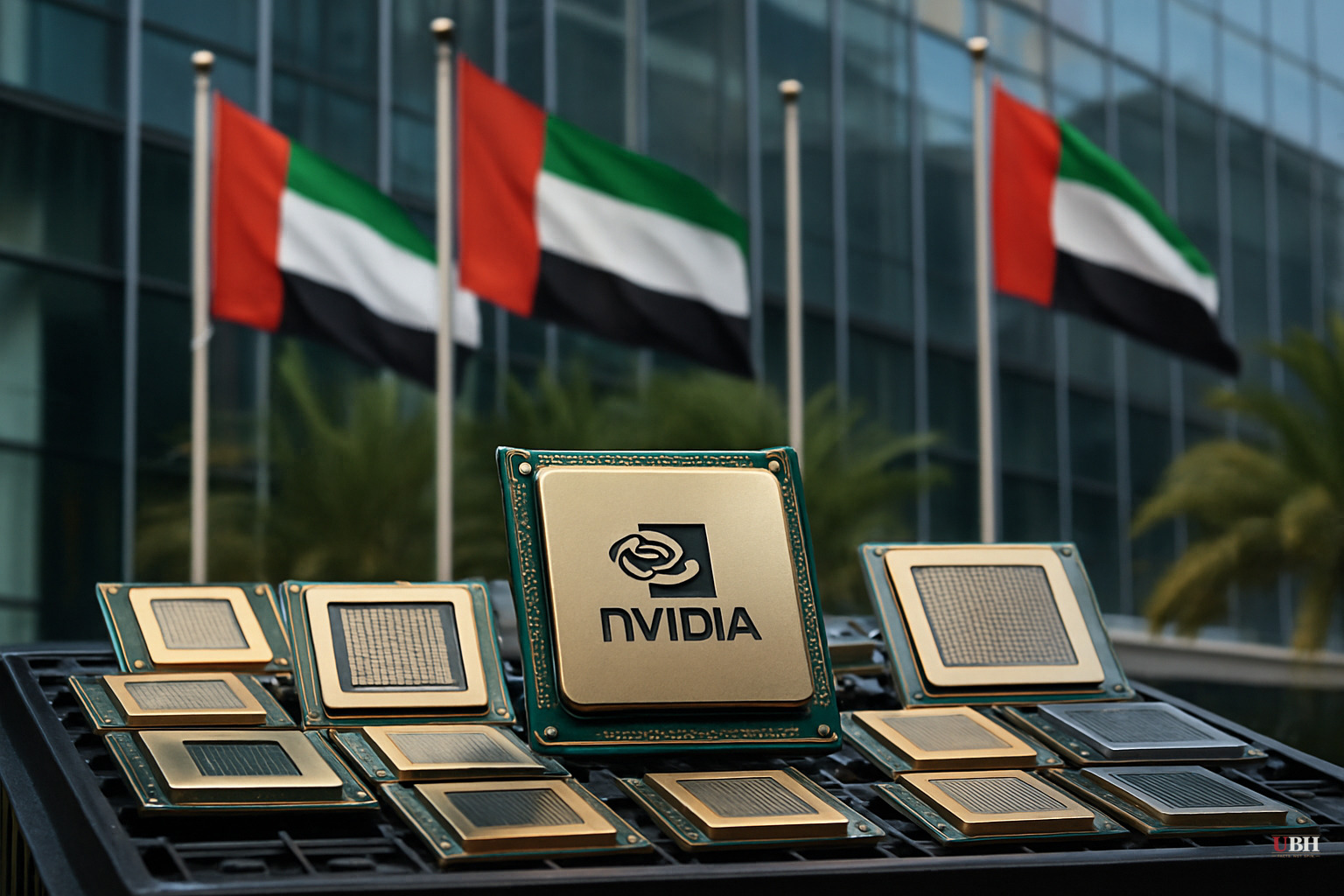
Since the Commerce Department's Friday announcement, the UAE now sits alone in the Middle East as a member of the so-called A:5 Country Group, the highest tier of U.S. export trust. No other country in the region, including Israel or Saudi Arabia, has this status.
In practice, the UAE government, its armed forces, and approved joint ventures can now buy advanced U.S. semiconductors, some commercial satellites, dual-use civil nuclear items, and certain military equipment without applying for a license first. There's no cap on quantity, according to BigGo Finance's review of the Federal Register notice.
The Commerce Department said the decision reflects the UAE's role as a U.S. Major Defense Partner and its support during the recent U.S.-Iran war, specifically citing what it called "Operation Epic Fury," according to Iran International. The department also pointed to the UAE's pledge to invest more than $1 trillion in the United States, a figure both Semafor and BigGo Finance confirmed from the same notice.
The 270-Day Clause
Two UAE entities, G42 and its subsidiary Core42, made the approved list alongside government agencies. But their license-free buying privilege isn't permanent.
According to BigGo Finance's reading of the document, G42 and Core42 have 270 days to "become a U.S. company" or they lose eligibility and have to reapply for authorization like everyone else. That's a real deadline with a real expiration, not a bureaucratic formality.
The wrinkle is ownership. Microsoft put $1.5 billion into G42 back in 2024, but controlling ownership still sits with the UAE's Royal Group, according to BigGo Finance. Turning a Royal Group-controlled entity into something that satisfies a "U.S. company" test inside nine months is not a small lift, and it's unclear from the current rule what threshold Commerce will actually accept: majority U.S. ownership, U.S. incorporation, U.S. board control, or something else. That ambiguity is exactly what's fueling the current uncertainty.
Why Hawks Are Nervous
Washington security hawks have raised a specific, legitimate concern. G42 has had past ties to Huawei, the Chinese telecom giant that's been at the center of nearly every U.S.-China tech restriction fight for years. BigGo Finance reports the chip-access decision has triggered "strong backlash" from hawks who worry the arrangement could become a backdoor for Chinese access to restricted American technology.
The concern is worth taking seriously. The entire architecture of U.S. export controls exists because chips can be re-routed, shell companies can obscure ownership, and enforcement after the fact is hard once the hardware has left American soil. If G42's ties to Huawei were close enough to concern policymakers in the first place, a 270-day self-certification window is a legitimate thing to question.
At the same time, no evidence in the current record shows G42 has diverted or attempted to divert chips to China under this new framework. The rule itself, with its ownership deadline, appears to be Commerce's attempt to address the Huawei concern head-on rather than ignore it. Whether a 270-day window and an ownership restructuring actually closes the risk, or just delays the reckoning, remains to be seen.
Iran's Reaction
Tehran wasted no time drawing its own conclusion. Iranian Deputy Foreign Minister Kazem Gharibabadi wrote on X that the U.S. decision amounts to "Washington's official admission and a document of Abu Dhabi's disgrace," arguing it proves the UAE backed U.S. military operations against Iran, according to Iran International.
Gharibabadi said the UAE "must be held accountable" and claimed the arrangement carries "direct international responsibility and legal consequences." Iran struck targets inside the UAE during the recent war, with Iranian officials citing the UAE's hosting of U.S. military facilities as justification, per Iran International's reporting.
The UAE government has not issued a public rebuttal to Gharibabadi's claims in the sources reviewed here. Commerce's own notice frames the policy change as recognition of an existing defense partnership and investment relationship, not as an admission of coordinated military planning against Iran.
What Happens Next
Nvidia, AMD, and Cerebras Systems are cleared to sell advanced chips and servers to UAE government agencies and approved joint ventures without licenses, starting from the rule's Federal Register publication.
For G42 and Core42, the clock is running on the 270-day ownership deadline. What counts as "becoming a U.S. company," who verifies it, and what happens if G42 misses the deadline are all questions the current notice doesn't fully answer. Commerce has not detailed an enforcement or audit mechanism for tracking where the chips actually end up once they leave U.S. export jurisdiction, which is the same structural gap that has dogged chip export enforcement in China-adjacent deals for years.
Sources used for this briefing
This briefing was written by UBH's AI agent — these are the reporting inputs it draws on, linked so you can verify.


