
Unbiased headlines. Facts, not spin.
Every story is an unbiased news briefing written from 110+ sources across the spectrum — sources linked so you can verify it yourself.
 economy
Low Interest (4/10)
May 29, 2026 at 12:23 PM
economy
Low Interest (4/10)
May 29, 2026 at 12:23 PM
Tyson Foods Replaces CEO Donnie King With P&G Outsider as Beef Losses Mount and Stock Drops 6%
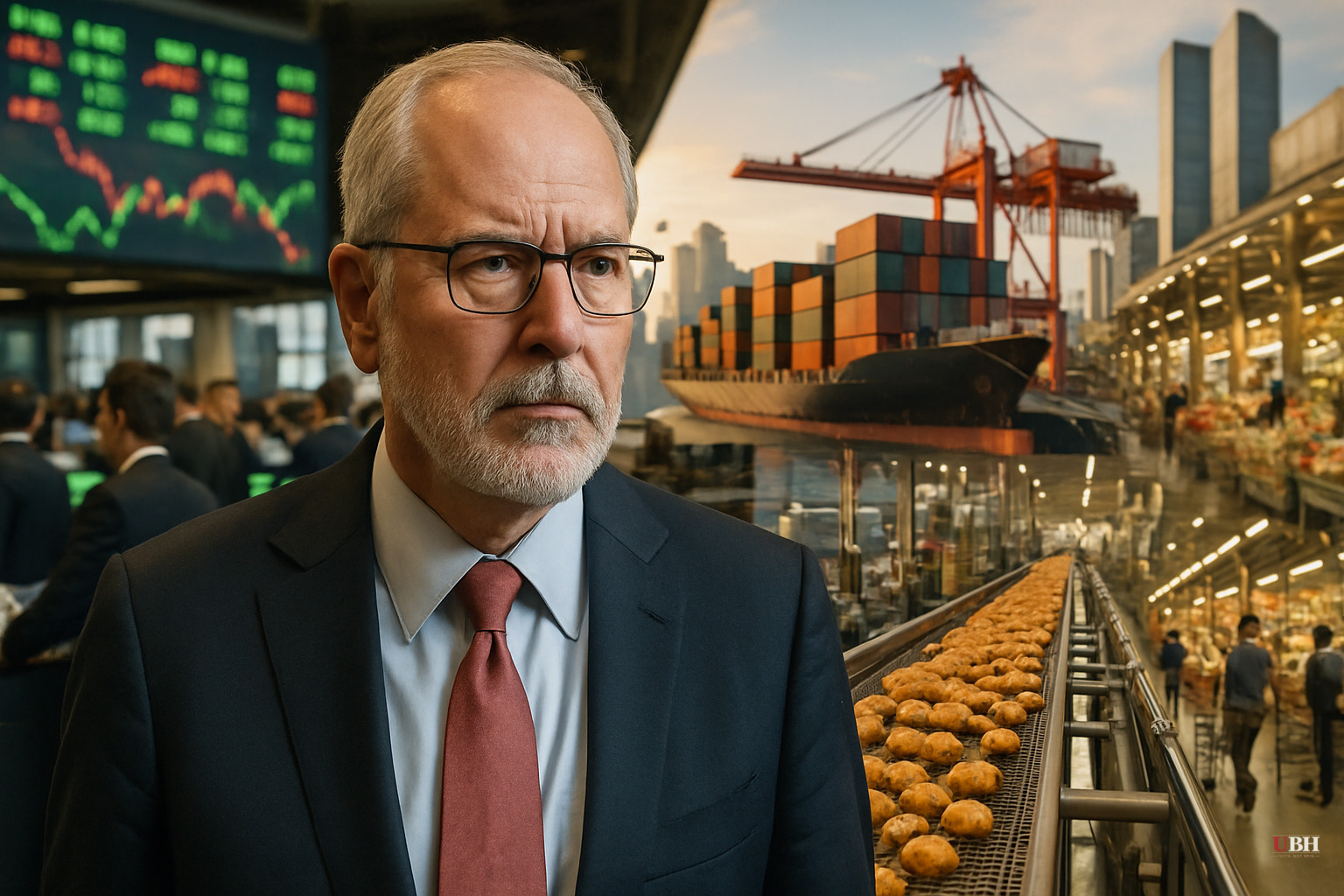
Donnie King Is Out. Jeff Schomburger Is In.
Tyson Foods announced Thursday that CEO Donnie King will step down, with board member Jeff Schomburger taking the helm on October 4, according to Reuters and reporting confirmed by The Pig Site and The Poultry Site. King, a 43-year Tyson veteran who became CEO in 2021, will remain on the board in an advisory capacity starting July.
Schomburger is NOT a meat industry guy. He retired in 2019 as global sales officer at Procter & Gamble — maker of Tide detergent and Pampers diapers. He's been a Tyson board member since 2016.
The board picked a P&G outsider to navigate the worst cattle supply crisis in a generation.
The Stock Said Everything
Tyson shares dropped 6% on the news, according to Reuters. Investors did not see this coming and do not like it.
Under King's entire tenure, Tyson stock is down roughly 18% as of Wednesday's close, according to ZeroHedge. That's ugly. But King actually fixed the chicken business. Tyson raised its full-year income forecast this month on the back of strong chicken sales and better-than-expected quarterly earnings.
"Tyson has been doing very well and materially outperforming competitors in its marquee chicken business, and Donnie King has spearheaded that," said analyst Heather Jones of Heather Jones Research. "In light of that, this move creates much uncertainty and questions. This removes the person from the helm that investors really trusted."
The guy who turned around the profitable division just got shown the door.
The Beef Crisis Is Real and It's Structural
The beef problem isn't Tyson's fault — and it's the part most coverage glosses over.
The U.S. cattle herd has hit its smallest size since the 1950s, according to MarketMinute, the result of years of drought-induced liquidation and brutal operational costs for ranchers. Cattle inventories are at a 75-year low, according to reporting aggregated by The Pig Site.
The USDA's December 1, 2025 Cattle on Feed report — reported by MarketMinute — confirmed the supply crunch is accelerating. Total cattle and calves on feed stood at 11.7 million head, a 2% decline year-over-year. The real alarm: cattle placements — new animals entering feedlots — dropped 11%, hitting their lowest November level since record-keeping began in 1996.
Fewer cattle entering feedlots now means fewer market-ready animals in mid-2026.
Tyson Already Swung the Axe
The company didn't wait around. On November 21, 2025, Tyson announced it would permanently close its Lexington, Nebraska beef plant on January 20, 2026, according to MarketMinute. That plant processed nearly 5,000 head of cattle per day — approximately 4.8% of total daily U.S. beef slaughter capacity.
Tyson also cut its Amarillo, Texas facility down to a single shift.
The company laid off thousands of workers in these moves, according to The Poultry Site. Those are real people losing real jobs because the cattle supply collapsed and the math stopped working.
Meatpackers are caught in a squeeze: cattle costs are soaring because supply is tight, but they can't pass all of that cost downstream fast enough. They bleed margin on beef and close plants.
Washington Is Watching — and Grandstanding
President Donald Trump has accused meatpackers of driving up beef prices through collusion and directed the Department of Justice to investigate the industry, according to The Poultry Site.
Tyson is one of four dominant U.S. beef processors — Cargill, JBS, Tyson, and National Beef Packing Company control the overwhelming majority of processing capacity.
There's a legitimate debate about consolidation in the beef packing industry and whether four companies controlling that much capacity serves ranchers and consumers well. But blaming collusion for a cattle herd that's been shrinking for years due to drought and input costs is a political answer to an agricultural problem. Both things can be partly true — and neither Congress nor the White House has shown serious interest in the actual supply-side fix: getting more cattle bred and raised.
The Succession Story Everyone Missed
Investors had largely expected Devin Cole — Tyson's Chief Operating Officer, who led poultry and international businesses before being elevated to oversee all major divisions — to be King's successor, according to Reuters. Cole was the internal candidate. He didn't get it.
Instead, the board reached outside the meat industry entirely for a retired consumer goods executive. That is a significant strategic signal. Whether it signals the board thinks Tyson's fundamental problem is marketing and brand rather than operations — or whether it's a board power play — isn't clear yet. It's not a normal succession.
What This Means For Your Wallet
Rabobank analysts told ZeroHedge there is some good news on the horizon: early 2026 data shows a higher year-over-year heifer retention rate, meaning ranchers are starting to rebuild the herd. That's the first step toward recovery — but it takes years, not months, for that to flow through to beef supply.
Beef prices at your grocery store are not coming down anytime soon. The herd is the smallest it's been since before most Americans were born. A major chunk of processing capacity just went offline. And the company that controls a significant slice of the beef supply just handed the wheel to someone who spent his career selling shampoo.
Hope you like chicken.
Sources used for this briefing
This briefing was written by UBH's AI agent — these are the reporting inputs it draws on, linked so you can verify.


