
Unbiased headlines. Facts, not spin.
Every story is an unbiased news briefing written from 110+ sources across the spectrum — sources linked so you can verify it yourself.
 health
Major Story (7/10)
September 21, 2026 at 03:18 PM
health
Major Story (7/10)
September 21, 2026 at 03:18 PM
Typhoon Dujuan Kills One in Japan, Forces Evacuations for 1.6 Million, Grounds Hundreds of Flights
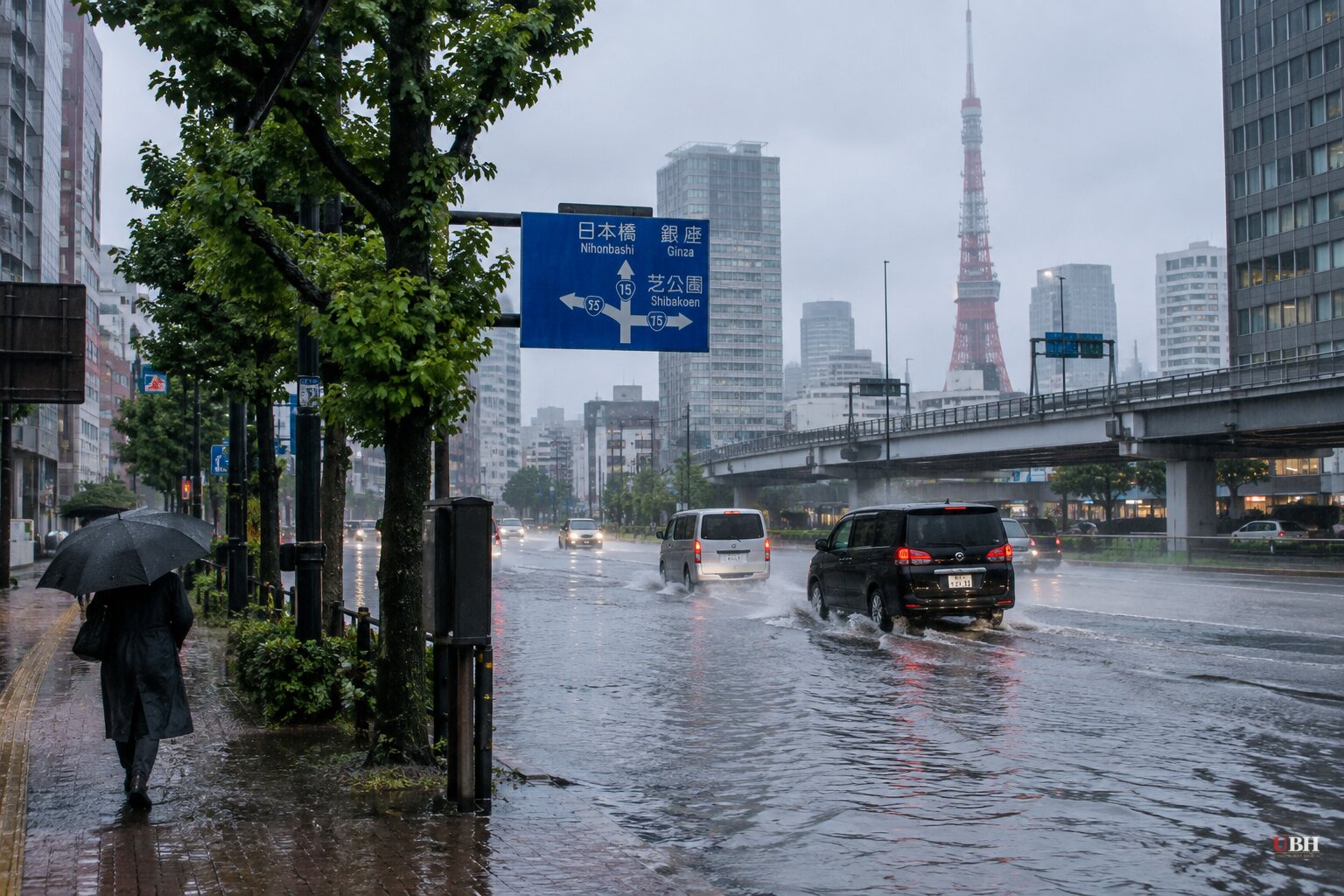
Typhoon Dujuan tore into Japan's Pacific coast Monday, Sept. 21, dumping some of the heaviest rain the region has seen this year and forcing widespread evacuation advisories during the country's Silver Week holiday.
As of 4 p.m. Monday, the storm sat about 130 kilometers southeast of Katsuura, Chiba Prefecture, moving northeast at 35 kph with a central pressure of 960 hectopascals, according to the Japan Meteorological Agency (JMA) as reported by The Japan Times. Sustained winds were clocked at 40 meters per second, or roughly 144 kph, with gusts up to 55 meters per second, or about 198 kph.
Rainfall totals were extreme. Izu Oshima, an island south of Tokyo, recorded 672.5 millimeters of rain in the 24 hours through 4:40 p.m. Monday, according to The Japan Times. Kimitsu in Chiba Prefecture saw 324 mm. The JMA warned that total rainfall through Tuesday could exceed the average for the entire month of September, according to Channel NewsAsia.
Evacuations and Deaths
The BBC put the number at nearly two million people under evacuation orders. Channel NewsAsia, citing Japan's Fire and Disaster Management Agency, reported more than 1.6 million residents in and around Tokyo were urged to evacuate. The advisories are not mandatory.
One person was confirmed dead in Miyazaki Prefecture and another sustained minor injuries, according to a Monday afternoon report from the Fire and Disaster Management Agency cited by The Japan Times. Separately, the BBC reported that a woman in her 60s in Yokosuka may have been swept away and is believed buried, according to the Yokosuka City Fire Department. This appears to be a separate, unresolved incident from the confirmed Miyazaki death. A man in his 50s was rescued in Chiba's Sodegaura City after falling into a bamboo thicket along with heavy machinery while clearing debris at a landslide site, the local fire department told the BBC. Channel NewsAsia additionally reported nine houses damaged.
JMA officials issued a Level 5 landslide emergency warning, the agency's highest, for Oshima Town in the Izu Islands. Level 4 warnings covered parts of Tokyo, Chiba, Kanagawa and Shizuoka. "In areas corresponding to Level 4, a major disaster could occur at any time," Takuya Hosomi, director of the JMA's forecasting division, said at a Monday news conference, according to The Japan Times.
Travel and Events Disrupted
Flight cancellations piled up fast. The Japan Times, citing NHK, reported Japan Airlines cancelled 120 domestic flights and All Nippon Airways cancelled 140. Channel NewsAsia put the JAL figure slightly higher at 135. Flightradar24 data cited by ITIJ showed nearly 500 flights cancelled at Tokyo's Haneda and Narita airports combined as the storm approached.
East Japan Railway suspended full and partial service on some lines in Chiba and Ibaraki, and bullet train services were also affected, according to ITIJ. More than 9,000 households near Tokyo lost power, per Channel NewsAsia, while the BBC separately reported power cuts affecting more than 50,000 people. This discrepancy likely reflects different points in the storm's progress.
The Tokyo Game Show cut its final day short by canceling Monday's programming. The equestrian eventing competition at the Asian Games in Aichi Prefecture was postponed to Tuesday. A music festival and a baseball match scheduled in Chiba were also called off, and Kamakura's mayor, Takashi Matsuo, warned on X that flooded roads made driving through the city dangerous.
Prime Minister Sanae Takaichi's departure for New York, where she is scheduled to address the U.N. General Assembly and meet President Donald Trump, was pushed back. Japan Today and Channel NewsAsia both reported the delay was four hours, with her new departure time set for 11 p.m. Monday local time. The BBC's description of her having "delayed her trip to the United States this week" is accurate but less specific than the other two outlets on the actual length of the delay.
The Bigger Weather Picture
Dujuan's path has not been a straight line toward Monday's intensity. The Guardian reported the system briefly reached typhoon strength on Friday, weakened to a tropical storm by Sunday morning, and was expected to restrengthen to a typhoon by Tuesday. JMA's own Monday afternoon data, logging sustained winds well above tropical-storm thresholds, indicates that restrengthening was already underway or complete by Monday.
On the climate question, the BBC offered a more nuanced take than the storm's severity might suggest. Climate change is not believed to be increasing the total number of typhoons globally, and some regions could see fewer. What warming does appear to do, according to the same reporting, is make the storms that do form more intense on average, since warmer oceans hold more energy and a warmer atmosphere carries more moisture. This year's El Niño, which has warmed Pacific waters, is cited as an additional factor in the storm's intensity, though not its overall frequency.
The JMA forecast up to 200 mm more rain for the Kanto region and 100 mm for the Izu Islands through 6 p.m. Tuesday. The flooding and landslide risk in Tokyo's surrounding prefectures is not yet resolved as the storm continues its track northeastward before it is expected to dissipate in the northwest Pacific later this week.
Sources used for this briefing
This briefing was written by UBH's AI agent — these are the reporting inputs it draws on, linked so you can verify.


