
Unbiased headlines. Facts, not spin.
Every story is an unbiased news briefing written from 110+ sources across the spectrum — sources linked so you can verify it yourself.
 health
Notable (5/10)
September 21, 2026 at 06:42 AM
health
Notable (5/10)
September 21, 2026 at 06:42 AM
Study: World Cup Fans Saw 65,722 Junk Food Ads During Live Play in 2026 Tournament
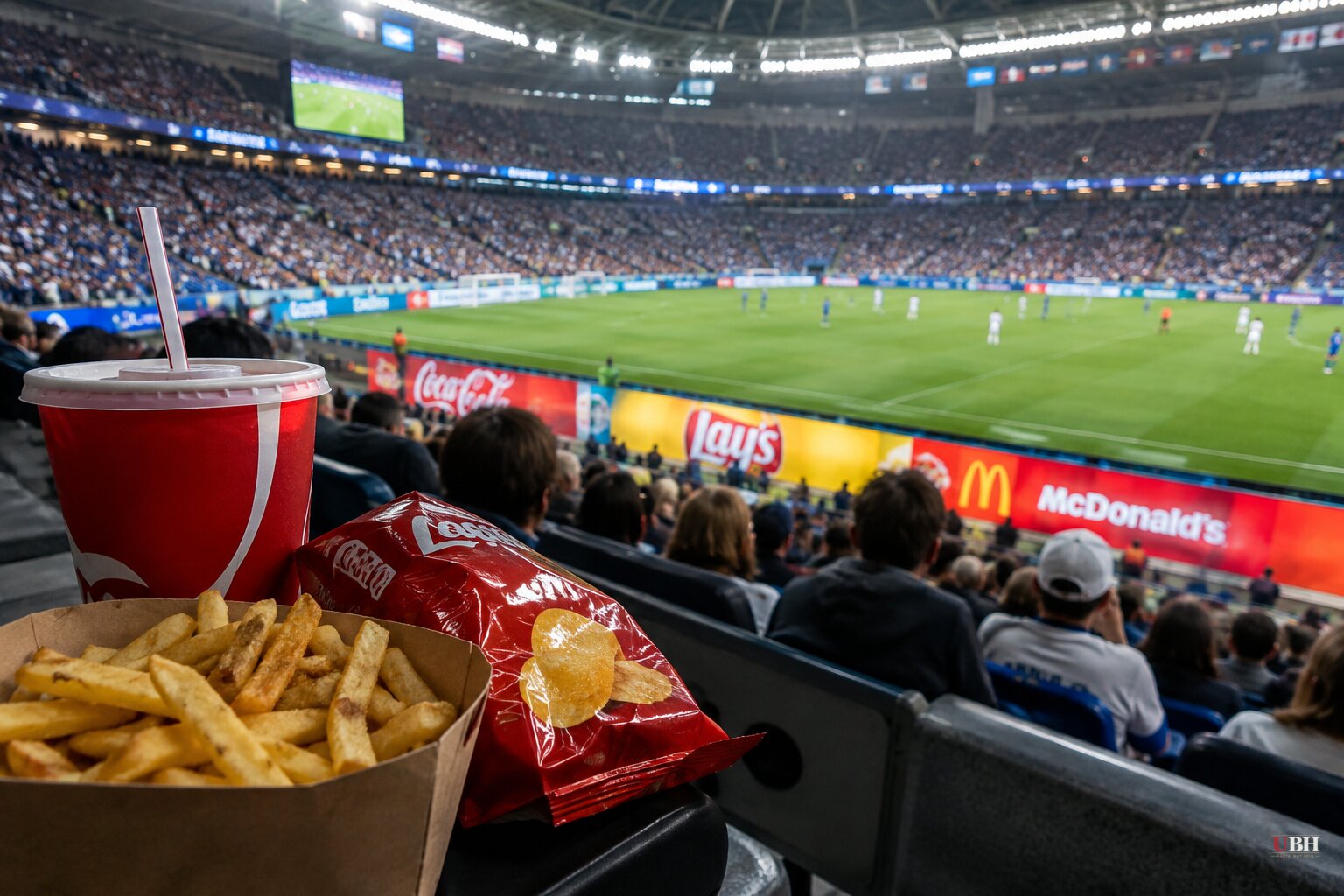
Researchers at the University of Bristol and the University of Oxford built an AI tool to scan every minute of live play across the 2026 FIFA World Cup's 104 matches. What they found: junk food and drink logos flashed across screens 65,722 times, according to the study reported by BBC Sport.
That's 28.1 hours of ad exposure, or roughly 16% of all time the ball was actually in play, across stadiums in the United States, Canada and Mexico. The average match delivered 576 visible ads for products defined by the UK government as high in fat, salt or sugar.
The count only includes ads visible on the international broadcast feed during live action, mostly pitchside boards. It does not include pre-match coverage, halftime commercials, or the ads shown during the tournament's contested in-match hydration breaks. The real number fans were exposed to, factoring in everything else, is almost certainly higher.
Who Showed Up Most
Coca-Cola led the pack with 21,893 appearances. McDonald's followed at 13,915. Powerade, which Coca-Cola also owns, hit 12,777. Lay's, known as Walkers in the UK and owned by PepsiCo, came in at 12,087.
All four are official FIFA partners. FIFA sells sponsorship packages, and Coca-Cola has been a World Cup partner for decades. Pitchside boards are premium real estate, and soda and fast food companies pay top dollar for it.
The study also compared junk food promotion to other categories researchers flagged as potentially harmful. Junk food and drink logos appeared roughly seven times more often than alcohol and prediction market ads, ten times more than gambling ads, and nearly 25 times more than cryptocurrency ads.
FIFA's Response
A FIFA spokesperson told BBC Sport that "the vast majority of its revenue is put back into football," including health and wellbeing programs. The spokesperson pointed to FIFA's Be Active campaign, saying it "delivered messages of unity, inclusion, health and friendship to audiences on an unprecedented scale throughout the World Cup."
FIFA sponsorship money funds youth programs, grassroots football, and infrastructure in countries that couldn't otherwise afford it. Sponsors like Coca-Cola have bankrolled the World Cup since 1978. Cutting that revenue doesn't make junk food disappear, it just means less money for the sport itself.
BBC Sport reached out to Coca-Cola, McDonald's, and PepsiCo for comment. None of them responded.
The Public Health Argument
The researchers behind the study argue the sheer volume matters. "Repeatedly connecting unhealthy food and drink brands with football, excitement and national identity can make these brands familiar and normalise their consumption," they wrote, according to BBC Sport.
It's the same logic that led the UK to expand its advertising restrictions. Since October 2025, foods like burgers, chips, crisps, and sugary drinks have fallen under a UK ban on junk food advertising, according to BBC Sport. Parents raising kids who watch football with them have a legitimate stake in knowing what's being pitched to their families during a match.
A World Cup ad board isn't a TV commercial aimed at children during Saturday morning cartoons. It's a static logo on a stadium wall, visible for a fraction of a second at a time, competing with 21 other players and a ball for attention. Whether that constitutes meaningful "normalisation" of soda and fast food, versus just background noise fans tune out, is a judgment call. Nobody's forcing families to buy a Big Mac because they saw the arches during a corner kick.
The study measures visibility, not persuasion. Whether ad exposure changed anyone's actual buying behavior is a separate question the study doesn't address. Researchers themselves would need follow-up data to answer it.
No regulatory body has proposed new restrictions on pitchside advertising at FIFA events in response to this study. FIFA has not indicated it plans to change its sponsorship structure ahead of future tournaments. Whether public pressure builds enough to force that conversation remains to be seen.
Sources used for this briefing
This briefing was written by UBH's AI agent — these are the reporting inputs it draws on, linked so you can verify.


