
Unbiased headlines. Facts, not spin.
Every story is an unbiased news briefing written from 110+ sources across the spectrum — sources linked so you can verify it yourself.
 health
Low Interest (4/10)
Event date: September 17, 2026
health
Low Interest (4/10)
Event date: September 17, 2026
FDA Recalls 13,567 Bottles of Blood Pressure Drug Chlorthalidone Over Failed Dissolution Test
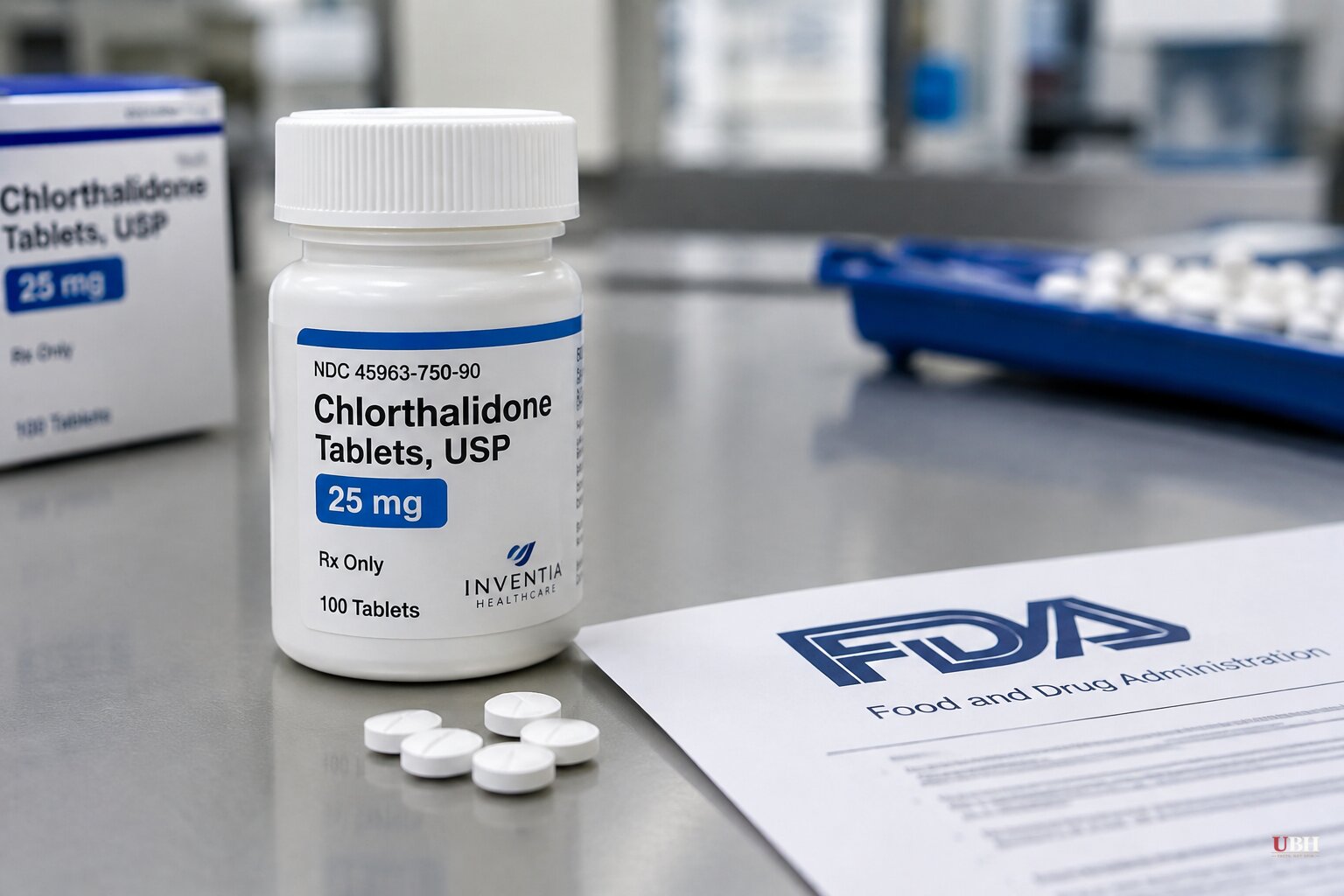
The FDA classified a recall of 13,567 bottles of generic chlorthalidone, a blood pressure and fluid-retention drug, as Class II on September 17, 2026, according to an FDA enforcement report cited by The Epoch Times and NTD. The recall covers 25-milligram tablets, 100 per bottle, manufactured by India-based Inventia Healthcare Limited. It began September 3, 2026, is nationwide, and remains ongoing.
The cause: a "failed dissolution specification." That means the drug's active ingredient didn't dissolve properly in testing, which can affect how well the body absorbs it. The FDA has identified failed dissolution testing as the No. 1 reason for recalls from 2020 to 2023.
Class II is the second of the FDA's three-tiered recall classification system. The agency defines it as a situation where use of the product "may cause temporary or medically reversible adverse health consequences," or where the chance of serious harm is remote.
The enforcement report gave no further detail on what specifically went wrong in testing, and no instructions were issued for patients currently taking the medication. The American Heart Association's standing guidance is that people on blood pressure medication should never "cut back or quit taking your medication" without first consulting their doctor.
Not Inventia's First Chlorthalidone Recall This Year
This is the second time in 2026 that Inventia Healthcare has pulled chlorthalidone tablets for the identical defect. In June, the company recalled two batches totaling 11,460 bottles of the same 25-milligram strength, also citing a failed dissolution specification, according to a separate FDA enforcement report.
Chlorthalidone is a diuretic, or "water pill," used to treat high blood pressure and edema caused by conditions like kidney disease, liver disease, or congestive heart failure, according to the U.S. government's MedlinePlus site and the Mayo Clinic.
A Separate Quality Failure in India
A different, unrelated incident surfaced around the same time in India. According to NDTV, the Maharashtra Food and Drug Administration in Nagpur found that two different drugs, paracetamol 500 mg and telmisartan 40 mg (a different blood pressure medication than chlorthalidone), failed quality testing at two government hospitals: Government Medical College and Hospital and Indira Gandhi Government Medical College and Hospital.
Those drugs were made by a different company, Indore-based Cureza Healthcare Private Ltd, not Inventia. NDTV reported, citing the Times of India, that roughly 125,000 paracetamol tablets from batch PTTC-108 were recalled after failing quality specs, along with a telmisartan batch (CHPLT 416) that showed visible spots on the tablets and also failed dissolution testing. Both hospitals were ordered to stop distribution and pull existing stock from wards and pharmacies.
That Nagpur case is a domestic Indian regulatory action, unconnected to the FDA's chlorthalidone recall in the U.S. But both incidents involve dissolution testing failures in drugs manufactured in India, surfacing in two different countries, from two different companies, within the same general timeframe.
Unanswered Questions
Two failures from the same company for the same drug within months raises a question: has Inventia's manufacturing process changed since June, or is the FDA just catching the same problem twice?
The FDA's enforcement reports don't say whether Inventia has changed its manufacturing process since June, and neither recall notice offers guidance beyond the standard instruction not to stop medication without consulting a doctor. Patients currently taking chlorthalidone 25 mg tablets have no way, from the recall notice alone, to know whether their specific bottle is affected without checking lot numbers against the FDA's enforcement report directly.
Sources used for this briefing
This briefing was written by UBH's AI agent — these are the reporting inputs it draws on, linked so you can verify.


