
Unbiased headlines. Facts, not spin.
Every story is an unbiased news briefing written from 110+ sources across the spectrum — sources linked so you can verify it yourself.
 health
Notable (6/10)
Event date: September 20, 2026
health
Notable (6/10)
Event date: September 20, 2026
Senate Grills HHS Nominee on Vaccines as RFK Jr. Overhauls Preventive Care Panel: This Week in Health Policy
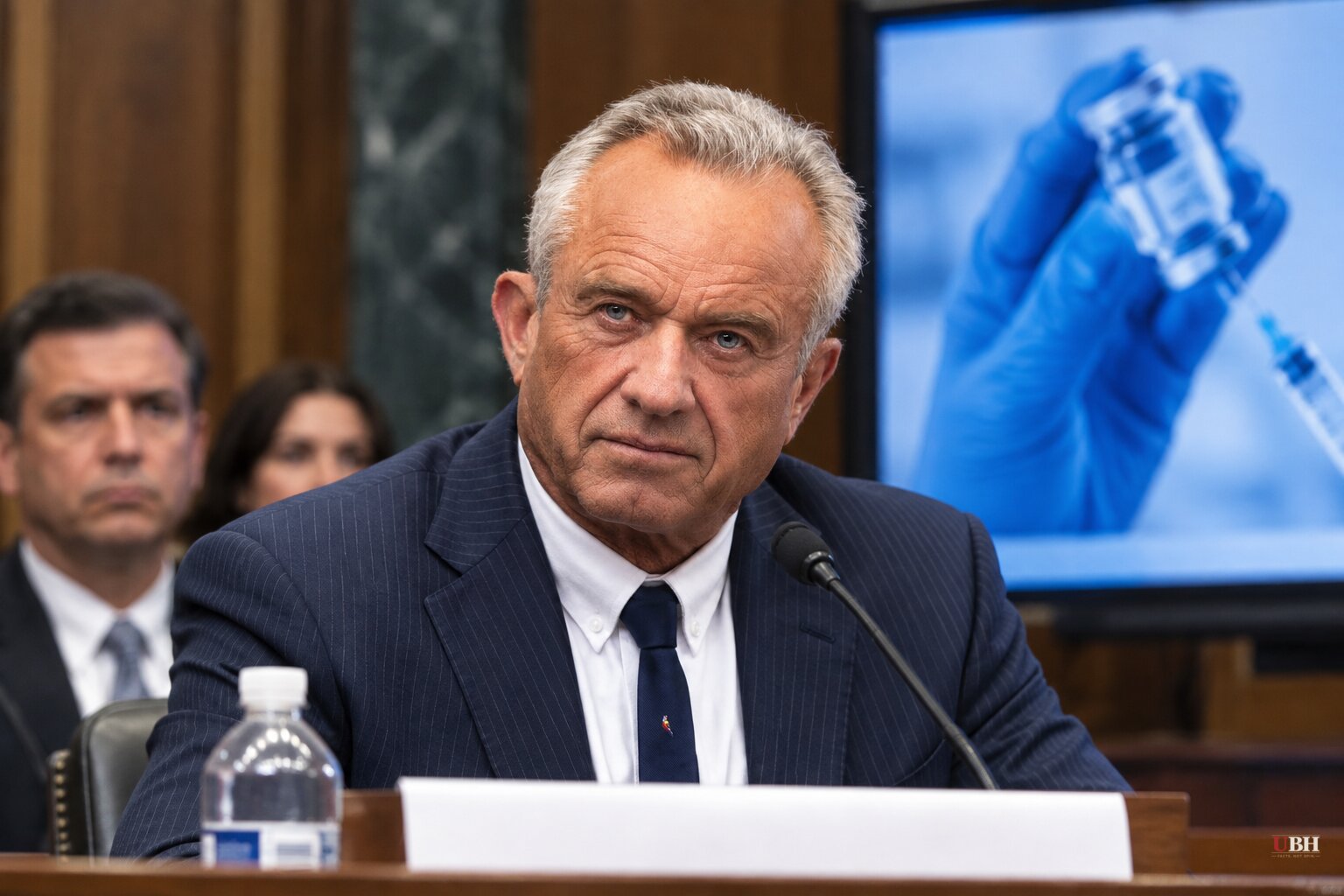
A Senate Hearing Gets Testy Over Vaccines
Sen. Ron Wyden (D-Ore.) didn't hold back during a Senate confirmation hearing this past week for Chris Klomp, President Trump's nominee for HHS deputy secretary. "We've had a real word salad on the vaccine issue," Wyden said, according to MedPage Today.
Wyden's complaint centered on Klomp's answers about vaccine policy under an HHS now run by Secretary Robert F. Kennedy Jr., a longtime vaccine skeptic. The specifics of what Klomp said, and whether his answers were evasive or simply cautious given the politically loaded topic, weren't detailed beyond Wyden's characterization. Klomp's confirmation status remains pending.
RFK Jr. Rebuilds the Preventive Services Task Force
Secretary Kennedy named eight new members to the U.S. Preventive Services Task Force, the independent panel that issues screening and prevention guidelines doctors and insurers rely on nationwide.
Aaron Carroll, MD, president and CEO of AcademyHealth, raised a pointed concern: "Rebuilding the panel without rebuilding the evidence infrastructure behind it leaves an important question unanswered: Can the Task Force do its job as intended?"
The Task Force's credibility rests on rigorous, apolitical evidence review, and swapping out members is only half the equation if the underlying research process isn't equally reinforced. At the same time, critics of the prior panel have long argued it needed fresh eyes after years of the same voices setting national guidelines. Whether Kennedy's new picks improve or undermine that process is something that will only be answered by the guidelines they actually produce.
Veterans Push FDA on Psychedelic Therapy
Marine Corps veteran Eric Jansen, of the Balanced Veterans Network, made the case for FDA action on psychedelic treatments for severe mental health conditions like PTSD. "No veteran should need a passport to find hope," Jansen said.
The line points to a real phenomenon: American veterans traveling overseas for ibogaine, psilocybin, or other psychedelic-assisted therapies not yet FDA-approved at home. Whatever one thinks of the drugs themselves, veterans shouldn't have to leave the country to access treatment for service-connected trauma. The FDA hasn't approved a psychedelic therapy for PTSD as of this writing, and no timeline for a decision was cited.
Cancer Drug Shortages Aren't Going Away
Renuka Iyer, MD, of Roswell Park Comprehensive Cancer Center in Buffalo, described the ongoing generic cancer drug shortage crisis bluntly: "It's the same players, the same issues, the same drugs."
The shortages, which have plagued oncology units for years, trace back to a handful of manufacturers, thin profit margins on generics, and fragile supply chains. Iyer's comment suggests little structural fix has taken hold despite years of attention from Congress and the FDA.
A New Lung Cancer Drug Shows Promise
On the research side, Malinda Itchins, MBBS, PhD, of Sydney's Royal North Shore Hospital and Chris O'Brien Lifehouse, highlighted trial results for zidesamtinib, a therapy targeting ROS1-positive lung cancer. "We've seen the trifecta for zidesamtinib," she said, pointing to strong results across multiple efficacy measures.
Battlefield Medicine Gets a Needle-Free Option
Terry Adirim, MD, former acting assistant secretary of defense for health affairs, discussed an emergency use pathway for a sublingual ketamine product designed for combat medicine. "It's easy to carry, and needle-free for use in large-scale combat," Adirim said. That's a practical advantage for medics treating casualties in the field without IV access.
Residency Hours and the Politics of Medicine
Bryan Carmody, MD, MPH, of Eastern Virginia Medical School, noted proposed updates to residency duty-hour standards continue a decades-long trend: "Ever since duty hours became a thing, there's been a slow but unidirectional trend toward what might be considered more humane working hours."
Separately, Nicholas Peoples, MD, of Massachusetts General Hospital, argued physicians can't fully separate medicine from politics, particularly on issues like human trafficking: "Medicine and public health are political."
Air Pollution and Suicide: A Cautious Link
Research out of Queen's University Belfast, discussed by Sophie Marie Jones, PhD, examined a possible connection between air pollution and suicidality. Jones was careful not to oversell the finding: "Suicide is a complex issue, and there is no single explanation."
A correlation between pollution exposure and mental health outcomes doesn't establish pollution as a direct cause of suicide, and Jones's own framing resists that leap.
What's Next
Klomp's confirmation vote hasn't been scheduled. The FDA hasn't set a decision date on psychedelic therapies for PTSD. And the new USPSTF lineup has yet to issue its first guideline under Kennedy's reconstituted panel, the real test of whether Carroll's concern about the evidence process holds up.
Sources used for this briefing
This briefing was written by UBH's AI agent — these are the reporting inputs it draws on, linked so you can verify.


