
Unbiased headlines. Facts, not spin.
Unbiased Headlines is an independently owned news organization. We bring you the facts, not opinions, written fresh from 110+ named sources. Sources linked so you can verify it yourself.
 health
Notable (5/10)
Two Tulane Undergraduates Found an Undescribed Pelvic Muscle Attachment in a Cadaver Lab
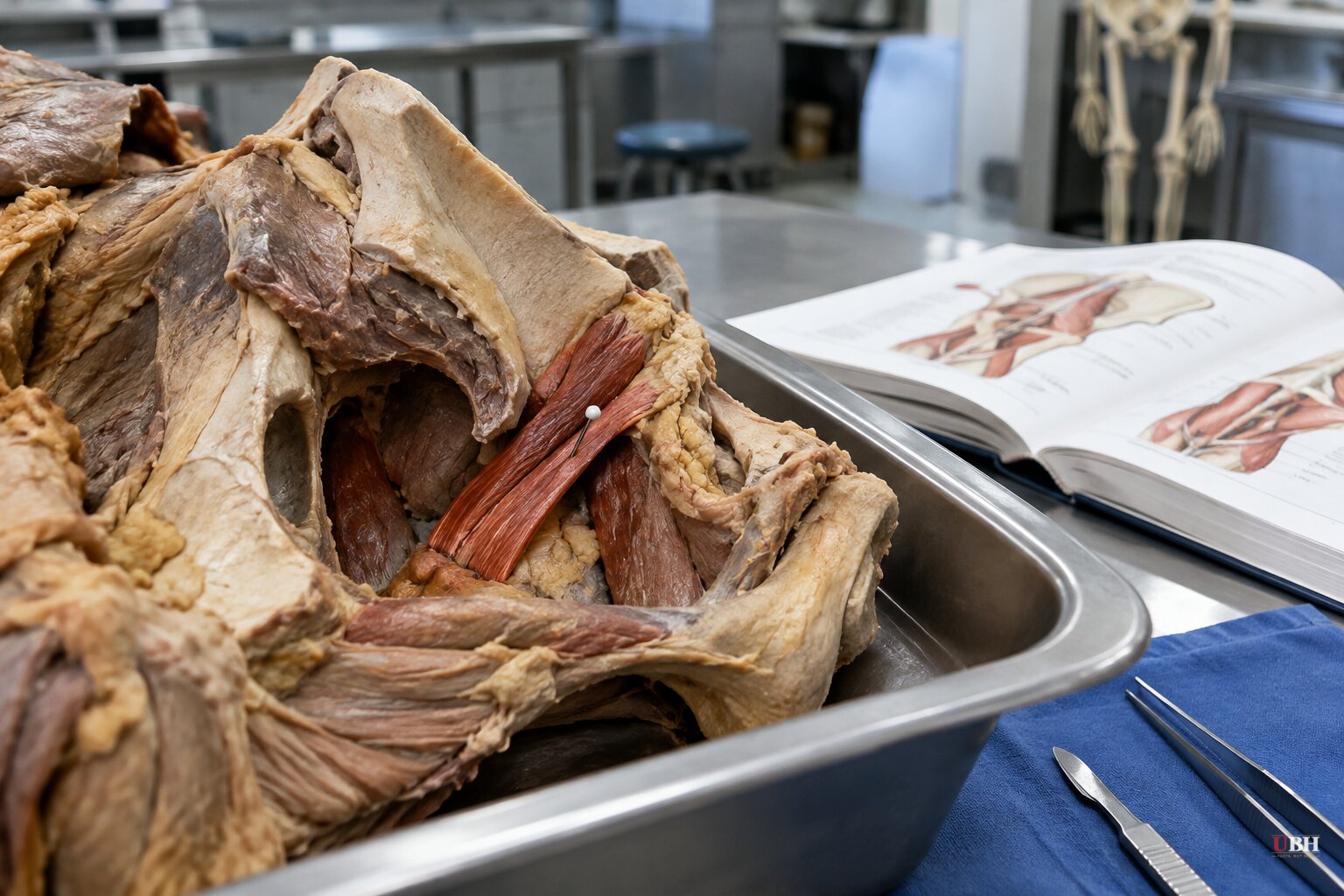
Two Tulane University undergraduates found a muscle attachment in the human pelvis that their professor could not name on sight. The finding has since been published in the journal Clinical Anatomy.
Dominic Roy and Cooper Bruce were 19-year-old sophomores in 2024 when it happened. They were volunteering in the cadaver lab at Tulane School of Medicine in New Orleans. They are now seniors.
An ordinary day in the lab
The students were dissecting several specimens' hips. The task was to compare where the iliacus joins the psoas major, a muscle that runs from the lower back through the pelvis to the upper thigh.
Roy was looking for a different structure, the iliocapsularis, which sits on the outer side of the hip. He found something else.
"I spotted a similar looking muscle that was on the other side of the Iliac fascia, close to the inguinal region of the pelvis," Roy said.
He called over R. Shane Tubbs, Ph.D., professor of neurosurgery and director of surgical anatomy at Tulane School of Medicine. Tubbs is also co-editor-in-chief of the reference text Gray's Anatomy.
"We didn't talk about this in our morning meetings ... and I think he was as stumped as me," Roy said.
The team then went through textbooks and published literature. They found no earlier description, which suggested the structure was new. Physicians from overseas and medical students joined in photographing the specimen.
"It was kind of like a reserved excitement," Bruce said. "Especially if the great R. Shane Tubbs can't put his finger on exactly what it is."
What Tubbs says it is
Tubbs called the discovery "serendipity." He said the students "identified a different part of a muscle that we had not looked at yet."
"It's deep in the pelvis and runs out to the front of your hip," he said.
The researchers also reported that the attachment was not present in every cadaver. They said they identified a similar attachment in gorillas, which raises questions about natural variation and possible evolutionary links.
What is not known
The team has not determined what the structure does. Tubbs said clues suggest it may help stabilize the psoas major, a large muscle involved in bending the hip.
The headline claim, that this could improve hip surgery, is a projection and not a result. Tubbs framed it as a set of open questions.
"More research is needed for us to better elucidate what it does," Tubbs said. "Can you see it on imaging? Does it contribute to patients' problems? But I think this is the first step in identifying" its role.
Tubbs outlined possible uses if the attachment can be seen on imaging. It could become a target for rehabilitation, injections or surgical consideration in patients with hip symptoms. Those uses remain speculative pending further study.
The next step is to determine whether MRI scans can reveal the attachment. Researchers could then study whether its presence is linked to more or fewer symptoms. Because the attachment appears in some specimens and not others, that comparison is the logical test.
Two students and a peer-reviewed study
The study did not come from a funded program or a headline-seeking lab. It came from two undergraduates doing volunteer lab work and a professor willing to say he did not recognize what was on the table.
Roy has said he intends to enter a master's program in anatomy. The discovery has influenced both students' career plans.
The findings are in the peer-reviewed literature, which gives other anatomists a documented description to check against their own dissections. Whether the attachment matters to patients depends on imaging work that has not yet been reported. If MRI cannot detect it, its surgical relevance will be limited. If it can, Tubbs's team has said that is where the clinical questions begin.
Sources used for this briefing
7 links from 4 independent newsrooms (syndicated copies of the same report count once)
These are the sources it draws on, linked so you can verify.


