
Unbiased headlines. Facts, not spin.
Unbiased Headlines is an independently owned news organization. We bring you the facts, not opinions, written fresh from 110+ named sources. Sources linked so you can verify it yourself.
 health
Major Story (7/10)
Virginia Voters Approve Abortion Amendment by About 61% to 39%; Court Hearing on Certification Set for Nov. 13
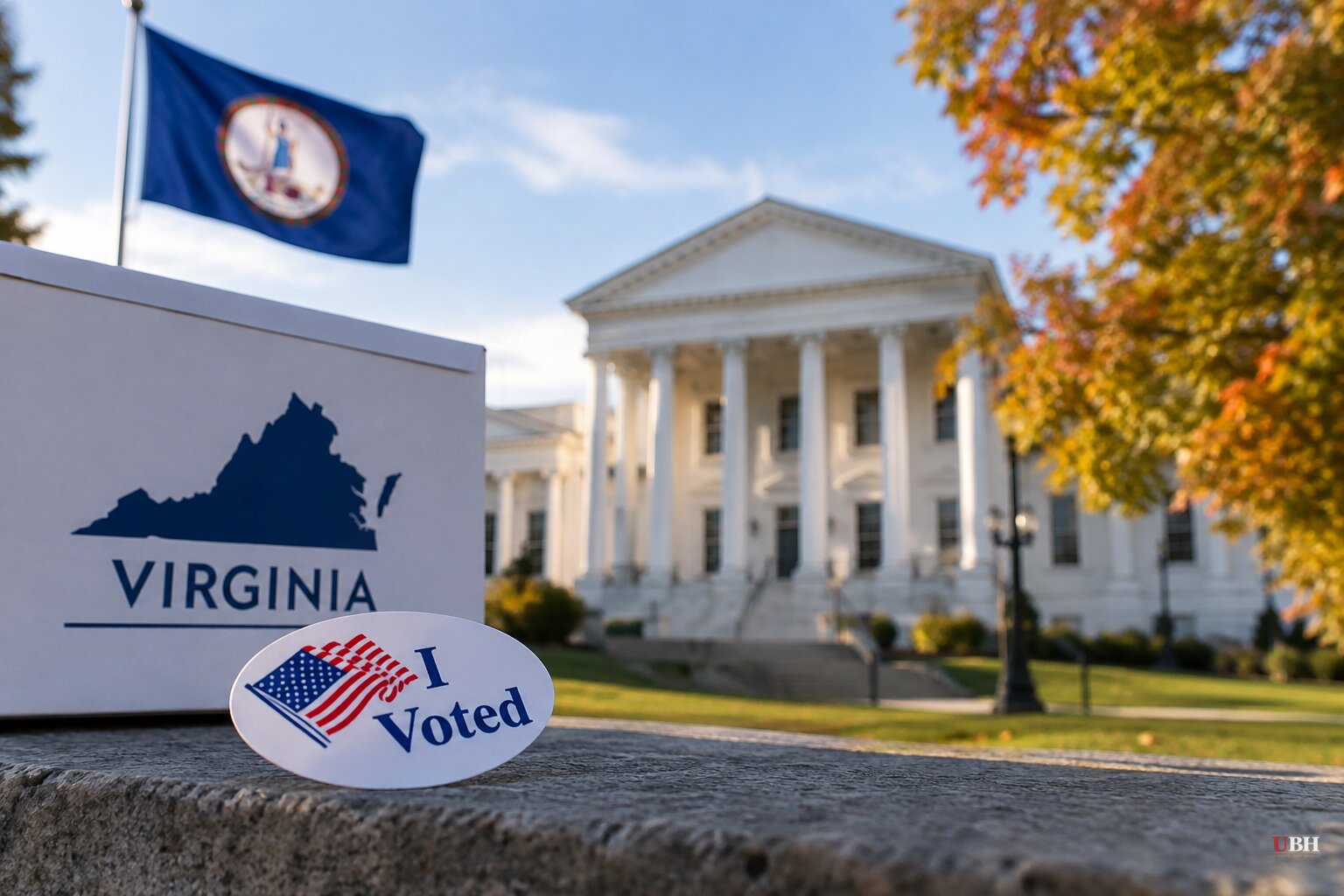
Virginia voters on Tuesday, Nov. 3, approved Question 1, adding a "fundamental right to reproductive freedom" to the state constitution. The Associated Press called the race at 9:01 p.m. Eastern with the measure ahead 60.7% to 39.3%, with about 63% of ballots counted. Early returns cited elsewhere put the yes vote at 60.9%. Final certified totals are not yet in.
The amendment is scheduled to take effect Jan. 1, 2027. A court hearing could complicate that.
What the amendment says
The new Section 11-A of the Bill of Rights covers "prenatal care, childbirth, postpartum care, contraception, abortion care, miscarriage management, and fertility care." It also protects doctors, nurses and patients from being punished for those decisions.
The right cannot be "directly or indirectly, denied, burdened, or infringed upon unless justified by a compelling state interest achieved by the least restrictive means," according to the text published by the Virginia Department of Elections. The amendment defines a compelling interest as one with "the limited purpose of maintaining or improving the health of an individual seeking care."
The third trimester is where the argument sits. The state "may regulate the provision of abortion care in the third trimester." But "in no circumstance shall the Commonwealth prohibit an abortion" that "in the professional judgment of a physician is medically indicated to protect the life or physical or mental health of the pregnant individual," or when a physician judges the fetus not viable.
How it compares with current law
Virginia Code 18.2-74 currently requires three physicians for a third-trimester abortion. The performing doctor and two consulting doctors must certify, "based upon their best clinical judgment," that continuing the pregnancy "is likely to result in the death of the woman or substantially and irremediably impair the mental or physical health of the woman."
The amendment's language refers to "a physician." It does not mention consulting physicians. Whether a future law could restore a multi-doctor requirement is a question for the Legislature and, likely, the courts.
The dispute over "up to birth"
Social media posts after the vote claimed Virginia had approved abortion "up to birth." Snopes rated that claim false, reasoning that the amendment explicitly lets the Legislature restrict some third-trimester abortions.
Snopes also cited the American College of Obstetricians and Gynecologists, which says less than 1% of U.S. abortions occur in the third trimester. The Guttmacher Institute estimated 1.13 million abortions nationwide in 2025. Planned Parenthood says the amendment reinforces access that already exists under Virginia law.
Opponents read the same text differently. They argue the "sweeping" reproductive freedom wording reaches well past abortion. They also point to the health exception, which includes mental health and rests on a single physician's judgment. Founding Freedoms Law Center lawyer Josh Hetzler said the amendment was put forward through "flawed and deceptive means."
Both sides are quoting the text accurately. The Legislature may regulate in the third trimester. It may not prohibit an abortion that one physician judges medically indicated for a patient's mental or physical health. How much room that leaves for regulation will be decided by future legislation and litigation.
Lawsuits pending
A hearing is set for Nov. 13 in Tazewell County in a lawsuit seeking to block certification of the results. The plaintiffs challenge the legislative procedures used to place the measure on the ballot and the ballot language. Hetzler's group is separately challenging the same-sex marriage amendment on behalf of a Prince William County pastor. A separate lawsuit also challenges the procedures used to place that amendment on the ballot.
Gov. Abigail Spanberger welcomed the result. "Virginians made clear that reproductive rights are not up for debate," she said in a statement.
Two other amendments passed
Voters approved two other constitutional changes the same night, according to early returns.
Question 2 passed 56.1% to 43.9%. It removes the state's 2006 constitutional ban on same-sex marriage and recognizes the right of two adults to marry regardless of sex, gender or race. The ban became unenforceable after the U.S. Supreme Court legalized same-sex marriage nationwide in 2015, but it remained in the constitution.
Question 3 passed 54.7% to 45.3%. It automatically restores voting rights to people convicted of felonies after release from incarceration. The state changed its policy in September following a federal court ruling. Under that policy, only convictions for murder, voluntary manslaughter and involuntary manslaughter now cost a person the vote, according to the Department of Elections. The amendment guarantees restoration after incarceration even for those three offenses.
The U.S. Supreme Court overturned the nationwide right to abortion in 2022. Since then, voters in more than one-fifth of states have passed ballot measures protecting abortion rights.
The next concrete step comes Nov. 13 in Tazewell County. If the court does not block certification of the reproductive freedom amendment, it is scheduled to take effect Jan. 1, as are the other two amendments.
Sources used for this briefing
7 links from 6 independent newsrooms (syndicated copies of the same report count once)
These are the sources it draws on, linked so you can verify.


