
Unbiased headlines. Facts, not spin.
Unbiased Headlines is an independently owned news organization. We bring you the facts, not opinions, written fresh from 110+ named sources. Sources linked so you can verify it yourself.
 health
Notable (5/10)
Samsung Galaxy Buds Hearing Test and Hearing Aid Features Win South Korean Medical Approval
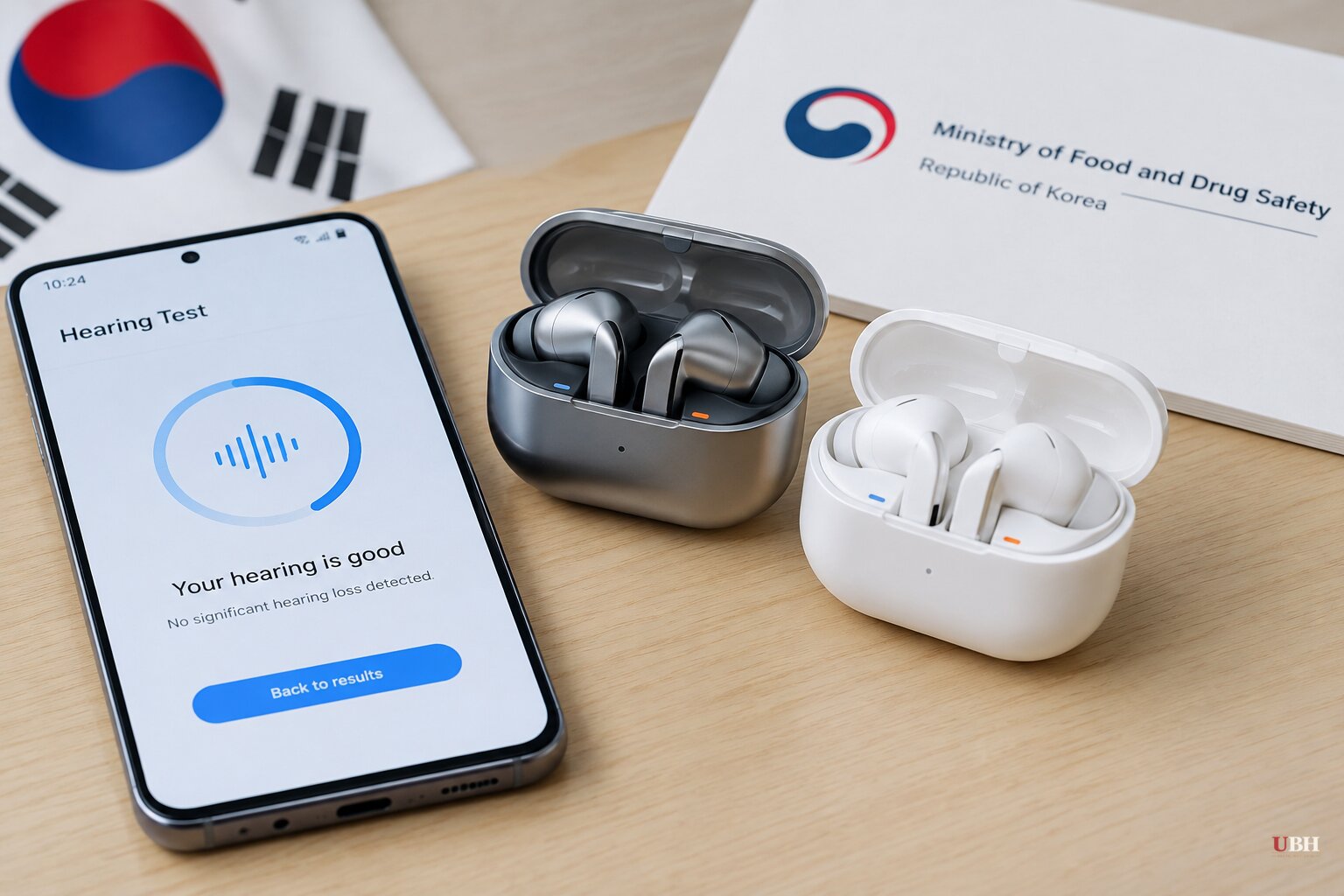
Samsung Electronics has secured medical device approval in South Korea for hearing-assessment and hearing-amplification features built into its Galaxy Buds4 Pro and Galaxy Buds3 Pro earbuds. The company announced the approval this week.
The approval comes from the Ministry of Food and Drug Safety (MFDS). The U.S. Food and Drug Administration cleared the same features in July.
No one is using the Korean version yet. Samsung said the features will reach Korean users through a software update in early 2027.
What the features do
The Hearing Test uses pure-tone air-conduction audiometry, the same principle behind the test done in a clinic. The earbuds play single-frequency tones into each ear separately and the software records the quietest sound the user can detect. The user starts the test from the Galaxy Buds menu in smartphone settings.
Results appear as an audiogram and are sorted into seven levels, from normal to profound hearing loss, with guidance on follow-up steps. Test results and noise-exposure data can sync to the Samsung Health app.
The Hearing Aid feature (called Hearing Care in Samsung's Korean software) takes those results and amplifies the frequencies the user struggles with. It does not just turn up the overall volume. Samsung says it uses NAL-NL2, a prescription formula developed by Australia's National Acoustic Laboratories.
It is aimed at adults 18 and older with suspected mild to moderate hearing loss. Users adjust the sound without a hearing specialist.
Evidence behind it
Samsung first introduced sound amplification in the Galaxy Buds Plus in 2020 and ran a clinical evaluation in 2021. That evaluation found the feature could help people with hearing loss communicate in everyday situations, according to the company.
BigGo Finance reported that Samsung met benchmarks in a 367-person comparison test and a clinical trial of 103 adults. Samsung's public statements, as relayed in the Korean press, do not break out those figures.
"We have integrated hearing test and hearing aid functions into Galaxy Buds, making hearing support more accessible," said Park Heon-su of Samsung's Digital Health Team. He added that the company will keep expanding personalized health management services across its Galaxy ecosystem.
Two regulators, two structures
Tech Times reports that the Korean and U.S. regulators did not classify the technology the same way. The MFDS registered the test and the amplification as one unified Software as a Medical Device package.
The FDA split them. The hearing aid feature got Class II over-the-counter hearing aid clearance, and the hearing test got a separate Software as a Medical Device designation, according to Tech Times.
Tech Times also calls this the first simultaneous clearance of consumer earbuds as hearing devices by two major regulators. That is the outlet's own characterization, and Samsung's announcement as relayed in the Korean press does not make that claim.
The Apple angle
The approval puts Samsung in closer competition with Apple's AirPods, the Korea Herald noted. BigGo Finance said Apple staked out the earbud-based hearing management market first.
This is a regulated medical-software play. Samsung needs the clearances to sell hearing support as more than a sound setting. Having both the FDA and the MFDS on record gives it two major markets with formal sign-off.
What comes next
In the U.S., Samsung has said it plans to launch the features in the fourth quarter of 2026, which runs through Dec. 31. That puts American users ahead of Korean ones, who wait until early 2027.
Samsung has not announced a specific rollout date for either market. The U.S. window is the nearer test of whether the company hits its own timeline.
Sources used for this briefing
7 links from 7 independent newsrooms (syndicated copies of the same report count once)
These are the sources it draws on, linked so you can verify.


