
Unbiased headlines. Facts, not spin.
Unbiased Headlines is an independently owned news organization. We bring you the facts, not opinions, written fresh from 110+ named sources. Sources linked so you can verify it yourself.
 health
Notable (6/10)
Event date: October 31, 2026 ·
Italy Reports 76 Local Dengue Cases, France 8, as Portugal Releases 30,000 Sterile Mosquitoes
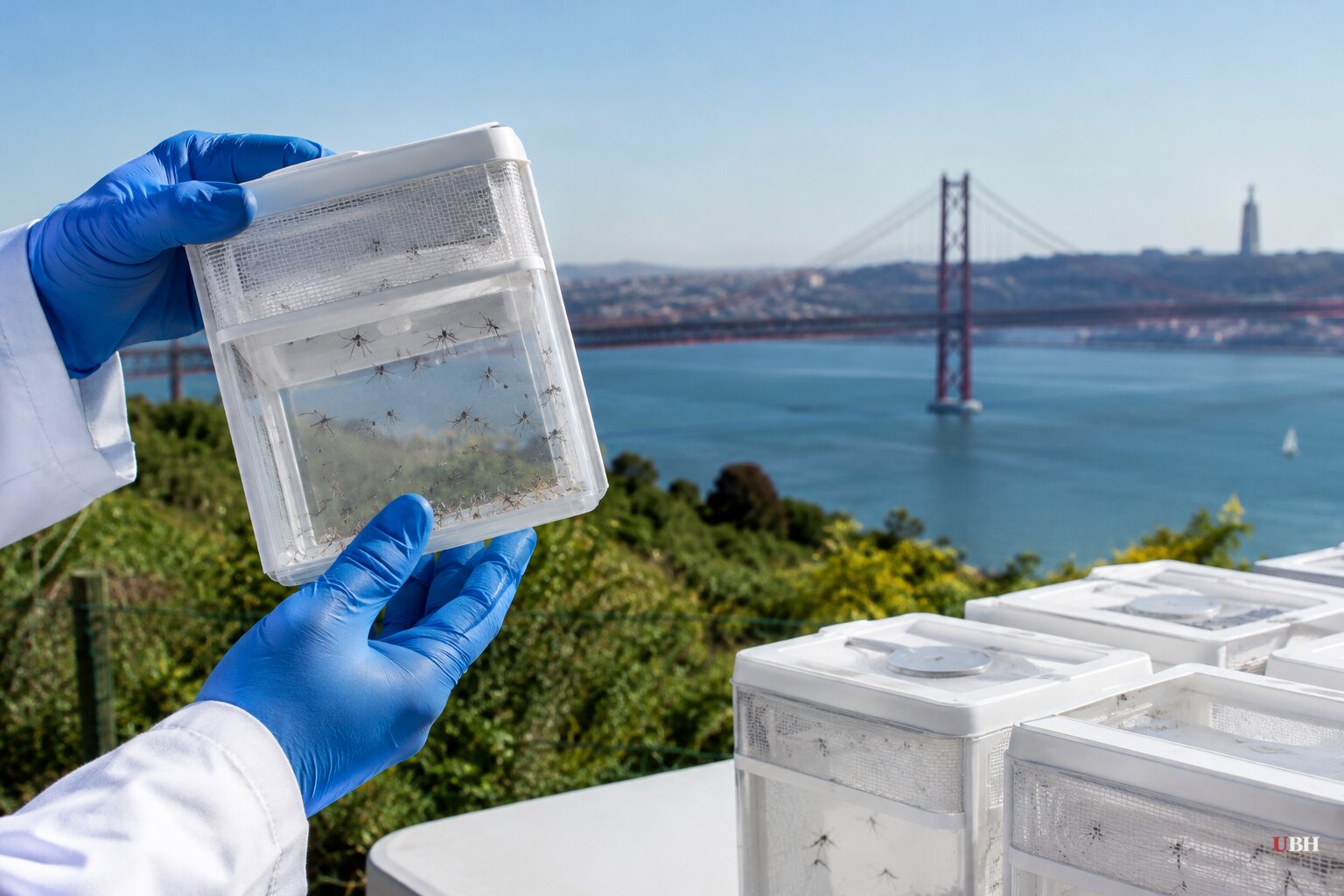
Dengue is being caught on European soil at a rate that has roughly doubled in a year.
By the end of October 2026, Italy had reported 76 locally acquired dengue cases and France eight. That is about twice the 2025 figures. "Locally acquired" means the patient was infected in Europe, not on a trip abroad.
How the mosquito got here
The culprit is the Asian tiger mosquito, Aedes albopictus. The European Centre for Disease Prevention and Control (ECDC) records its first report in Europe in Albania in 1979 and its detection in Italy in 1990. Shipments of used tyres and lucky bamboo carried it across borders, according to the ECDC.
It has since spread to France, Spain, Germany, Switzerland and other countries. In Italy it is established in most areas below 600 meters above sea level. The ECDC also says the species is showing signs of adaptation to colder climates.
It moves about 60 kilometers a year further north, according to Jan Semenza, an environmental epidemiologist. Outbreaks move faster, at roughly 120 kilometers a year. "They're coming later, but they're coming faster," he said, adding that this puts 50 million people at risk each year.
How an outbreak starts
The mechanism is simple. A traveler comes home from Thailand or Brazil carrying the virus. A local mosquito bites that person, then bites someone else.
"And then you have a local outbreak," Semenza said.
The World Health Organization says 308 dengue cases were reported to it from France, Italy and Spain in 2024. The WHO lists the changing distribution of Aedes aegypti and Aedes albopictus as a driver of dengue's spread into previously dengue-naive countries.
Portugal tries sterile males
In September, Portugal released 30,000 sterilized male tiger mosquitoes in Lisbon. It was the country's second attempt with the technique.
The males were sterilized by irradiation. They mate with wild females, which then produce no offspring.
"What we are fighting against is that we can become an endemic country," said André Peralta Santos, deputy chief of Portugal's Directorate-General of Health.
The effect of the Lisbon release on mosquito numbers has not yet been measured.
Brazil used a different method a few years ago, infecting mosquitoes with the bacterium Wolbachia, which blocks viruses from infecting them.
Eradication is off the table
Semenza is blunt about the limits. "You cannot autoclave the environment," he said. "Once the mosquito is established, the mosquito is here to stay; there's nothing you can do about it."
His answer is preparation: population control, vaccines, antivirals and community engagement. Marion Koopmans, a virologist at Erasmus Medical Centre in the Netherlands, argues citizens are an underused asset. "We should not underestimate the power of citizens," she said. "In the mosquito-borne world … there's a lot of information that you can get from people." Reporting apps are one tool.
The diagnosis gap
Doctors face a problem when a patient has never left the continent. Semenza put it this way: "Often you get an infection even if you haven't been abroad. And then how can [doctors] figure out that these types of weird symptoms that they have never seen before could be a potential tropical disease?"
The EU's Health Emergency Preparedness and Response Authority (HERA) is putting €10 million into new diagnostics. Laurent Muschel, HERA's director and deputy head, said Europe is also "missing the right medicines to treat these new diseases." The agency is funding research into antivirals and new vaccines.
Why mosquitoes pick their targets
Separate research from Florida International University, published in iScience, may eventually help with repellents. In a study of 119 volunteers, three disease-carrying species consistently preferred different people. No participant attracted all three.
The tiger mosquito was drawn to people with higher levels of ketones and plant-like chemicals released by skin. Aedes aegypti favored people without added fragrance. The southern house mosquito responded more to differences in the skin microbiome.
"We didn't expect the species to prefer different people when we started the study," said lead author Kaylee Marrero, a Ph.D. student. The team, led by neurogeneticist Matthew DeGennaro, says species-specific repellents could replace a one-size-fits-all approach. That is a research prospect, not a product.
What comes next
Semenza's warning is that the current trajectory "doesn't look good." Cases remain sporadic in most European countries, and EU and national authorities say their goal is to keep it that way. Experts fear sporadic outbreaks could harden into sustained transmission.
It remains to be seen whether sterile-male releases like Portugal's can suppress tiger mosquito numbers at a scale that matters, and whether the 2026 case counts in Italy and France are a ceiling or a floor.
Sources used for this briefing
7 links from 5 independent newsrooms (syndicated copies of the same report count once)
These are the sources it draws on, linked so you can verify.


