
Unbiased headlines. Facts, not spin.
Every story is an unbiased news briefing written from 110+ sources across the spectrum — sources linked so you can verify it yourself.
 health
Notable (6/10)
September 21, 2026 at 12:40 PM
health
Notable (6/10)
September 21, 2026 at 12:40 PM
London's Emission Zone Cut Pollution Deaths 40%, Sofia's Clean Air Zone Only Runs Three Months a Year
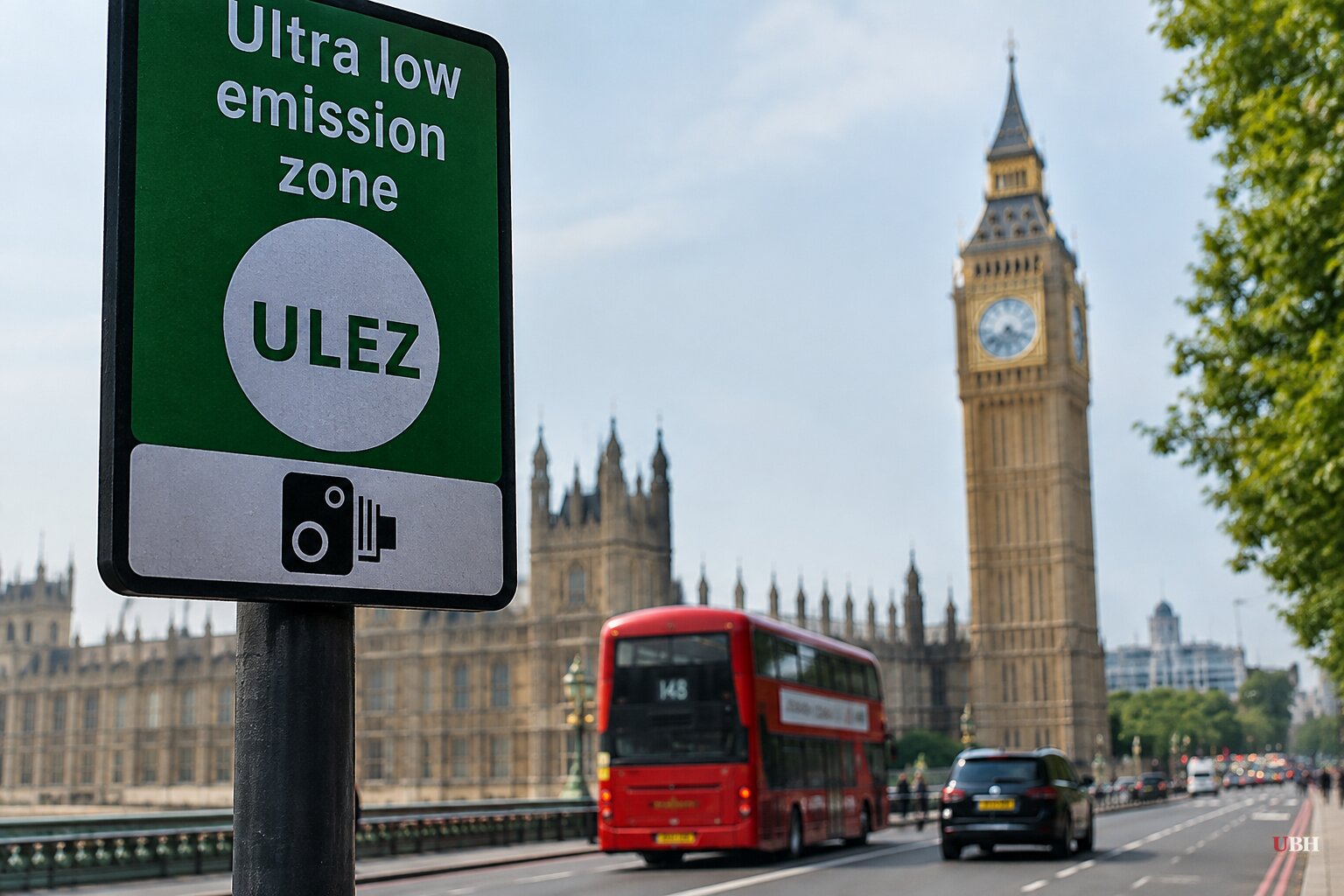
Air pollution killed almost eight million people worldwide in 2023, according to the State of Global Air Report 2025. The World Bank puts the annual economic cost at $8.1 trillion, roughly €7.05 trillion, or about six percent of global GDP. Two European cities are proving the problem is fixable. One is doing it right. The other is only halfway there, and everyone involved knows why.
The Toll Nobody Sees
Dr María Neira, the former director of environment, climate change and health at the World Health Organization, told Euronews Earth that pollution particles reach "any organ" in the body, including the brain. She links long-term exposure to cognitive decline and diseases like Parkinson's, Alzheimer's and dementia.
Olympic runner Paula Radcliffe, diagnosed with exercise-induced asthma at 14, described running through polluted air in Beijing and experiencing headaches, nausea and impaired vision. She says the same exposure hits kids harder, affecting brain development and school performance.
None of this shows up on a chest X-ray until it's serious. Pollution is invisible, which makes it easy for politicians to ignore.
London Actually Did Something
London didn't just study the problem. It acted. An independent study from Imperial College London's Environmental Research Group, led by researchers including Chamberlain and published this year, found that deaths linked to toxic air in the capital fell roughly 40 percent between 2019 and 2024. The driver was the Ultra Low Emission Zone, which charges high-emission vehicles to drive in the city, combined with other clean air measures.
The study measured actual deaths going down, not projections or models.
Sofia's Half-Measure
Bulgaria's capital tells a different story. Dr Kostadin Kostadinov of the Medical University of Plovdiv told Euronews Earth that by 2023, Sofia was estimated to have one of the highest pollution-attributable death rates among cities studied. Traffic and wood-burning home heating are the two biggest sources.
Sofia only got a low emission zone after residents and environmental groups filed a class action lawsuit. Ivaylo Hlebarov, the air quality consultant to Sofia Municipality, says there's already evidence it's reducing pollution. But the zone only runs three months a year.
Hlebarov calls that gap what it is: "It's a political decision." He points out that nitrogen dioxide pollution from traffic doesn't drop off seasonally, so limiting the zone to part of the year doesn't match the actual pollution pattern. He wants it made year-round.
Bulgaria has some of Europe's highest rates of cardiovascular disease, stroke and cancer, conditions Kostadinov links to air pollution, though he acknowledges local research on the connection remains limited.
The Tradeoff Nobody's Advertising
Neira frames political resistance to clean air rules as coming mainly from fossil fuel and transport industries fighting to protect their business. That's a real dynamic. But it's not the whole picture, and the Sofia example shows why.
A three-month-a-year restriction on wood-burning heat isn't industry lobbying. It's a compromise with residents who can't afford to rip out a wood stove and install something else, especially in winter. Emission zones and heating restrictions carry real costs for people who don't have the money to upgrade their car or their furnace on a government timeline. Sofia's limited zone looks less like corporate capture and more like elected officials trying not to get thrown out of office by working families who'd bear the cost.
That's a legitimate tension. Nobody in these reports disputes that emission zones save lives. The dispute is over who pays for it and how fast.
Where the Tech Comes In
The EU-funded MODELAIR project, led by Professor Soledad Le Clainche at the Technical University of Madrid, is trying to make enforcement smarter rather than just harsher. Her team, working with researchers in Belgium, the Netherlands, Sweden and the UK, is building AI-powered 3D "digital twins" of cities that map pollution street by street in real time, according to the European Commission.
Le Clainche says her group is the first to calculate a city's 3D pollution environment in real time rather than relying on averaged readings. The tools are being tested in Brussels, Madrid and Bristol to help city planners target traffic restrictions and monitoring where they'll actually cut exposure, instead of blanket rules that hit everyone the same regardless of where the real problem is.
If AI modeling can show regulators exactly which streets and which hours drive the worst exposure, cities can target enforcement instead of taxing an entire population for the sins of a few bad blocks. Breathe Cities, the initiative backed by Bloomberg Philanthropies, the Clean Air Fund and C40 Cities, now works with 16 cities worldwide on that kind of data-driven approach. Bloomberg Philanthropies committed an additional $45 million to the effort in June 2026.
Whether Sofia extends its zone to the full year, and whether it does so with better targeting instead of a blanket ban, remains an open political fight in a country still weighing the cost against Kostadinov's mortality numbers.
Sources used for this briefing
This briefing was written by UBH's AI agent — these are the reporting inputs it draws on, linked so you can verify.


