
Unbiased headlines. Facts, not spin.
Every story is an unbiased news briefing written from 110+ sources across the spectrum — sources linked so you can verify it yourself.
 health
Notable (6/10)
September 21, 2026 at 10:07 AM
health
Notable (6/10)
September 21, 2026 at 10:07 AM
Study: European Babies Face Nearly Double the Extreme Fire Weather of 1950s Generation
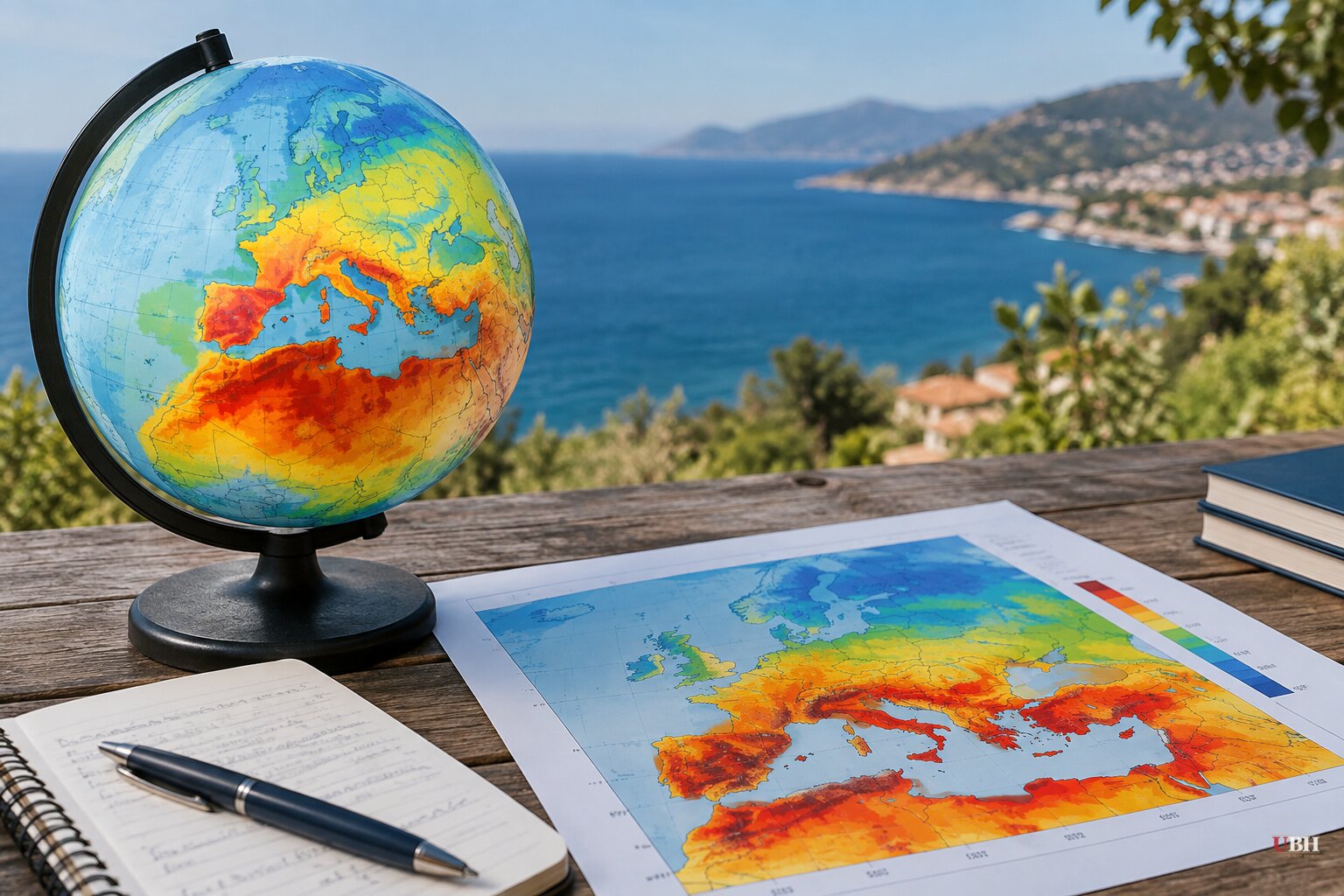
A child born in Europe in 2025 will spend more than three extra years of their life under extreme fire weather conditions compared to someone born in 1950, according to a study published in the journal Environmental Research Letters and led by researchers at Vrije Universiteit Brussel.
Under current climate policies, which the study says put the world on track for 2.6°C of warming by 2100, researchers found today's children will face an 84% increase in extreme fire weather exposure over their lifetime versus their great-grandparents' generation. The Mediterranean gets hit hardest: people born there in 2025 could see up to 2.5 times the exposure of the 1950 cohort, or more than five additional years of extreme fire weather, according to lead author Rosa Pietroiusti.
Portugal, which the study identifies as the European country with the highest proportion of land burned in recent decades, is projected to see extreme fire weather days more than double, from 14 per year between 1950 and 1970 to 32 per year by 2100 under current policy trajectories. TIME reports that a Portuguese child born in 2025 could rack up roughly 272 additional days of extreme fire weather exposure for every additional degree of end-of-century warming, while children in Greece could see 473 additional days and kids in Spain and Italy around 448.
What the study actually measured
The researchers didn't count wildfires. They counted weather. Extreme fire weather was defined as days when the Fire Weather Index, a measure of hot, dry, windy conditions, exceeds the worst 5% of days recorded for that country between 1985 and 2014. Pietroiusti was direct about the limitation: "It doesn't mean that there [will be] a wildfire on all of those days, but it does mean that the risk is much higher," she told TIME.
The Guardian's coverage included the same caveat from Pietroiusti, who called severe fire weather "a necessary but not sufficient condition" for the kind of catastrophic fires that tore through Spain, France and Greece this summer. Weather sets the stage; it doesn't strike the match.
The part the study doesn't measure
Fire scientists and land managers outside this study have long pointed to a second driver of Europe's worsening blazes: decades of rural depopulation across Spain, Portugal, Italy and Greece that left forests and scrubland thick with unmanaged fuel. Add in arson, downed power lines, and abandoned agricultural land no longer grazed or cleared, and you get tinderbox conditions that have little to do with the global thermostat.
A reasonable critic would note that a policy response built entirely around cutting emissions decades from now does nothing about the fuel loads sitting in European forests right now. Spain's own firefighting unions and Portuguese forestry officials have said for years that controlled burns, grazing programs and brush clearance are the tools that actually stop small fires from becoming the "raging infernos" the Guardian describes, regardless of what happens to global temperatures.
The study doesn't dispute that ignition and fuel matter. It simply wasn't designed to measure them. Its scope was demographic and meteorological: cross-referencing 21 warming scenarios, from 1.5°C to 3.5°C, against birth-year cohorts. That's useful for understanding how the weather backdrop is shifting. It's not a fire-management plan.
The generational framing
Raúl Cordero, a climate scientist at the University of Groningen who wasn't involved in the study, told the Guardian the findings highlight an "inherently intergenerational injustice," pointing to fires in Belgium this year as conditions "that their parents or grandparents had never encountered." That's Cordero's characterization, not an established legal or moral finding, and readers should treat it as his interpretation of the data rather than a settled fact.
The study's own bright spot: researchers found that holding warming to 1.5°C, a threshold they say is likely to be crossed within a few years, would still spare a child born in 2025 about 1.3 fewer years of extreme fire weather than the current-policy path. Every fraction of a degree, in Pietroiusti's words, "can reduce the hazard."
What the study doesn't answer is what happens between now and any emissions target decades out. No EU-wide funding commitment or binding vegetation-management mandate accompanied the paper's release, and the researchers make no policy recommendation beyond faster decarbonization. Whether Mediterranean governments pair that long-term goal with the near-term forest-management fixes fire crews say they need remains an open question.
Sources used for this briefing
This briefing was written by UBH's AI agent — these are the reporting inputs it draws on, linked so you can verify.


