
Unbiased headlines. Facts, not spin.
Unbiased Headlines is an independently owned news organization. We bring you the facts, not opinions, written fresh from 110+ named sources. Sources linked so you can verify it yourself.
 economy
Breaking / Critical (9/10)
Two Ships Sink Near Hormuz as UN Maritime Chief Says 6,000 Seafarers Remain Trapped
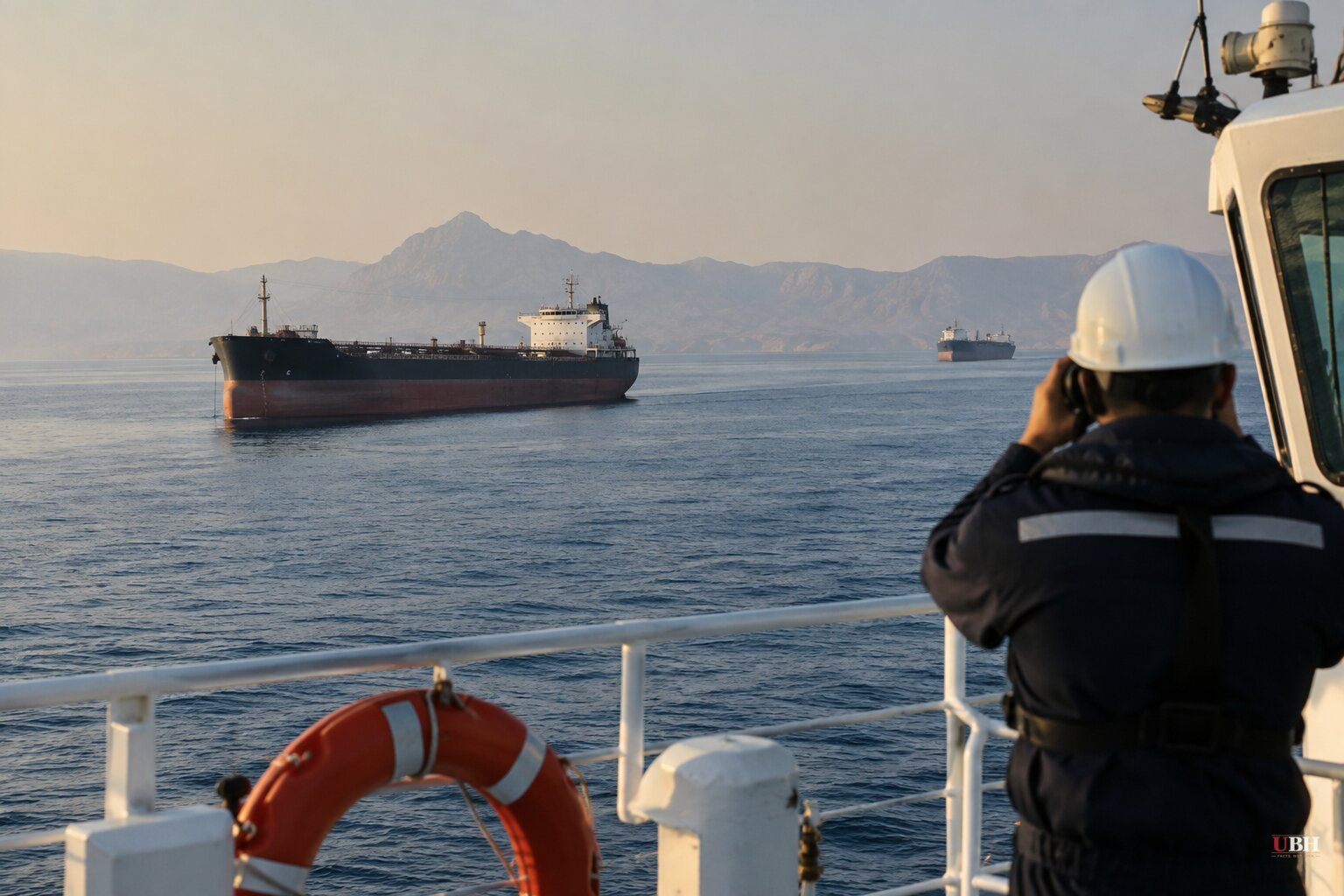
The Strait of Hormuz is down to a trickle, and the people who crew the ships are the ones taking the risk.
The Singapore-registered container ship GFS Pride was struck Tuesday while passing through the strait. It caught fire and later sank, according to the Maritime and Port Authority of Singapore. All crew were evacuated safely.
The Antigua and Barbuda-flagged Cape Dao also sank, according to International Maritime Organization data posted Wednesday. It was first hit by a projectile on September 23. One Indian crew member was killed.
These are only the second and third ships to sink in the Middle East since the war began in February, according to IMO data.
Traffic collapsing
More than 125 vessels crossed the strait daily before the war. The ship-tracking firm Kpler puts that number at fewer than 10 to 12 now, a drop of more than 90%.
Oil is following. Kpler data shows only 4.147 million barrels transited Hormuz on Monday, less than a quarter of pre-war levels. The seven-day average has fallen sharply since early October.
UK Maritime Trade Operations has logged nine attacks in or near the strait since Monday, including a drone strike on a tanker. The Financial Times counted 24 ships attacked over roughly two weeks.
The strait has been under two concurrent blockades since US-Israeli strikes on Iran in late February. U.S. forces patrol the southern corridor near Oman. The northern route runs through Iranian-controlled waters, and the IRGC Navy has said vessels using routes it considers unauthorised face "punitive action."
Who is stuck
IMO Secretary-General Arsenio Dominguez said the situation "continues to be severe and critical."
"There is a double blockade and too many vessels have been attacked, particularly in recent days," he told Fox News Digital. He said seafarers "have continued to perish" and that around 6,000 remain trapped since the conflict began. His advice is that nobody should transit "until we have guarantees."
Euronews reports that at least 95 seafarers in commercial roles have died since the war started.
The Al Ruwais shows how that plays out. The 314-metre, Bahamas-flagged LNG carrier, owned in the UAE, has sat adrift off Pakistan for weeks. Its 34-member crew will not attempt the crossing.
Under maritime rules, the right to refuse entry to a designated warlike area is individual. One objecting sailor is enough to stop a ship.
"If it were up to the company, we'd go through, but for that to happen, the entire crew would have to agree. And they don't," an electrician aboard told Euronews. He is waiting to leave by boat for Pakistan to join another vessel.
Owners are paying to change minds. On ships whose crews agree to cross, captains have been offered up to $100,000 a month plus $50,000 risk bonuses, and ordinary crew wages have risen four to six times, according to Euronews. The Al Ruwais electrician said some ships pay deckhands as much as $10,000 but not equally. "It would mean that the captain's life is worth more than that of the deckhand," he said.
Blockade enforcement and the disputes over it
The U.S. blockade of Iranian ports began in April and resumed July 14. Recordings collected by mariners and reviewed by the Wall Street Journal capture Navy warnings to commercial ships. In one, a U.S. vessel says: "I am preparing to fire at your engine room. You have 15 minutes to clear your crew from your engine room."
The recordings also show confusion. Crews asked which ship was being addressed, and some struggled with English-language warnings.
On July 24 the Navy gave the sanctioned LPG tanker Lavine 15 minutes to clear its engine room. Exactly 15 minutes later the ship issued a distress call. U.S. Central Command said the next day that American forces had disabled it after its crew repeatedly tried to violate the blockade.
On July 25 the Chinese captain of the Panama-flagged bulk carrier Liao Fan, anchored at Khor Fakkan in the UAE, explained over the radio that his ship had already left Iran. The U.S. did not fire. The ship later cleared the blockade.
Iran has its own complaint. In an Oct. 9 letter to the IMO, submitted by its ambassador Seyed Ali Mousavi, Tehran alleged U.S. forces repeatedly occupied VHF Channel 16, the international distress channel, and addressed Iranian crews in Persian with "threatening, abusive and provocative language," in some cases urging them to abandon their vessels.
CENTCOM rejected that account. "The U.S. naval blockade has been in place for months and is professionally communicated to all international mariners," it said. Vessels that refuse to comply "receive multiple warnings, with ample opportunity to comply."
Mine or drone
Who sank the GFS Pride is disputed. Iran's state-run Press TV said the ship "hit a sea mine on an unauthorized route." Experts cited by CNN doubt that and say a drone attack is more likely.
Charlie Brown, a former U.S. Navy officer and senior adviser at United Against Nuclear Iran, called the sinking "a dangerous escalation after weeks of near-daily attacks on commercial shipping." He said Iran's mine claim is unlikely, and posed the open question: what response other nations will mount.
No government has announced one. For now the answer rests with crews like the Al Ruwais's, who have the legal power to say no and are using it.
Sources used for this briefing
7 links from 7 independent newsrooms (syndicated copies of the same report count once)
These are the sources it draws on, linked so you can verify.


