
Unbiased headlines. Facts, not spin.
Unbiased Headlines is an independently owned news organization. We bring you the facts, not opinions, written fresh from 110+ named sources. Sources linked so you can verify it yourself.
 economy
Notable (6/10)
Event date: October 15, 2026 ·
Truckers' Fuel-Price Blockades Empty Southern Italian Shelves as Meloni Cabinet Meets on Aid Decree
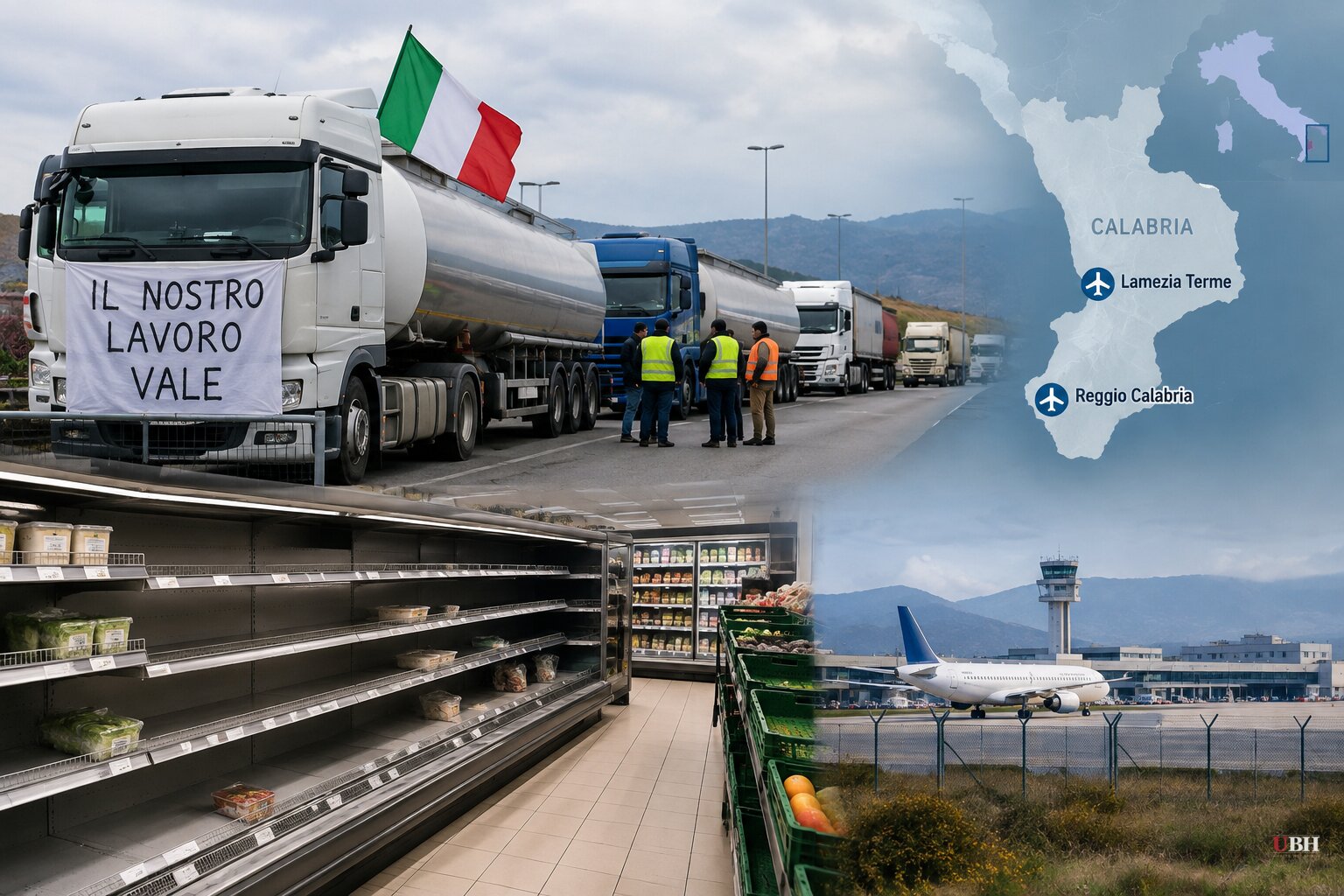
The protest began in southern Italy last week. Truck drivers angry about diesel prices and the cost of living have since parked rigs at motorway interchanges and logistics hubs across Campania, Puglia, Calabria and parts of Sicily. Now the shelves are going bare.
Meloni's cabinet is scheduled to meet today, Thursday, Oct. 22, to approve a decree combining support for road haulage with extra money for agriculture, her office said in a statement.
Shelves, airports and factories
In Campania, trucks have gathered near interchanges and freight centers around Naples and Caserta, disrupting the A1 between Milan and Naples and the A30 between Caserta and Salerno. Queues have run for kilometers. Trucks and tractors also drove into the central square of Ravenna in the northeast as farmers joined in.
The airports at Crotone and Reggio Calabria ran out of Jet A-1 fuel. Notices to flight crews told them to carry enough reserves before arriving.
The ANCD-Conad group, which represents Conad-brand retailers, said large quantities of fruit, vegetables, milk and meat are stranded on trucks and in warehouses. Federdistribuzione said conditions in Campania, Puglia and Calabria were worsening, with fresh food rotting. Confesercenti said four in 10 southern firms have supply problems and some restaurants have closed.
Production has stopped in places. Pastificio Rummo in Benevento suspended operations after trucks carrying raw materials stopped arriving. Buffalo mozzarella production has halted. Kiwi fruit losses have reportedly reached about €30 million in five days, and Calabrian builders report shortages of steel and bitumen.
"The freedom to protest cannot translate into undermining citizens' right to receive fresh food or destroying the value created by Italy's agri-food supply chains," said Maurizio Pelliconi, president of ANCD-Conad.
Deputy Infrastructure Minister Edoardo Rixi said the blockades are also disrupting supplies to hospitals. "If someone is breaking the law, then at a certain point the law must be enforced," he told reporters.
The government's two-track response
Rome is offering money and threatening prosecution at the same time.
Business Minister Adolfo Urso told parliament on Wednesday that blocking only lorries while letting cars through is still a roadblock. "It has criminal consequences, including possible prison sentences," he said. According to government figures, police have identified 1,339 people, reported 71 to prosecutors and issued 242 administrative fines, mostly in Campania. Interior Minister Matteo Piantedosi has told prefects and police chiefs to respond to illegal closures, and about 500 trucks are traveling under police escort in Campania alone.
Agriculture Minister Francesco Lollobrigida suggested some protests had been "infiltrated" by criminals. Deputy Premier Antonio Tajani said he understood the grievances but that blocking motorways will not lower diesel prices.
On money, Salvini met haulage groups in Milan on Tuesday and announced about €1 billion in aid. He pledged to release €480 million immediately, meant to cover 70 percent of extra diesel costs between March and October. Urso cited €434.8 million already allocated for diesel compensation. A further €590 million for replacing older vehicles is due from Jan. 1.
Salvini said he was open to a cap on diesel prices. Lawmakers are weighing a flexible cap on petrol and diesel, including fuel sold directly to commercial operators, inside a broader fuel decree that has passed the Senate and is now before the lower house. Salvini has also criticized EU limits on aid for older, more polluting vehicles.
The truckers' position
The haulers say the numbers do not work. They argue fuel costs have become unsustainable, and the blockades have continued in Campania, Puglia and parts of Sicily even after Salvini's announcement.
Palazzo Chigi said the blockades persisting despite an agreement with the industry's trade associations point to a "more complex" situation. It called for a clear line between legitimate grievances and illegal behavior. The main haulage associations have since urged the government to clear the blockades.
The movement is not unified. After assurances from the prefect of Catania, the Sicilian haulers' group Aias suspended its action Wednesday night, as did Calabria's Fedralog. Fedralog warned it will march on Rome if Salvini's Oct. 27 meeting with the sector fails to deliver.
The mayors of Naples and Bari, Gaetano Manfredi and Vito Leccese, asked Salvini to bring that meeting forward. They warned of cities being "paralysed." Campania Governor Roberto Fico said the main response must come from the national government.
A rough week for Rome
The blockades land on top of other unrest. Over the weekend, gangs of mostly young people rampaged through Milan and other northern cities, and the government responded Tuesday with a security decree targeting underage offenders.
The next test is whether today's decree, together with the roughly €1 billion in aid already announced, persuades the holdouts in Campania and Puglia to lift their blockades before Oct. 27. If it does not, Fedralog's threatened march on Rome is the next flashpoint.
The flexible price cap is still before the lower house, and it has not become law.
Sources used for this briefing
7 links from 7 independent newsrooms (syndicated copies of the same report count once)
These are the sources it draws on, linked so you can verify.


