
Unbiased headlines. Facts, not spin.
Unbiased Headlines is an independently owned news organization. We bring you the facts, not opinions, written fresh from 110+ named sources. Sources linked so you can verify it yourself.
 economy
Major Story (7/10)
Only 3 of 20 Foreign Firms Put Under Russian Control Since 2025 Were US-Linked, Reuters Analysis Finds
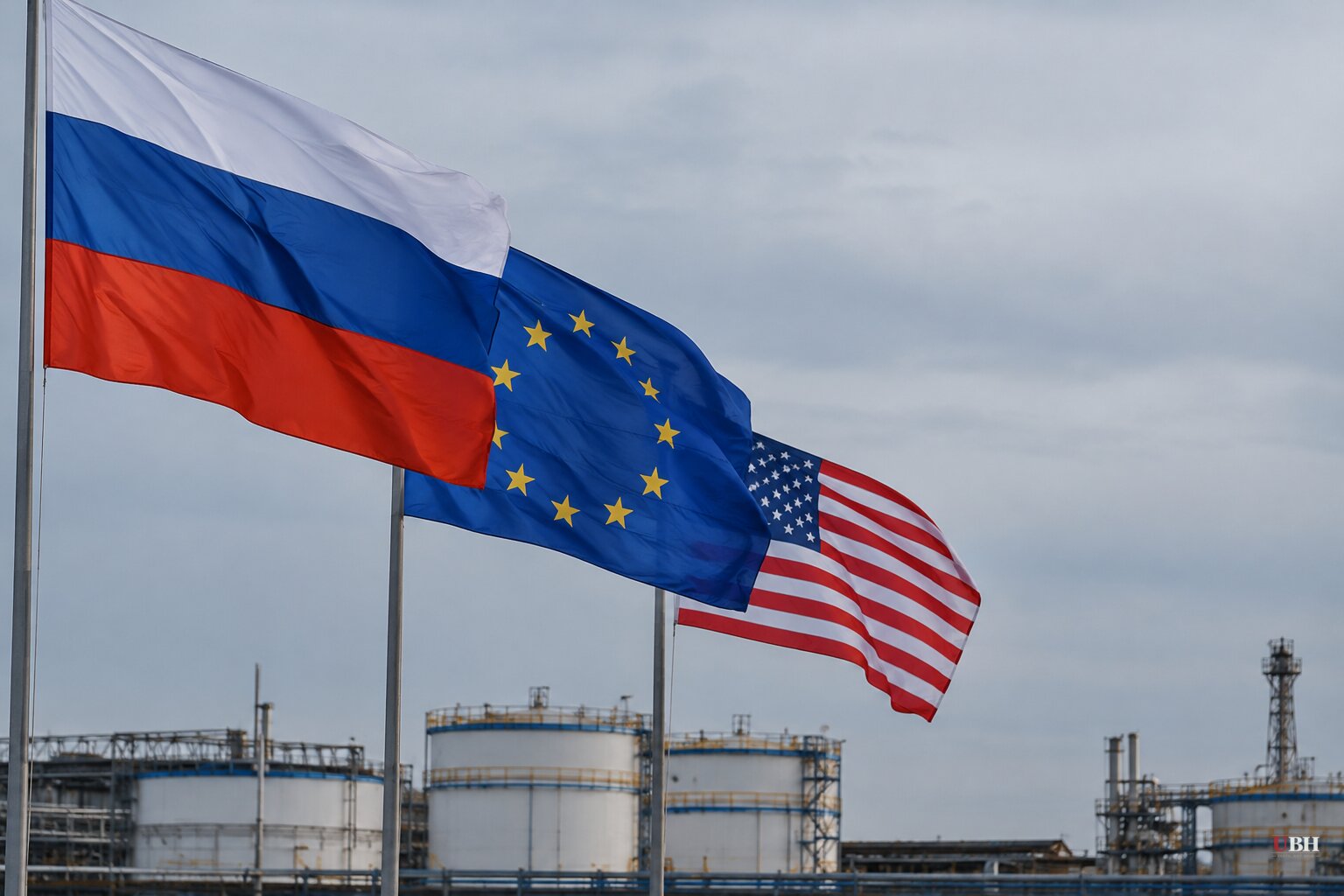
Russia has placed 20 foreign-owned companies under temporary administration since Donald Trump's inauguration in January 2025. Only three had US links. The other 17 were controlled by European companies, according to a Reuters analysis of official data.
The newest cases hit big names. Since September, Russia has taken control of the local units of Swiss food group Nestle and retailers Auchan and Metro. Last week it took over the local assets of four smaller companies from France, Germany, Sweden and Belgium.
The Kremlin's stated reasoning
Kremlin spokesman Dmitry Peskov did not deny the pattern. "Their country of origin was one of the factors taken into account in making the decision," he said. He accused the countries involved of "illegal expropriations of Russian property."
Moscow has cited Europe's wartime support for Ukraine and its involvement in "direct battlefield hostilities" as grounds for the takeovers. The Kremlin declined to comment on how it treats US and European companies in Russia.
A person close to Russian financial regulators told Reuters that while business negotiations with Washington are underway, it is not in Moscow's interest to take as tough a line on US firms. That claim comes from one anonymous source. It has not been confirmed on the record by any Russian official.
A spokesperson for Switzerland's State Secretariat for Economic Affairs said the available information supports the perception that more European than US firms are being hit. Nestle said in September it would take steps to protect its rights in Russia and declined further comment. The other companies did not respond to requests for comment.
The European Commission called the recent seizures "forced expropriation in all but name." A Commission spokesperson said the moves follow "a clear pattern of economic retaliation" and show that "Russia is not a safe environment for business."
Washington and Moscow warm up
The takeovers are landing while US-Russia contacts intensify. US special envoy Steve Witkoff met Vladimir Putin in St. Petersburg on Wednesday, Oct. 21, for talks on ending the Ukraine war. Russian news agencies reported that Putin told Witkoff he wants to restore economic ties with the United States.
This month the US announced a deal to buy Russian diesel. Reuters reported that Russia is set to send its first cargo to the US today, Oct. 22. Other deals, including on gas, have been discussed in recent months.
On Saturday, Oct. 17, Trump signed an executive order waiving key Russia-related sanctions and tariffs before they took effect under a new law. He said the move was in the US national interest. Kirill Dmitriev, who heads the Russian Direct Investment Fund and has pushed for the return and expansion of US firms, called it a "historic moment." He said last week that Russia and the US would soon announce joint initiatives that could proceed before the war ends.
The administration's position is that engagement serves American interests. The White House did not respond to a request for comment on how Russia is treating US versus European firms.
Trump has also criticized Ukrainian strikes on Russian oil refineries, citing harm to American consumers, while European leaders have lined up behind Ukrainian President Volodymyr Zelensky. Ukraine and its allies have voiced concern that Washington is backing away from Kyiv.
American facilities still get hit in Ukraine
Being spared in Russia's courts is not the same as being spared on the battlefield. Andy Hunder, president of the American Chamber of Commerce in Ukraine, told CNN that Russian missiles and drones have damaged facilities belonging to Coca-Cola, PepsiCo, McDonald's and Oreo.
"This is a direct hit with drones and missiles, and they keep hitting them," Hunder said. "It's sending a message that they're targeting American business. We're not seeing any response from the White House."
The documented incidents run through late summer and early fall:
- PepsiCo acknowledged in late August that a production facility in the Mykolaiv region was damaged. There were no casualties.
- A Russian drone struck a Coca-Cola plant outside Kyiv in early September. Zelensky called it "a clear signal from Russia to America."
- On Sept. 25, a warehouse operated by a McDonald's logistics partner in the Kyiv region was damaged in a drone attack, McDonald's Ukraine confirmed. The chain's restaurants are offering a reduced menu as a result.
Zelensky and Hunder describe these strikes as targeting American business. Neither the Kremlin nor the White House is quoted in the notes confirming that characterization. A former senior State Department official told CNN that US companies on the ground disagree about how publicly to discuss being hit, and that some do not want to disclose repeated strikes.
The diesel shipment due today is the first concrete test of the new energy arrangement. Dmitriev's promised joint US-Russia initiatives have no announced date or terms. The European firms already under Russian administration have no announced recourse beyond what they can pursue on their own. Nestle has said it will act to protect its rights.
Sources used for this briefing
7 links from 6 independent newsrooms (syndicated copies of the same report count once)
These are the sources it draws on, linked so you can verify.


