
Unbiased headlines. Facts, not spin.
Unbiased Headlines is an independently owned news organization. We bring you the facts, not opinions, written fresh from 110+ named sources. Sources linked so you can verify it yourself.
 economy
Notable (6/10)
Center for Responsible Lending: Median Renters Need 16 Years to Save for a Starter Home, Double 2019
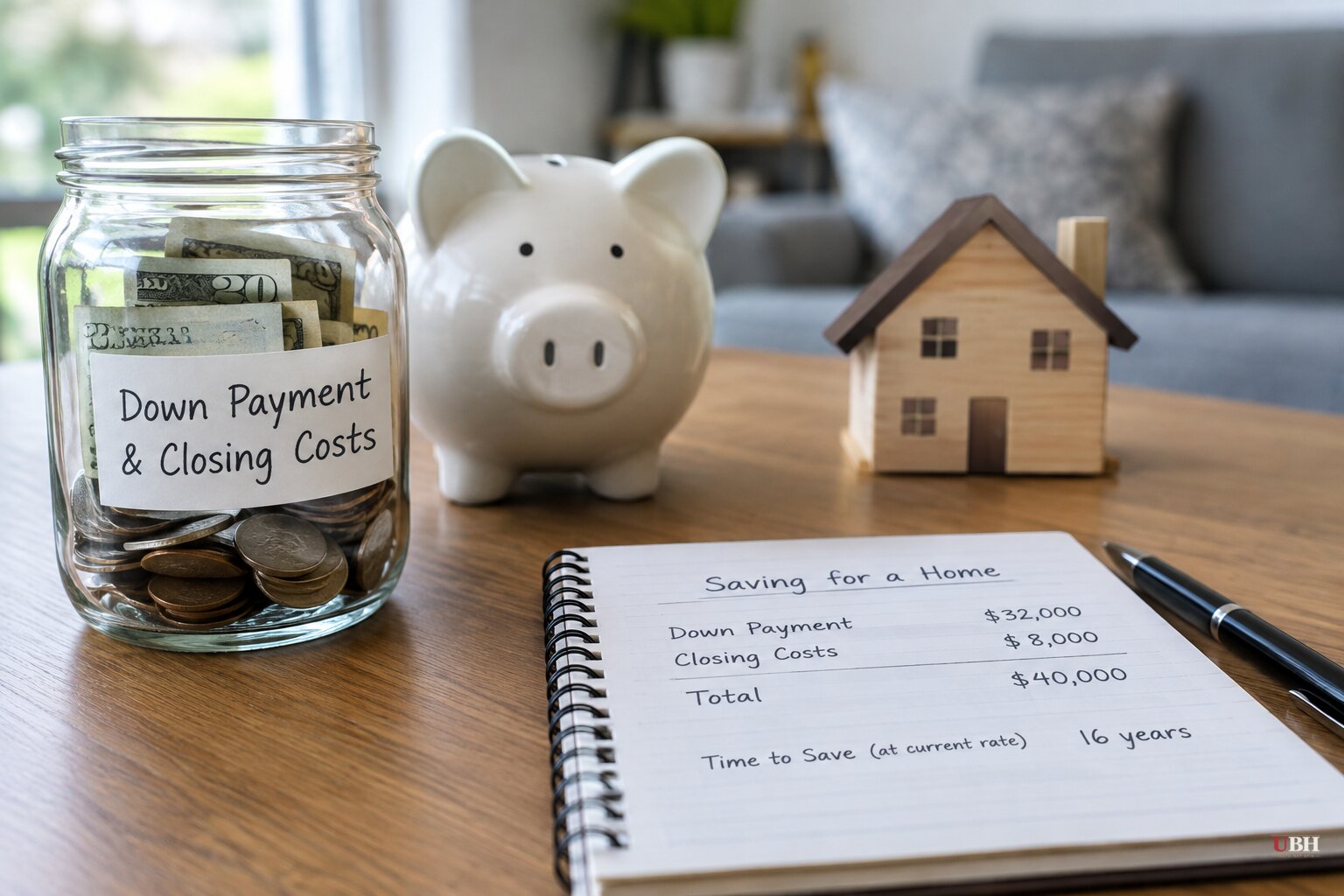
The time it takes an average American renter to save for a first home has doubled since 2019.
That is the finding of a new analysis from the Center for Responsible Lending, a research nonprofit, and its Julian Bond Institute, released Oct. 22. The group says a median-income renter household would need 16 years to save a down payment and closing costs on a starter home.
"Over the last seven years, the time to save up that down payment and closing costs has doubled," said Mike Calhoun, the center's president. The group last ran the same calculation in 2019.
The numbers
The report breaks the timeline out by group:
- Median-income renter households: 16 years.
- Median-income Black renter households: 21 years.
- Middle-income households earning roughly $50,000 to $120,000: 12 years, also double the earlier figure.
- Front-line workers such as police officers, firefighters, EMTs, nurses and teachers: 10 to 13 years. The researchers say that is "at least doubled."
The center calculates a starter home cost of $335,574, which is 80% of the median sales price of existing homes. The time needed to save varies by metro area, from 11 years in Houston to 24 in Los Angeles.
The report points to several pressures since 2019. Home prices have shot up. Inflation spiked and has stayed stubbornly high. Renters' incomes have not kept pace, and personal savings rates have dropped. Closing costs have also ticked up, driven in part by rising homeowners insurance.
Mortgage rates have topped 7%, which adds to the squeeze on first-time buyers.
Why Calhoun says the number is low
Calhoun says 16 years likely understates the problem. The calculation assumes a 3.5% down payment, the minimum the Federal Housing Administration requires for first-time buyers. The median first-time buyer actually puts down about 10%.
The model also assumes families are really "stretching their savings," Calhoun said. Many cannot save at all, are forced to eat into savings, or take on debt.
The report also notes a practical problem with a 16-year runway. Children who are young when a family starts saving "may have left the household — for higher education or the workforce — before the family will have saved enough to purchase their first home."
A divided housing market
Calhoun described a split between those who own and those who don't. "If you look at the last seven years, they have been extraordinarily good to homeowners," he said.
People who bought when prices were far lower have built large amounts of equity. Some refinanced when mortgage rates hit historic lows of around 2% or 3%, before they spiked.
Renters trying to get in face the opposite math. Rising rents have consumed a growing share of family incomes, according to a recent report by the Harvard Joint Center for Housing Studies, which found that a quarter of renters pay more than half their income on rent and utilities.
The supply argument
Not everyone thinks easier money is the answer. A HousingWire commentary by Tobias Peter and Ed Pinto, co-directors of the AEI Housing Center, argues Washington is looking in the wrong place. They write that "adding purchasing power while supply is constrained will simply push prices higher," and that America's problem is "too few starter homes at prices ordinary families can afford."
The commentary points to the pandemic. Ultra-low interest rates sharply increased purchasing power while housing supply remained constrained. "Demand adjusted almost overnight; construction could not," the authors write, and much of the benefit showed up in higher home prices.
They also argue credit is already loose where homes are cheap. In America's least-expensive markets, they say, borrowers with FICO scores around 620 can qualify, loans can reach 100% or more of a home's value, and debt-to-income ratios can exceed half of gross income. In expensive markets, high prices crowd out weaker borrowers regardless of underwriting rules.
The authors define a starter home as one selling for less than four times county median household income. They say builders produced more than 750,000 of them from 2015 through 2024, which they call "not nearly enough."
The Center for Responsible Lending's own report also calls for zoning and other reforms to boost the supply of smaller, cheaper starter homes, including duplexes, townhomes and manufactured housing.
The closing-cost fix under review
One federal idea is already on the table. FHFA Director Bill Pulte is considering reducing the number of credit reports required for a mortgage. A typical three-bureau report costs roughly $80 to $100, and a two-bureau or one-bureau report could cut that.
The HousingWire authors warn the savings could be illusory. Scores differ across the three bureaus and two score providers, so lenders and borrowers may drift toward whichever gives the best number. That could create investor uncertainty and push yields higher.
Their math: on a $400,000 mortgage, a one-basis-point rise in the rate costs roughly $1,000 over 30 years. That would swamp a savings of $80 to $100 up front.
Whether any change lowers closing costs, or just shifts them into the interest rate, is the open question for buyers facing a 16-year savings clock.
Sources used for this briefing
7 links from 4 independent newsrooms (syndicated copies of the same report count once)
These are the sources it draws on, linked so you can verify.


