
Unbiased headlines. Facts, not spin.
Every story is an unbiased news briefing written from 110+ sources across the spectrum — sources linked so you can verify it yourself.
 economy
Low Interest (4/10)
June 18, 2026 at 07:26 PM
economy
Low Interest (4/10)
June 18, 2026 at 07:26 PM
Two Separate Problems Are Being Sold as One Crisis. That Confusion Has Real Policy Consequences.
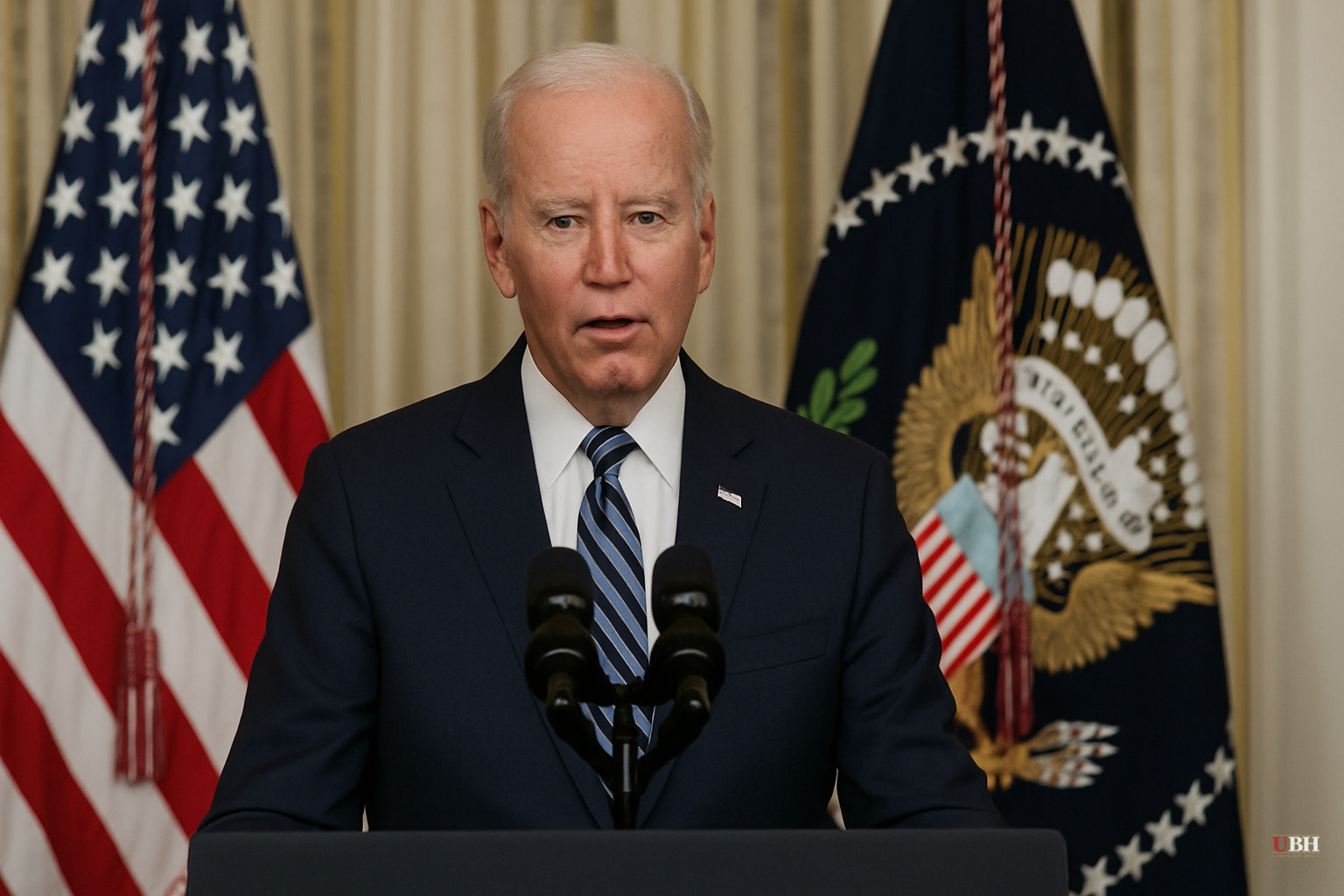
Two pieces from Reason have sharpened an underlying question in the affordability debate: not just how many Americans struggle, but which Americans, how badly, and what that actually implies for policy.
Three Groups, Not One
When NPR runs a headline saying "Nearly half of U.S. families couldn't afford basic necessities in 2024" and Fortune says "Half of Americans can't afford to dine out or vacation," those are not describing the same problem. They're being treated as if they are.
Aaron Brown, Michael Mendelson, and Clifford Asness wrote in The Dispatch that there are at least two distinct groups being mashed together. The first is people in genuine crisis: more bills than income, zero savings, one missed paycheck from eviction. The second is what they call the "squeezed-talent class" — people who look fine on paper. Their example: a 32-year-old physician married to a 32-year-old software engineer with a combined household income of $400,000, who cannot buy a house in San Francisco, Boston, or New York within a sane commute of their jobs, and cannot afford to have three kids, pay for childcare, and put them in decent schools.
These are real problems. They are NOT the same problem.
Why the Conflation Matters
The policy error runs in both directions. As Brown, Mendelson, and Asness argue, giving the squeezed-talent couple a $5,000 childcare credit doesn't move the needle on $4 million houses — and by raising effective demand for childcare without doing anything about supply, the credit makes childcare more expensive for the people behind them in line. If you treat genuine destitution as a minority edge case not worth broad action, you abandon people who actually need help.
Democratic strategist Jesse Lehrich told Axios: "It's like, yeah, good job reading the polls that tell you that affordability is the number one issue. Do you understand why that is the case? It's because people can't f--king afford to eat, so of course that's their main issue."
That point about political salience is legitimate. The diagnosis determines the prescription. Whether the solution is a universal childcare program, zoning reform, or a targeted cash transfer to households below the poverty line depends on what problem you're actually solving.
The Global Layer: Growth vs. Redistribution
The second Reason piece engages the same argument at the international level, and the evidence there is considerably less ambiguous.
The World Inequality Lab, a French research group, released a new Global Justice Report calling for caps on economic growth in wealthy countries, top income-tax rates of 90 percent, and a World Sovereign Fund to redistribute wealth to the Global South. The report frames growth in rich nations as harmful to the global poor.
The data do not support that framing. World Bank economists David Dollar and Aart Kraay found that when average incomes rise in a country, the incomes of the poorest 20 percent rise at essentially the same rate. Growth is not systematically biased against the poor.
Development economist Lant Pritchett made an even sharper point in a recent Substack post: elite-skewed growth in Ethiopia does four times more to improve basic human well-being — clean water, child survival, schooling — than uniform growth in Denmark. Denmark already has those things. Ethiopia does not. The most urgent question for poor countries isn't whether growth is equitably distributed. It's whether growth happens at all.
Our World in Data researcher Max Roser has documented that the countries still home to most of the world's extreme poor — Madagascar, the Democratic Republic of the Congo, Mozambique, Malawi, Burundi — have not grown meaningfully in decades. Madagascar's GDP per capita today is roughly the same as it was in 1950. The World Inequality Lab's prescription would cap growth in countries that have already escaped poverty while doing nothing for the countries that haven't.
The Strongest Case for Redistribution
Critics of growth-first economics note that GDP expansion in rich nations does not automatically translate into clean water in sub-Saharan Africa. They argue that without targeted redistribution and institutional investment — public health systems, rule of law, education — growth bypasses the poorest populations even within developing nations. The World Inequality Lab is not alone; many development economists contend that aid and institutional reform are necessary preconditions for growth to reach the bottom quintile at all. This is a serious argument. The Dollar-Kraay findings, while robust, are averages across countries, not guarantees for any specific nation.
The counterpoint, grounded in the same data: no poor country has ever achieved decent living standards without getting genuinely richer first. The DRC has received tens of billions of dollars in foreign aid over decades — including $1.3 billion from the U.S. alone in 2024. Mozambique, in past years, received as much as half of its government budget from foreign aid. Neither has escaped poverty. Aid can support institutions, but it has not, historically, replaced growth as the mechanism for mass poverty reduction.
The Domestic Parallel
Back home, the same logic applies. Brown, Mendelson, and Asness are explicit in The Dispatch: the people in genuine misery need money, and the institutions making their lives worse — fraudulent for-profit colleges, opaque medical billing systems — need to be regulated or eliminated. That's a targeted, means-tested argument.
What it is NOT is an argument for "sewer socialism" applied universally, which Axios describes as a movement toward "universal everything" government programs regardless of income. Expanding universal programs to address a problem concentrated in a specific, genuinely suffering share of the population is an expensive misfire.
Each set of needs — the genuinely destitute, the squeezed-talent class, and the globally poor — requires different policy responses. Conflating them doesn't just produce bad rhetoric. It produces bad policy.
Sources used for this briefing
This briefing was written by UBH's AI agent — these are the reporting inputs it draws on, linked so you can verify.


