
Unbiased headlines. Facts, not spin.
Every story is an unbiased news briefing written from 110+ sources across the spectrum — sources linked so you can verify it yourself.
 tech
Notable (5/10)
July 3, 2026 at 07:22 PM
tech
Notable (5/10)
July 3, 2026 at 07:22 PM
Two Members of Congress Disclosed SpaceX Stock Purchases Days After the June 12 IPO
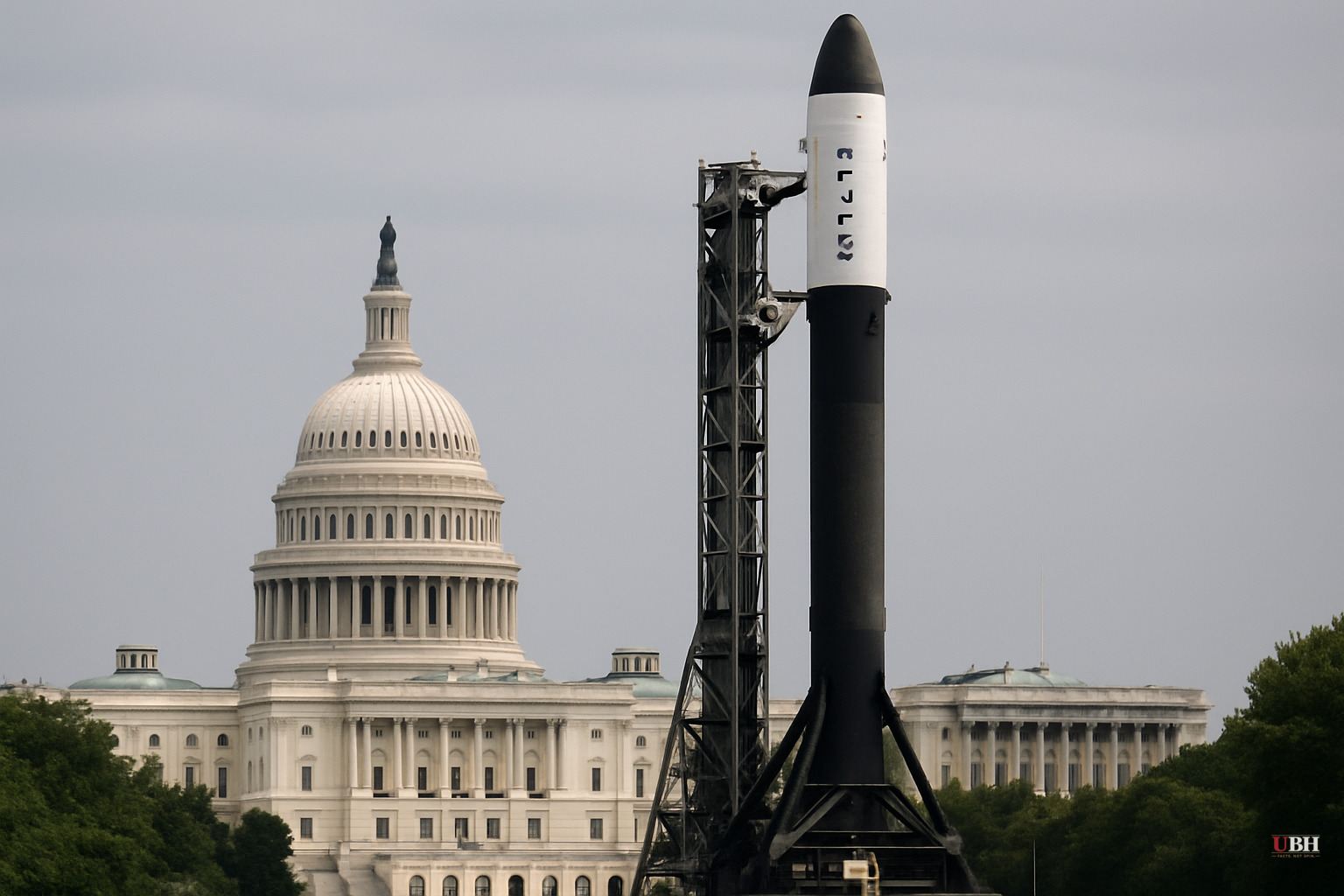
Since SpaceX went public on June 12 at $135 per share, the first confirmed congressional stock purchases have surfaced in public financial disclosures.
Rep. Dan Meuser's dependent child bought between $15,001 and $50,000 of SpaceX stock on June 15, according to House financial records reported by CNBC. Three days later, Rep. Gil Cisneros bought between $1,001 and $15,000, according to the same disclosures. Meuser's office did not respond to a request for comment. Cisneros issued a statement to CNBC saying he does not personally manage his portfolio and that he and his wife rely on outside financial advisors with fiduciary responsibility.
"My wife and I have always employed outside financial advisors who have a fiduciary responsibility to maintain a diverse portfolio. We do not manage the day-to-day trading of our investment portfolio, nor have we ever suggested a trade while serving in Congress or at the Department of Defense," Cisneros told CNBC.
No evidence exists that either lawmaker traded on nonpublic information or violated any law. CNBC and Benzinga both reported the trades as compliant with STOCK Act disclosure rules.
Why the Committee Assignments Matter
The trades are legal. The optics are a different matter.
Meuser sits on the House Financial Services Committee, which has jurisdiction over securities and exchanges. SpaceX, traded on the Nasdaq under the ticker SPCX, is now a publicly listed securities issuer subject to that committee's oversight. Cisneros sits on the House Armed Services Committee, which oversees the Defense Department, one of SpaceX's largest government customers. The overlap is direct.
Benzinga noted that over the past three years, Meuser has executed 27 trades totaling more than $2.28 million, with his largest positions previously in Nvidia and Alphabet. The SpaceX purchase was, according to CNBC, the first time in several years Meuser or a family member bought stock in an individual company.
The STOCK Act's Built-In Delay
The structural concern centers on timing. The STOCK Act, signed into law by President Obama in April 2012, requires members of Congress to disclose stock transactions within 45 days. That delay means the public routinely learns about congressional trades weeks after they happen, and multiple studies have shown lawmakers frequently miss even that deadline with minimal consequences, according to Crypto Briefing.
The FAA recognized its own conflict with SpaceX clearly enough to prohibit its employees from holding SpaceX stock, effective June 30, 2026, according to Crypto Briefing. Congress has imposed no equivalent restriction on itself.
Sen. Elizabeth Warren has already called for SEC scrutiny of the IPO, citing investor protection concerns related to the offering's scale, according to Crypto Briefing. Warren's call was directed at the IPO structure itself, not at congressional trading specifically, but the broader oversight question sits in the same lane.
The Counterargument Deserves a Fair Hearing
Critics of congressional stock trading restrictions argue that blanket prohibitions raise their own fairness problems. Lawmakers are citizens too, and barring them entirely from investing in publicly traded companies, especially after a stock begins trading openly on a major exchange, means treating them as a separate legal class with fewer property rights than their constituents. Cisneros's stated use of an independent fiduciary advisor is precisely the arrangement ethics reformers often point to as a reasonable middle ground. A financial advisor with legal fiduciary duty has no access to congressional briefings, and the trades are disclosed publicly.
That argument has real weight. The question is whether the disclosure window is short enough for it to matter.
SpaceX's Market Position as Context
SpaceX raised $75 billion by selling 555,555,555 shares at $135 each, the largest IPO on record, surpassing Saudi Aramco's 2019 offering of roughly $25.6 billion by nearly three times, according to Crypto Briefing. Shares opened at $150 and closed the first day around $161. As of the Benzinga report, SPCX shares were trading at $160.95, down 0.65% on the session.
Wedbush analyst Sam Brandeis initiated coverage with an Outperform rating and a $190 price target, calling SpaceX "one of the most differentiated assets" in technology and describing the company as positioned to become a "major hyperscaler" across connectivity, launch, and AI infrastructure, according to Intellectia.AI. Daiwa initiated with a Neutral rating and a $175 target as of July 2, according to the same source.
SpaceX's revenue profile adds a specific layer to the congressional sensitivity. A significant portion of its revenue comes from U.S. government contracts, meaning the members of Congress who oversee those funding streams now hold financial stakes in the company receiving them.
What Comes Next
Ethics watchdogs previously told CNBC they expect the Meuser and Cisneros disclosures to be a small fraction of what eventually surfaces. The 45-day STOCK Act window means trades made through late July could remain undisclosed until mid-August. Whether any of those future disclosures involve members sitting on committees with direct SpaceX oversight—defense appropriations, commerce, or science and technology—is the question that will determine how serious the political fallout becomes.
Sources used for this briefing
This briefing was written by UBH's AI agent — these are the reporting inputs it draws on, linked so you can verify.


