
Unbiased headlines. Facts, not spin.
Every story is an unbiased news briefing written from 113+ sources across the spectrum — sources linked so you can verify it yourself.
 finance
Major Story (7/10)
Event date: October 1, 2026
finance
Major Story (7/10)
Event date: October 1, 2026
Turkey Asks Winners in Its $20 Billion Fund Collapse to Voluntarily Hand the Money Back
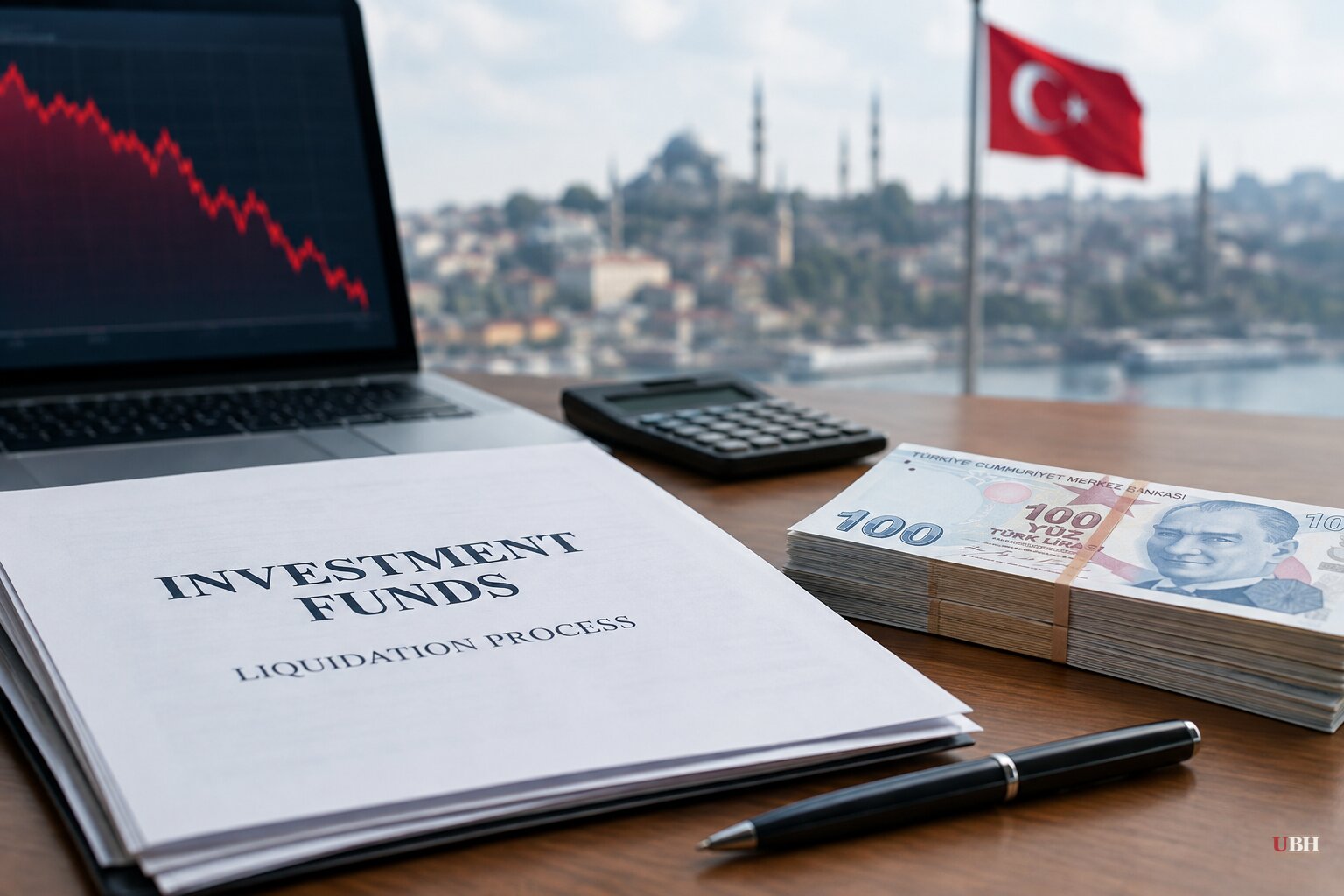
Since Turkish regulators ordered the liquidation of more than 100 investment funds on September 17, following a wave of redemption freezes, a market-wide circuit breaker, and the arrests of multiple fund executives, the government has shifted from damage control to cleanup. Ankara is now asking investors who made outsized profits to voluntarily give the money back.
The payout plan
Turkey's Capital Markets Board (SPK) approved interim payments of up to 1 million lira, about $20,400, per eligible investor in funds run by Tera Portföy, Pusula Portföy, Atlas Portföy and Hedef Portföy, according to Bloomberg and Daily Sabah. Investors with net investments below that threshold get made whole. Those above it get the capped amount now and a spot in line for whatever the liquidation eventually recovers.
Money market funds get paid first. The rest follow in descending order of investor count, with funds tied to A1 Capital, Bulls and Pardus slotted in after, per ZeroHedge's review of the SPK order. Roughly 455,758 retail investors are tied up in the 131 funds now being unwound, a scale that dwarfs most prior Turkish market interventions.
Alongside the payouts, the SPK opened what it calls Voluntary Return Accounts at the state-run Birlesik Fon Bankası, inviting anyone who reaped what regulators call "excessive" gains before the freeze to send the money back voluntarily, according to Bloomberg. There is no legal mechanism forcing anyone to use it.
The government's defense
Finance Minister Mehmet Şimşek told an S&P Global conference on October 1 that authorities had "quarantined" the troubled portfolio managers fast enough to stop contagion, according to a Turkish transcript reported by Anadolu Agency and carried by Daily Sabah. "We are not talking about a systemic problem," Şimşek said, pointing to public debt at 22% of GDP and a budget deficit he described as roughly half the developing-country average.
A fund coordination council chaired by the vice president was established Tuesday to oversee the liquidation, and the State Supervisory Council has been tasked with examining how the crisis happened, Daily Sabah reported. The council met Friday, October 2.
Turkey's overall debt and deficit metrics are not, by themselves, signs of a sovereign crisis.
The political fallout widens
Al-Monitor reported that a senior ruling-party official's son briefly faced asset restrictions and that a former economy minister disclosed companies he co-owns have money trapped in one of the frozen funds. A senior Turkish financial executive, speaking to Al-Monitor on condition of anonymity, said he believes other political figures are likely involved and that some of the lost money was moved elsewhere. "We know very little about who sold these shares to these funds, and how they bought it from whom, and then who made money," he said.
No charges have been announced against any political figure beyond the fund executives already arrested, including Tera Holding chairman Emre Tezmen, who was arrested after earlier being placed only under a travel ban, according to ZeroHedge. Whether the asset-tracing ever identifies where the money went, and whether anyone with political connections is held accountable the same way Tera and Pusula executives have been, is unresolved.
Why this cuts deep in Turkey
NPR reported that many Turks keep savings in physical gold or foreign cash outside the banking system entirely, a habit officials call yastık altı, or "under the pillow." Turkish officials argue the practice starves the formal financial system of capital. Koç University economist Selva Demiralp, a former Turkish central bank economist, pushed back on that framing: "Once you look at why people do this, it stops looking irrational actually, and it's a very rational response to a long history of high and unpredictable inflation, a few banking crises people still remember, and a general sense that the lira just doesn't hold its value the way gold does."
A fund scandal involving arrested executives, frozen redemptions and a 90% account wipeout for ordinary savers does nothing to change that calculation. One investor, who sold her Istanbul home, moved to Portugal and parked the proceeds in Turkish stock funds as an inflation hedge, told Turkish Minute her account has fallen roughly 90% and she cannot withdraw what remains. "It is melting away before my eyes, and I can't do anything about it," she said.
Turkish equities have also been under broader pressure, with Tech Revolt describing the benchmark sliding into bear-market territory amid the fund unwind and regional economic strain tied to the Middle East conflict, though the available reporting does not detail how much of that decline traces to the funds specifically versus outside pressures.
The open question is enforcement. Turkey has a payout cap, a liquidation queue and a request for good behavior. What it does not have, based on anything regulators have announced, is a way to compel the investors who cashed out before the freeze to actually use the Voluntary Return Accounts. Şimşek has said more regulation is coming. What that looks like, and whether it includes any teeth for recovering money from people who choose not to volunteer it, has not yet been specified.
Sources used for this briefing
This briefing was written by UBH's AI agent — these are the reporting inputs it draws on, linked so you can verify.


