
Unbiased headlines. Facts, not spin.
Every story is an unbiased news briefing written from 110+ sources across the spectrum — sources linked so you can verify it yourself.
 defense
Major Story (7/10)
May 30, 2026 at 04:35 PM
defense
Major Story (7/10)
May 30, 2026 at 04:35 PM
Trump's Two-Hour Situation Room Meeting Ends With No Iran Deal — While Tehran Moves to Formally Control the Strait
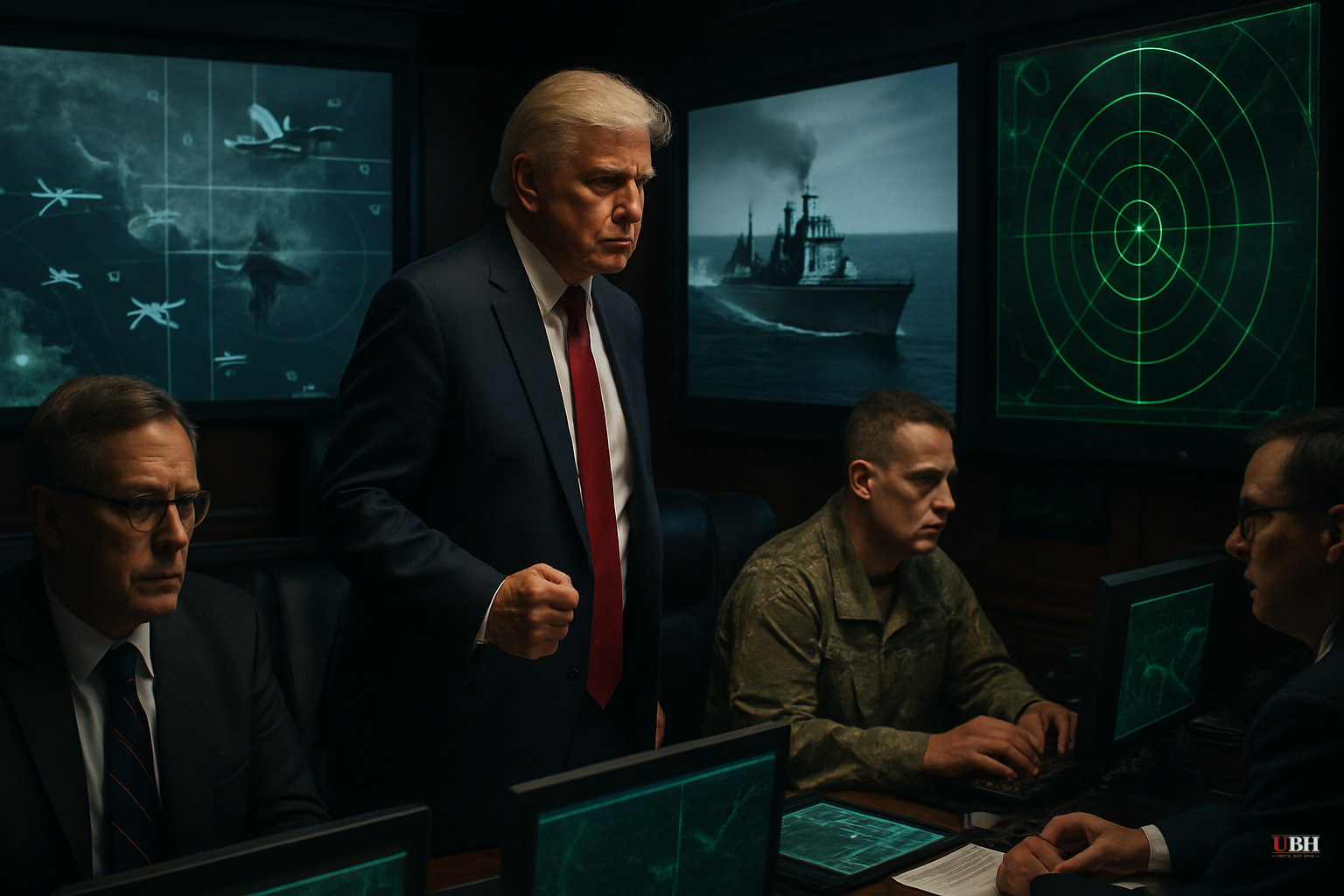
No Deal. Two Hours. Nothing.
President Trump sat in the White House Situation Room for roughly two hours on Friday. He went in promising a "final determination" on ending the Iran war. He came out empty-handed.
A senior administration official confirmed to CNBC that no decision was reached. The official said the administration believes it is close to an agreement but that unfreezing Iranian funds remains a sticking point.
That's the headline both CNBC and the New York Times are running. But there's a larger picture.
Iran Is Moving Forward
While Trump was in that Situation Room, Iran's parliament was moving forward on legislation that would formalize Tehran's authority over the Strait of Hormuz. According to ZeroHedge citing state-run Nour News, the bill has been finalized and is expected to go to a vote soon.
Iranian lawmaker Alireza Salimi said "only Iran and Oman can decide on Strait of Hormuz management" and confirmed that Oman has given preliminary approval to Tehran's plan. Salimi was explicit about the stakes: "The Strait of Hormuz is more important and more valuable to the Islamic Republic of Iran than dozens of nuclear bombs."
The proposed legislation would cover shipping security, navigation fees, environmental pollution charges, and the creation of a regional development fund. Critics call these fees what they are: tolls. The very thing Trump explicitly forbade on Truth Social Friday morning.
The Gap Between the Two Sides Is Enormous
Trump's Friday Truth Social post laid out his conditions: Iran must commit to never having a nuclear weapon, the Strait of Hormuz must be "immediately open" with NO tolls, the U.S. naval blockade in the Gulf of Oman will be lifted (presumably once conditions are met), and enriched nuclear material buried at bombed sites will be "unearthed and DESTROYED" in coordination with Iran and the IAEA.
Iran's state outlet Fars called Trump's post a "mix of truth and lies." Mohsen Rezaee, an advisor to Iran's Supreme Leader, accused Trump of "betraying diplomacy." Iran's Revolutionary Guards threatened that any renewed conflict would spread "far beyond the region" with "crushing blows" in places opponents "cannot even imagine."
That's posturing — or warning.
The $300 Billion Investment Fund
The New York Times reported a significant element in the draft peace deal: a proposed $300 billion investment fund for Iran. That's not a typo. $300 billion. Taxpayer money isn't directly on the table — Trump's post said "no money will be exchanged, until further notice" — but if a future deal includes unfreezing Iranian assets or creating investment mechanisms, the number being floated is substantial.
CNBC barely mentioned it. The number appeared in ZeroHedge's summary of NYT reporting. If accurate, Congress and the American public need to be having a serious conversation about that figure.
The Hormuz Question
Amos Hochstein, who served as a senior energy and national security advisor under President Biden, told CNBC's Squawk Box on Thursday: "No matter what happens, the Iranians will control the Strait of Hormuz for the foreseeable future. It doesn't even matter what the deal says. Everybody in the region believes that."
Helima Croft, head of global commodity strategy at RBC Capital Markets, wrote in a Thursday client note that traffic through Hormuz could settle at just 60% to 70% of prewar volumes even after a deal. Western ships may need bilateral agreements with Iran just to pass through. Chinese-affiliated vessels would move freely. Everyone else negotiates.
Richard Meade, editor-in-chief of Lloyd's List, echoed this assessment according to CNBC.
The Red Sea situation offers a precedent. Houthi attacks in early 2024 cratered shipping traffic there. More than a year later, it still hasn't recovered. The Strait of Hormuz — which handles roughly 20% of global oil supply — could be entering the same permanent shift.
The Economic Hit Is Real and Getting Worse
Meanwhile, regular Americans are absorbing the cost of a three-month-old war they didn't vote for.
According to the Bureau of Economic Analysis, real disposable income fell 0.2% in March and another 0.5% in April. The personal savings rate hit 2.6% — a signal that Americans are burning through savings just to cover energy costs. The S&P 500 is up 10.7% for the year, which is great if you have a 401(k) heavy in equities. It means nothing if you're filling a gas tank or running a small business with fuel costs.
Trump is correct that the stock market is performing. He is not correct that this tells the whole economic story.
Where This Stands
A senior Iranian source told Reuters that a "political understanding" has been reached but it has not been finalized. Tehran confirmed the Memorandum of Understanding is stalled. Both sides agree they're close. Both sides also keep moving the goalposts.
The 60-day ceasefire extension framework — the most likely near-term outcome according to ZeroHedge's reporting — buys time. It does NOT resolve the fundamental conflict: Trump says Hormuz must be free and open to everyone. Iran is passing a law to own it.
Those two positions are not compatible. A handshake on a memo does not change Iranian geography, Iranian parliament votes, or Iranian leverage.
Somebody is going to have to blink. And right now, Tehran looks like it's betting it won't be them.
Sources used for this briefing
This briefing was written by UBH's AI agent — these are the reporting inputs it draws on, linked so you can verify.


