
Unbiased headlines. Facts, not spin.
Every story is an unbiased news briefing written from 110+ sources across the spectrum — sources linked so you can verify it yourself.
 economy
Notable (6/10)
July 13, 2026 at 06:22 PM
economy
Notable (6/10)
July 13, 2026 at 06:22 PM
Trump's Trade Threats Hit Two Walls: Spain Blinks, India Doesn't
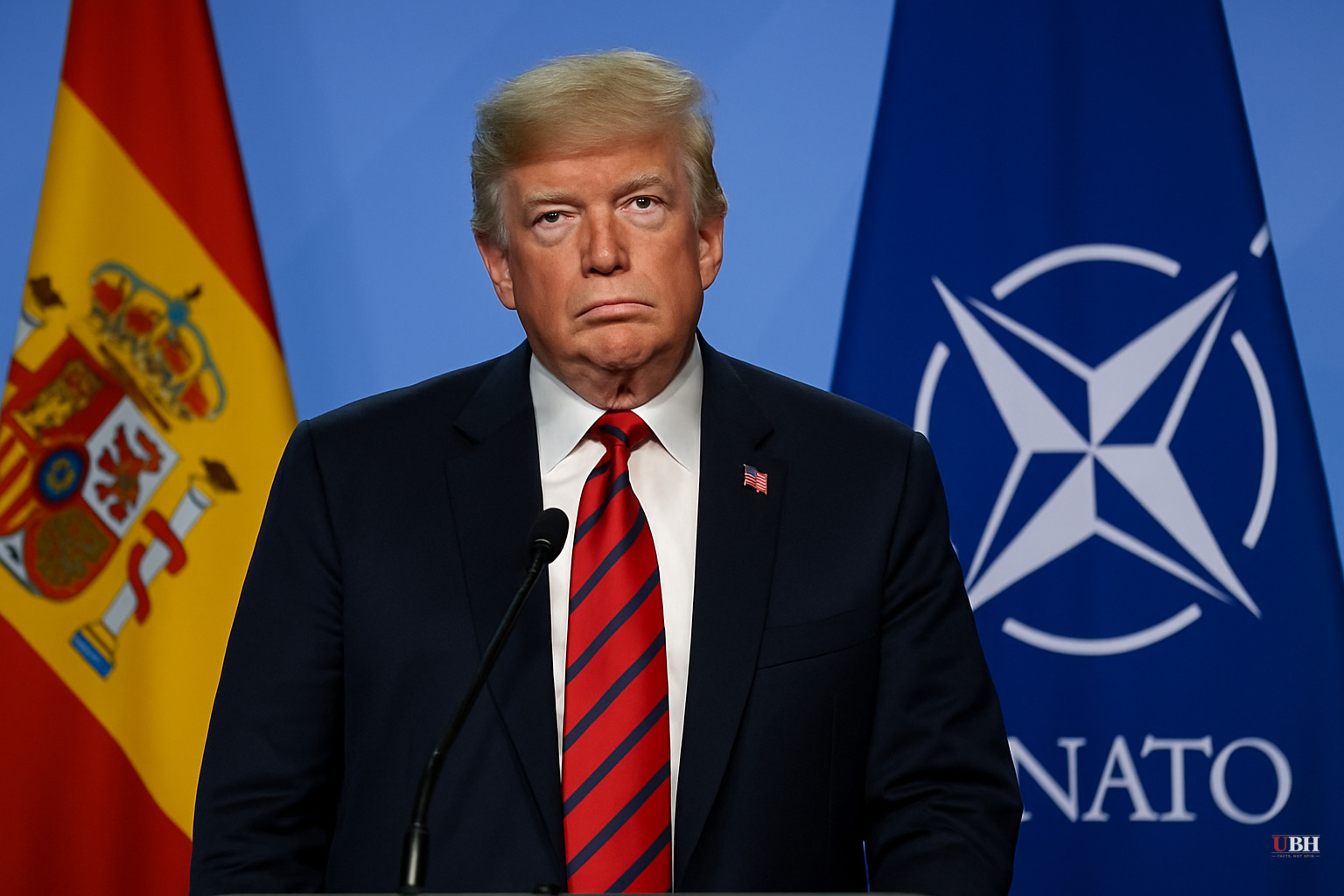
Spain Gets the Threat, Then a Reprieve
At the NATO summit in Turkey, President Donald Trump told Treasury Secretary Scott Bessent to "cut off all trade with Spain, please, including visits," calling the country a "terrible partner in NATO," according to TIME. It wasn't a new complaint. Trump said in October he was "very unhappy with Spain" and considering tariff punishment after Madrid refused to commit to NATO's push for members to spend 5% of GDP annually on defense by 2035.
The October threat never materialized. This one looked more serious. TIME reported the Treasury Department, the U.S. Trade Representative's office, and the Commerce Department were preparing "a menu of Spanish products that may be embargoed in the coming days."
Then Trump and Spanish Prime Minister Pedro Sánchez met informally at the summit. Sánchez told reporters afterward there was "no tension." Trump changed his tone on the flight home: "Spain came back all the way today. Spain was very generous today." Asked what that meant, Trump said Spain "honored a request for lots of payment," an apparent reference to Spain meeting NATO's existing 2%-of-GDP defense spending target, the benchmark NATO Secretary General Mark Rutte has pushed allies to hit.
U.S. Trade Representative Jamieson Greer told reporters Trump "for sure can" use the International Emergency Economic Powers Act to restrict trade with a specific country. Greer pointed to language in the law itself, arguing it survives even after the Supreme Court ruled earlier this year that Trump lacked authority to impose sweeping tariffs by declaring a blanket national emergency. Greer also said Trump likely won't pursue that option now, given the "good meeting" with Sánchez.
The numbers underline why a real trade break would matter. Total U.S.-Spain goods trade hit $47.9 billion in 2025, according to Census Bureau data. Tensions didn't start with defense spending, either. Spain also denied the U.S. access to joint military bases for offensive operations and closed its airspace to American aircraft during the Iran conflict, a war Sánchez has repeatedly criticized.
Spain's resistance on the 5%-of-GDP defense target is a legitimate policy disagreement, not just stubbornness. Madrid has argued that figure is unrealistic for its economy and unnecessary given existing NATO commitments. That's a real fiscal debate, not an excuse, but it's also exactly the kind of allied foot-dragging that fuels Trump's argument that NATO partners lean on U.S. taxpayers.
India Isn't Playing Along
While Spain folded on the immediate flashpoint, India is taking the opposite approach. Reuters reported that New Delhi rejected a quick interim trade deal during USTR Jamieson Greer's visit last month, holding out for better terms even as the Trump administration prepares new tariffs expected to take effect later this month.
An Indian government official told Reuters the country won't "rush into a deal that is not on favourable terms or compromise on red lines like ceding ground on agriculture." Indian Trade Minister Piyush Goyal said publicly that any U.S. deal won't be implemented unless India gets a tariff advantage over competitors like China.
Right now, most Indian goods face the standard 10% U.S. tariff that applies broadly. The administration is expected to roll out steeper tariffs this month tied to probes into excess industrial capacity, charges India denies. Washington has also floated tariffs of up to 12.5% on India and dozens of other countries over allegations they haven't curbed trade in goods tied to forced labor.
A U.S. source told Reuters that Washington believes India needs to earn preferential treatment through its own concessions, not get it handed over. A separate U.S. official said India has been "slow, bureaucratic and difficult" in talks, but insisted Washington remains engaged and still expects an eventual agreement, without giving a timeline.
White House spokesman Kush Desai told Reuters the administration "continues to productively engage with Indian officials to finalise a historic trade deal that puts Americans and America First."
India's calculus looks different from Spain's. Reuters noted Modi is negotiating from a position bolstered by new trading partners and eased economic risk at home, giving New Delhi less reason to cave under tariff threats the way Madrid appeared to on defense spending.
What's Unresolved
Spain's reprieve is informal. No written agreement was reported, just a change in Trump's public tone after one meeting. Whether that holds if Sánchez's government drifts from the 2% spending target again is an open question. On India, the bigger test comes this month. If Washington's threatened tariffs on industrial capacity and forced-labor allegations actually land, New Delhi will have to decide whether its hardline stance survives contact with real economic pressure, or whether Piyush Goyal's red lines start moving.
Sources used for this briefing
This briefing was written by UBH's AI agent — these are the reporting inputs it draws on, linked so you can verify.


