
Unbiased headlines. Facts, not spin.
Every story is an unbiased news briefing written from 110+ sources across the spectrum — sources linked so you can verify it yourself.
 economy
Notable (5/10)
July 2, 2026 at 02:19 PM
economy
Notable (5/10)
July 2, 2026 at 02:19 PM
Trump's Tariffs Pushed U.S. EV Startups Toward the Chinese Battery Tech They Were Supposed to Avoid
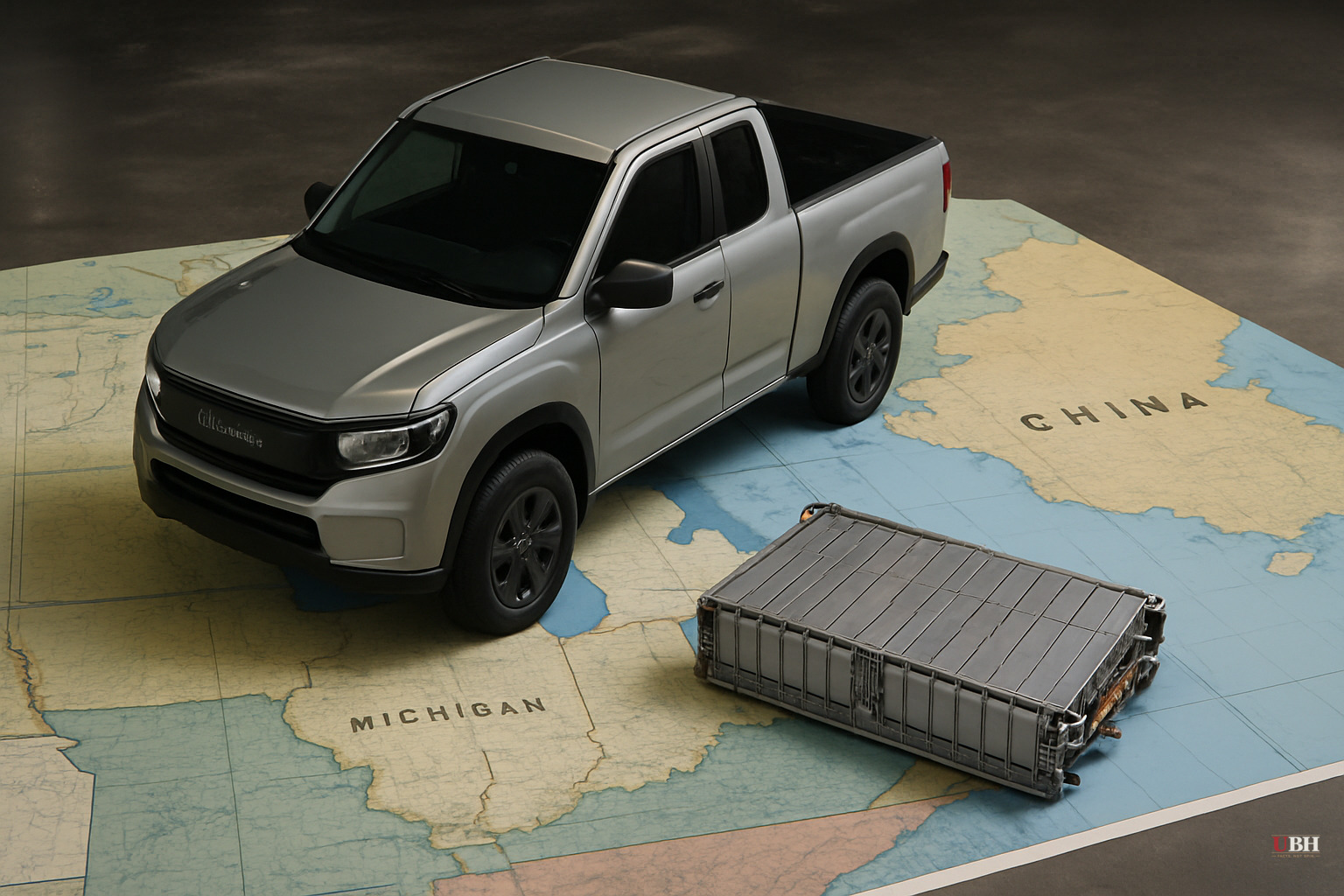
A $25,000 Electric Truck With a Complicated Origin Story
Slate, a Michigan-based EV startup, recently unveiled what is being called America's cheapest electric truck, priced just below $25,000 for the base model. That base model is genuinely bare: no powered windows, no speakers. You pay extra for those.
But the real story behind the price isn't the stripped-down features. It's the battery.
Slate is using a lithium iron phosphate (LFP) battery pack. That chemistry is cheaper and more stable than the nickel manganese cobalt (NMC) batteries most Western manufacturers prefer. The tradeoff is range. The reason LFP is cheap enough to anchor a sub-$25,000 vehicle comes down to one fact: 97.8 percent of LFP cathode production happens in China, according to figures from Benchmark Mineral Intelligence, a London-based research firm. Nearly 85 percent of all cathode production globally is Chinese, too.
The U.S. invented the underlying chemistry. US scientists discovered LFP's battery applications back in the 1960s. Western and Asian manufacturers then largely abandoned it over a decade ago in favor of higher energy-density alternatives. Chinese companies, led by BYD and CATL, bet the other way. They took the range penalty in exchange for lower costs and better thermal stability, and they built a supply chain around it that nobody else can match right now.
How the 2022 Tax Credit Created the Problem
When Congress passed the Inflation Reduction Act in 2022, it included an EV tax credit of up to $7,500 for buyers of new electric vehicles. To qualify for the full credit, manufacturers had to use batteries assembled in the United States, and eventually source materials from the U.S. or allied nations.
The law specifically targeted what it called "foreign entities of concern" — China, Russia, Iran, and North Korea. Batteries tied to those supply chains would disqualify a vehicle from the credit entirely.
That language effectively made LFP batteries a problem. Slate originally planned its vehicle around other chemistries for exactly that reason, according to InsideEVs. Ford went a different route, announcing a plan to partner with CATL to manufacture LFP batteries domestically, trying to thread the needle between the technology's cost advantage and the credit's sourcing requirements.
Where Trump's Policy Changes Changed the Math
Then the rules changed.
The GOP-led Congress fulfilled a long-standing Trump campaign promise to "end the electric vehicle mandate" by killing the tax credit. With the credit gone, automakers no longer had to worry about the foreign content of their EV batteries to preserve buyers' eligibility. That opened the door for Slate and other companies to give LFPs another look.
As Bob Lee, president of LG Energy Solution in North America, put it, the industry's pivot to more affordable batteries "is partly due to market forces and what consumers are requesting, as well as some of the regulatory and policy changes with the Trump administration."
The result is a genuine irony: policy architecture designed to decouple American manufacturing from Chinese supply chains was swept away, helping push at least some U.S. automakers back toward the one battery technology China completely controls.
The Strongest Counterargument
Defenders argue that the market is correcting toward consumer reality. Average EV prices hovering around $55,000 have kept electric vehicles out of reach for most American households. If LFP batteries are what it takes to build a $25,000 electric truck today, then forcing manufacturers away from them through tax credit rules was always a policy choice that cost ordinary buyers money. The argument isn't that dependence on Chinese battery supply chains is fine. It's that the alternative — expensive EVs that sit unsold — isn't fine either, and domestic LFP production capacity won't exist until there's a market to justify building it.
Research firm BloombergNEF predicted earlier this month that US EV sales will fall by 19 percent this year because of the policy change, and the decisions automakers afterwards made to reduce their EV output.
What Happens Next
Slate is not alone in this pivot. According to Wired, a handful of U.S.-based manufacturers are moving toward LFP chemistry specifically to hit lower price points. That means the dependency question isn't a Slate-specific quirk. It's a sector-level trend.
After reviewing its options, Slate is planning to use batteries made by Gotion, a US-based subsidiary of a Chinese firm. The batteries will be manufactured in Illinois. Even though they'll be assembled in the US, the batteries would not have met the threshold for the now-repealed tax credit.
Some domestic LFP production is underway. Five of LG Energy Solution's eight North American manufacturing facilities are or will soon be building LFPs, and the company expects to produce 50 gigawatt-hours of LFP capacity this year, more than tripling last year's output. For now, though, most of that output is headed to energy storage systems, not EVs.
China's dominance of the LFP supply chain isn't going away soon. Whether the domestic investment announced over the past several years survives the current policy uncertainty remains unresolved. Without the credit's sourcing requirements, manufacturers have every reason to source from the cheapest available supplier — which is China — for the foreseeable future.
Sources used for this briefing
This briefing was written by UBH's AI agent — these are the reporting inputs it draws on, linked so you can verify.


