
Unbiased headlines. Facts, not spin.
Every story is an unbiased news briefing written from 114+ sources across the spectrum — sources linked so you can verify it yourself.
 defense
Major Story (8/10)
August 19, 2026 at 07:34 PM
defense
Major Story (8/10)
August 19, 2026 at 07:34 PM
Trump's New Tech Strategy Bets on a Few AI Giants While His Own Crypto Venture Uses Chinese Models
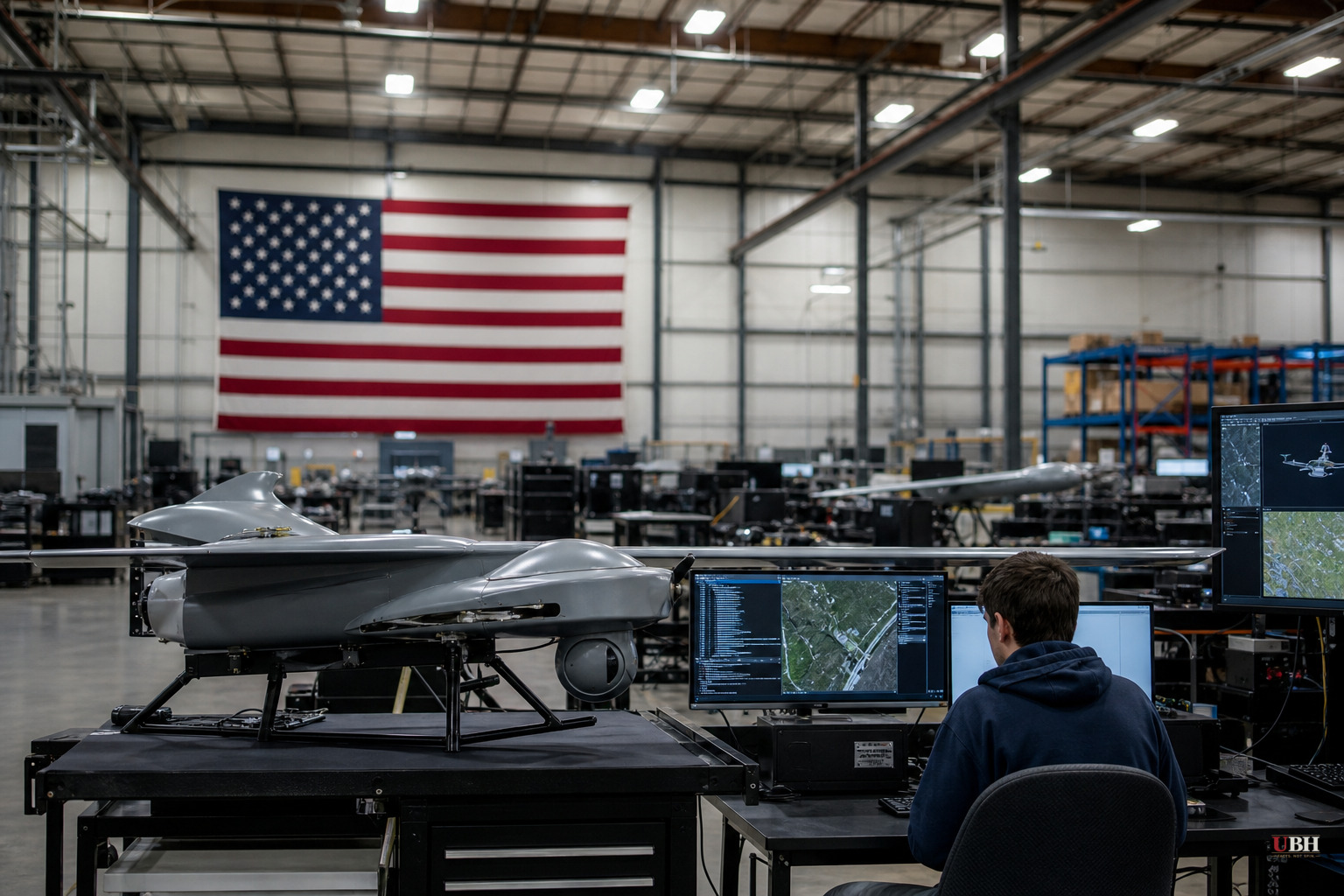
The White House Office of Science and Technology Policy published a new National Security Science and Technology Strategy this week, and it reads like a full-court press against China on two fronts: speed up the Pentagon's adoption of AI and drones, and lock down the research pipeline China has been quietly mining for years, according to Nextgov.
The strategy calls for the Defense Department to buy faster, using performance-based contracts and other transaction authorities instead of the traditional acquisition slog, according to Defense One. It sets undersea warfare, space and AI/autonomy as top priorities, specifically citing "multi-agent systems and swarm intelligence" as critical to deterring China in the Indo-Pacific. It also pushes to loosen foreign military sales rules so young defense-tech startups can sell to allies and survive on more than just Pentagon contracts.
Defense One's reporting flags a real tension buried in the plan: the strategy leans on a small number of well-connected U.S. tech companies to deliver this AI push, which could crowd out other innovative approaches and, ironically, slow down getting commanders the tools they actually want.
The Anthropic mess shows how messy this actually is
If anyone wants proof the government doesn't have this fully sorted out, look at what happened with Anthropic. In mid-July, the Air Force sent military contractors a letter demanding they purge Anthropic's AI products from weapons and control systems by September 1 or risk losing all Pentagon business, according to reporting.
Within weeks, the Air Force reversed course. The National Security Agency argued that without Anthropic's Mythos model, it would be far harder to find and patch vulnerabilities in the Pentagon's own systems. One recently departed senior U.S. official said cutting off Mythos would amount to "unilateral disarmament." The reversal came after a public feud between Anthropic CEO Dario Amodei and Defense Secretary Pete Hegseth over restrictions Anthropic tried to put on how the military could use its technology.
Jen Easterly, who ran the Cybersecurity and Infrastructure Security Agency under President Biden, said the underlying threat isn't new. "These are the kinds of things we were talking about and worrying about before AI became a daily headline," she said, adding that China may be only months away from fielding its own cheaper AI models capable of powering the kind of intrusions seen in the Volt Typhoon and Salt Typhoon hacks that hit U.S. water systems and power grids under the Biden administration.
Universities get a two-week deadline
On the research-security side, the Defense Department on Monday ordered 30 U.S. universities, reportedly including Harvard, MIT and Johns Hopkins, to audit their partnerships with 130 flagged foreign institutions, most of them in China, according to TIME. Schools that don't cut "problematic" ties within two weeks risk losing federal research funding.
Emil Michael, undersecretary of war for research and engineering, said the Department of War has "zero tolerance for academic partnerships that compromise our national security." The order follows real cases: a federal jury last year convicted former Corning scientist Ji Wang of stealing Pentagon-funded trade secrets he allegedly planned to hand to a Chinese business, and Arcadia, California mayor Eileen Wang resigned in May after admitting she acted as an unregistered Chinese government agent before taking office.
Concern about foreign exploitation of taxpayer-funded research isn't paranoia when there are actual convictions and admissions on the record. The China embassy in Washington pushed back, calling the crackdown "overstretching of the concept of national security" and urging the U.S. to "abandon the Cold War mentality." Some academics have separately warned the sweep could stigmatize Chinese researchers broadly and hurt American science, a fair point worth weighing against the documented espionage cases.
Then there's the crypto hypocrisy
World Liberty Financial, the Trump family-linked crypto venture, is backing WorldClaw, a platform that offers AI models from Chinese companies the U.S. government has already flagged for national security and intellectual property concerns, according to Reuters reporting cited by the Center for Security and Emerging Technology.
Sam Bresnick of Georgetown's CSET said: "As the U.S. government tries to respond to the rise and threat of Chinese AI, it seems hypocritical to go out through WorldClaw to use these tools from China to try and make a bunch of money." No government agency has announced an investigation into World Liberty Financial's use of restricted Chinese AI models, and no charges have been filed.
The Xi visit complicates things further
All this is unfolding as Chinese President Xi Jinping's planned U.S. visit approaches. Washington and Beijing are still trying to nail down basic logistics for a hoped-for AI dialogue, according to the South China Morning Post, published Wednesday. Two sources familiar with the discussions said the U.S. government hasn't decided which agency should lead the talks, and the two sides haven't agreed whether private AI labs or just diplomats should be at the table.
The open question is whether the administration can enforce its own China-tech restrictions consistently on universities, contractors, and itself before Xi's visit forces the issue into the open.
Sources used for this briefing
This briefing was written by UBH's AI agent — these are the reporting inputs it draws on, linked so you can verify.


